 how-to
Capturing Anand Karaj Ceremony Traditions: A Photographer's Guide
Table of Contents
- Understanding the Anand Karaj Ceremony Order
- Anand Karaj Photography Etiquette: What to Know Before You Enter the Gurdwara
- Photographing the Laavan: The Four Rounds and Their Meaning
- Your Sikh Wedding Photography Shot List, Mapped to Each Ritual
- Practical Setup: Low Light, Audio, and Unobtrusive Equipment
- Consent, Privacy, and Sharing Images Respectfully
- Conclusion: Capturing Anand Karaj Traditions with Care
- Frequently Asked Questions
Last Updated: October 21, 2026
Understanding the Anand Karaj Ceremony Order
Capturing Anand Karaj ceremony traditions starts with knowing the sequence cold. The Anand Karaj is the Sikh marriage ceremony, a spiritual union performed in a Gurdwara before the Guru Granth Sahib.
The ceremony follows a fixed order. Learn it once and you'll never be caught off guard.
- Kirtan and gathering - devotional singing begins as families settle
- Ardaas - the opening prayer, said standing with hands folded
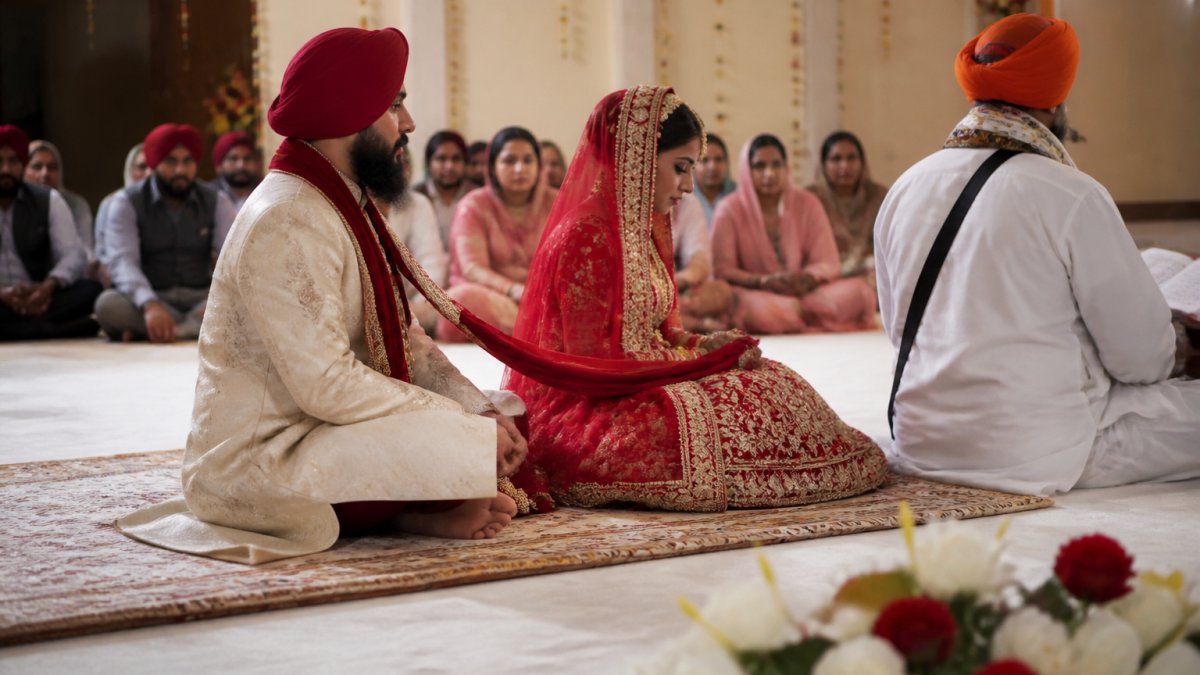
- Palla ceremony - the bride's father places a scarf in the groom's hand
- Laavan - four hymns, each followed by a round of the Guru Granth Sahib
- Anand Sahib - hymns of bliss sung by the congregation
- Karah Parshad and Ardaas - the closing prayer and shared blessed food
The Spiritual Significance and the Guru Granth Sahib
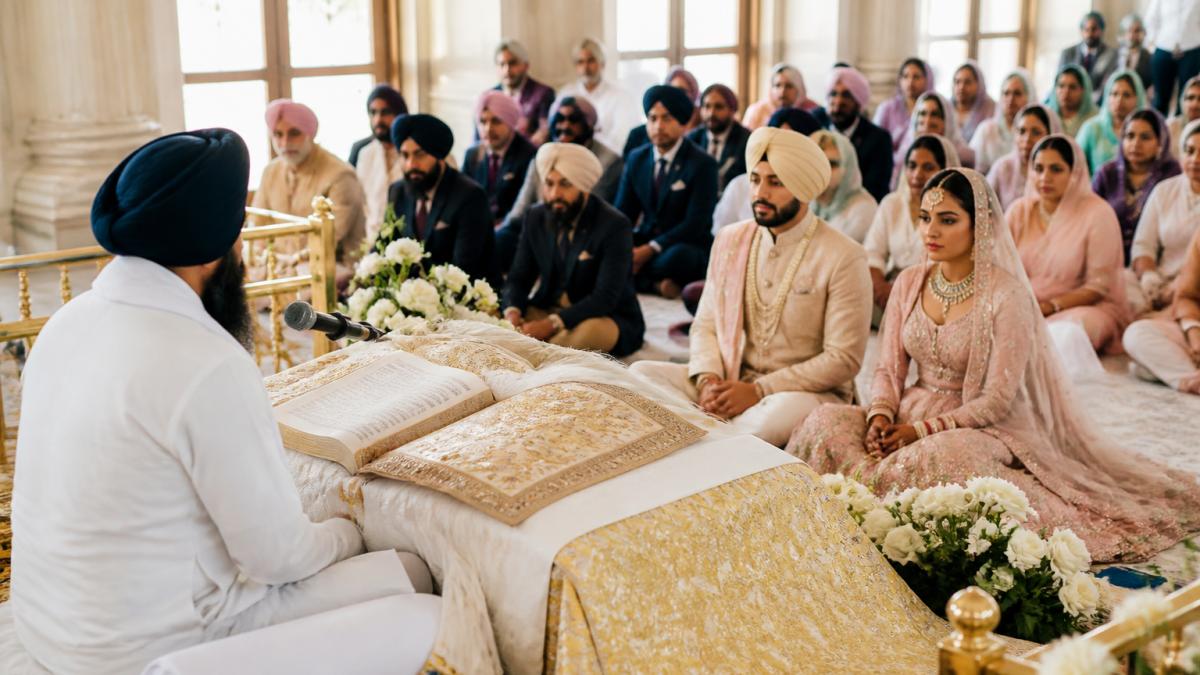
The Guru Granth Sahib sits at the centre of everything, treated as a living Guru, not a prop (The Last Guru - the Guru Granth Sahib - Waheguru (God) and authority - Edexcel - GCSE...).
This changes how you shoot. Many Gurdwaras ask photographers to cover their heads and remove shoes, so plan ahead.
The Laavan are the heart of it. These four hymns describe the soul's journey toward union with the divine, each mapping to a round the couple walks.
Anand Karaj Photography Etiquette: What to Know Before You Enter the Gurdwara
Anand Karaj photography etiquette comes down to respect: cover your head, remove your shoes, and stay out of the way of worship. Get these basics right and the family will trust you for the rest of the day.
Here's what we check before every Sikh wedding we cover:
- Head covered with a scarf or rumal
- Shoes removed at the entrance
- Modest clothing, no shorts or bare shoulders
A common mistake is treating the Gurdwara like a venue. It isn't. The Sikh Rehat Maryada guidance on Gurdwara conduct sets out the conduct expected inside, and it's worth reading before you accept the booking.
Photographing the Laavan: The Four Rounds and Their Meaning
Photographing the Laavan means capturing four distinct rounds, each with its own mood. The couple circles the Guru Granth Sahib four times while the Granthi sings, the groom leading and the bride following, her dupatta or scarf held between them.
Your shot list for the Laavan:
- First round - wide shot of the couple starting, the congregation seated behind
- Second round - the couple's faces, focused and calm
- Third round - hands holding the scarf, a detail shot
- Fourth round - the couple returning to their seats, families watching
The quiet moments matter as much as the walking, the bride adjusting her dupatta, the groom's parents watching from the side. These are the frames families ask for later.
Your Sikh Wedding Photography Shot List, Mapped to Each Ritual
A Sikh wedding photography shot list should follow the ceremony, not fight it. What helps on the day is knowing the specific frame, the exact moment to press the shutter, and what to do when light or crowd works against you. Here is how we map coverage to each ritual, from pre-wedding customs to the closing prayer.
| Ritual | Must-Capture Moment | Timing | Practical Note |
|---|---|---|---|
| Choora ceremony | Bangles slipped onto the bride's wrists by maternal uncle and aunts | Pre-wedding, at home, often morning | Shoot from slightly above to catch the bangles and hands together; window light behind the bride gives a clean rim |
| Jaago | Family dancing with the decorated pot, often at night | Night before | Push ISO and use a fast prime; the pot is the anchor, frame it with dancers around it rather than chasing faces |
| Dhol procession | Groom's arrival with dhol players, often in the street or car park | Morning of | Get low for the dhol; the drum skin and sticks make the frame. Watch for backlight from car headlights |
| Milni | Groom's family greeting the bride's family, often with garlands | Before entering the Gurdwara | Shoot the handshake and garland exchange from the side; a wide frame shows both families |
| Palla ceremony | Bride's father placing the scarf in the groom's hand | Start of Anand Karaj | Brief and emotional, watch the father's hands, not his face. Pre-focus on the scarf |
| Laavan | All four rounds, wide and close | Mid-ceremony | See the Laavan section below for round-by-round detail |
| Ardaas | Congregation standing, hands folded | Opening and close | A low side angle shows the standing congregation without blocking anyone; no flash |
| Karah Parshad | Shared food handed out, hands cupped | End of ceremony | Close on cupped hands receiving the parshad; the texture of the food reads well in soft light |
| Anand Sahib | Congregation singing, some with eyes closed | After the Laavan | Catch the raised faces and closed eyes; a long lens from the side keeps you unobtrusive |
The Palla Ceremony: The Frame Most Photographers Miss
The Palla ceremony is the one most photographers miss. It is brief, emotional, and fast. The bride's father places one end of a scarf in the groom's hand, and the bride holds the other as they walk the Laavan. Watch the father's hands, not his face, the story is in the transfer. Pre-focus on the scarf, shoot tight on the hands, then pull back for the couple holding it together.
The Laavan: Round-by-Round Visual Plan
The four rounds are the heart of the ceremony, each with a different visual character. Plan your position before the first round begins.
- First round, wide shot of the couple starting from their seats, congregation behind, establishing the space.
- Second round, the couple's faces, focused and calm; a medium lens from the side catches the concentration.
- Third round, hands holding the scarf, a detail shot; the scarf is the visual thread of the Laavan.
- Fourth round, the couple returning to their seats; pull back to include the parents' faces as they watch the circuit complete.
The quiet moments matter as much as the walking. Catch the bride adjusting her dupatta. Catch the groom's parents watching from the side. These are the frames families ask for later, and they happen in the gaps between the hymns.
Building a Shot List the Family Recognises
A shot list is not just for you. Share a simplified version with the family a week before and ask them to flag anything missing, a grandparent who must be in a particular frame, a singing cousin, a one-off family tradition. The best shot lists are co-written with the people whose day it is, and that conversation also surfaces moments they don't want photographed.
Practical Setup: Low Light, Audio, and Unobtrusive Equipment
Low light inside a Gurdwara is the biggest technical hurdle. Prayer halls are often lit by high windows and a few fixtures, with mixed colour temperature and deep shadow in the corners. Plan your settings before you walk in, you won't get a second chance at the Laavan.
Low-Light Settings That Actually Work
- Use a fast prime lens, f/1.8 or wider, to gather light without flash; a 35mm or 50mm equivalent covers most of the hall from a side position.
- Push ISO higher than at a reception. Modern sensors handle ISO 3200 to 6400 well; grain beats a blurry frame every time.
- Set white balance manually for mixed tungsten and daylight, using a grey card or your palm as reference before the ceremony.
Audio: Clean Gurbani Without a Visible Rig
For videography, clean audio of the Gurbani and the Laavan is worth as much as the picture. With permission, place a small audio recorder on a tripod near the Granthi rather than relying on a camera-mounted mic, it picks up the singing without cables across the floor. If that's not possible, a shotgun mic on a boom held low and still from your side position is next best.
Equipment That Keeps You Invisible
For videography, keep your rig small. A gimbal in a crowded prayer hall is a hazard, wide, moving, and eye-drawing. We favour a single body with a stabilised lens and a second operator at a fixed side position. Two quiet, fixed positions beat one operator moving around every time. If you must move, go sideways along the side aisles, never across the front of the congregation.
- One camera body per operator, stabilised lens, no cage or rig that widens your footprint
- A small audio recorder with a fresh battery and card, placed before guests arrive
- A head covering and shoe bag for each crew member, so you are not fumbling at the entrance
- A spare battery and card in a pocket, not a bag you have to leave the hall to reach
A Pre-Ceremony Checklist for the Crew
Run this fifteen minutes before the ceremony: head covered, shoes off, phone silenced, white balance set, ISO tested, audio recorder placed and rolling, spare battery in pocket, both operators in position. Confirm with the family contact that nothing has changed, then stop fiddling with gear and watch the room. The best technical setup is the one you forget once the Kirtan starts.
Consent, Privacy, and Sharing Images Respectfully
Consent is not a formality. Some families are traditional and won't want certain moments photographed, especially during the bride's preparations or private rituals. Ask early, in plain terms.
Here's how we handle it:
- Agree in writing which parts of the day are and aren't covered
- Confirm who can share images publicly and who can't
- Respect any request to keep certain family members out of frame
- Store files securely and share only through private galleries
The Information Commissioner's Office guidance on photography and consent is a useful reference for how consent and personal data apply to event photography. If a family asks you to delete or withhold an image, do it without argument.
Conclusion: Capturing Anand Karaj Traditions with Care
Capturing Anand Karaj ceremony traditions well takes more than a good camera. It takes knowing the ceremony order, respecting the Gurdwara, and staying still when it counts.
At Khush Studio, we've spent over 20 years documenting Sikh, Indian, and Muslim weddings with a discreet, personal approach.
Ready to talk about your ceremony? Enquire with Khush Studio and let's plan coverage that honours every ritual.
Frequently Asked Questions
What are the main traditions of an Anand Karaj ceremony?
The Anand Karaj includes several key traditions: the bride and groom sit before the Guru Granth Sahib, the Granthi explains the spiritual meaning of marriage, the four Laavan hymns are sung while the couple walks around the holy book, and the ceremony closes with Ardaas and Karah Parshad. Respectful conduct, covering the head, and removing shoes inside the Gurdwara are essential throughout.
How long does an Anand Karaj ceremony usually last?
A typical Anand Karaj lasts between 45 and 90 minutes, depending on the number of hymns sung and the length of the Ardaas. Photographers should plan to arrive at least 30 minutes early to set up discreetly and capture quiet moments before the congregation fills the Gurdwara. The Laavan rounds themselves take about 10 to 15 minutes in total.
What should a photographer avoid during an Anand Karaj ceremony?
Avoid standing in front of the Guru Granth Sahib, using flash during prayers, crossing between the congregation and the holy book, and moving during the Laavan rounds. Never photograph the Guru Granth Sahib directly with a flash, and always seek permission from the Granthi before the ceremony. Wear modest clothing and cover your head inside the Gurdwara.
How can photographers capture the Laavan respectfully?
Position yourself at a respectful distance, ideally to the side and slightly behind the couple, so you do not block the congregation's view. Use a silent shutter and available light. Capture the couple's expressions as they complete each round, but avoid stepping onto the path they walk. Coordinate with the Granthi beforehand to confirm acceptable positions for photographing the Laavan.