 How-to
How to Plan a Private Nikah Ceremony Step by Step
Last Updated: November 16, 2026
Quick Summary
To plan a private nikah ceremony, start by agreeing on privacy terms and confirming religious requirements with your officiant three to six months ahead. Then secure a suitable venue, confirm witnesses and the mahr, and share a clear run sheet with everyone involved. Documenting the day with a discreet photographer completes the plan.
- Agree privacy terms with your partner before inviting anyone.
- Confirm witnesses, the wali and mahr terms with your officiant early.
- Choose a weekday date first, since officiants and witnesses are often hardest to book.
- A nikah ceremony itself often takes around 15 to 30 minutes.
- A religious nikah alone does not create a legally recognised marriage in the UK.
Table of Contents
- What a Nikah Ceremony Is and Why Its Religious Significance Matters
- Nikah Ceremony Requirements: Consent, Witnesses and the Wali
- Private Nikah Ceremony Checklist and Planning Timeline
- Choosing a Date, Venue and Officiant for a Small Ceremony
- Nikah Ceremony Script and Order of Events
- How Long a Nikah Ceremony Takes and Planning the Run Sheet
- Privacy, Mahr Agreement and Registering Your Marriage in the UK
- Booking Your Nikah Day Documentation With Khush Studio
- Frequently Asked Questions
What a Nikah Ceremony Is and Why Its Religious Significance Matters
A nikah is the Islamic marriage contract, and it is the moment a couple becomes married in the eyes of Islam. Planning a private nikah ceremony starts with understanding what the nikah actually is, because the religious meaning shapes every decision that follows. For many couples, the nikah carries more weight than the legal paperwork, even though both matter.
The nikah is a contract made between the bride and groom, with clear consent from both. It is witnessed and usually led by an imam or nikah officiant. Many couples choose a small, intimate setting, which suits a private nikah ceremony well.
Key points to understand before you plan:
- The nikah is a religious contract, agreed freely by both partners
- Witnesses and a wali (guardian) often play a required role
- The mahr (dower) is agreed and recorded as part of the contract
- The ceremony can be simple, but it should be done properly
Religious practice varies between families, communities and schools of thought. Speak early with your imam about what your tradition requires, so your plan follows it from the start.
Nikah Ceremony Requirements: Consent, Witnesses and the Wali
Consent is the first requirement of any valid nikah, and it must be free. Both partners need to agree to the marriage without pressure from anyone. Many couples find that speaking privately with each other before the day is a useful step.
Witnesses are another core part of the nikah. Most traditions ask for two adult witnesses who hear the offer and acceptance. The wali, a male guardian for the bride, is also required in many schools of thought. Check which requirements apply to your family before you finalise guest arrangements.
Common requirements to confirm with your officiant:
- Free consent from both the bride and groom
- Two adult witnesses who can hear the proposal and acceptance
- A wali for the bride, where your tradition requires one
- Agreement on the mahr, recorded in the contract
A common mistake is assuming the witnesses can be any guests. Ask your officiant to confirm who qualifies before you invite anyone to play that role.
Private Nikah Ceremony Checklist and Planning Timeline
A private nikah needs a different checklist from a large wedding. Refining the atmosphere of your intimate space requires careful attention to detail, and choosing a wedding florist can help transform a modest room into a setting that honors the sanctity of the occasion.

Use this timeline as a working plan, adapting it to your tradition and to the advice of your imam.
- Three to six months before: Agree with your partner what "private" means in practice: the guest list size, whether phones are allowed, what may be shared online, and who will be told before invitations go out. Speak to your chosen officiant and confirm which religious requirements apply to you, including witnesses, the wali where your tradition requires one, and the mahr. If you plan a civil registration as well, check notice periods and document requirements now, because they run on a separate timetable.
- Two to three months before: Confirm the venue or home setup, the witness roles, and the mahr terms. If the ceremony is at home, plan the room layout, seating for older guests, accessibility, and a quiet space for the contract signing. Check whether the venue permits religious ceremonies and photography, and ask about any sound limits or curfews.
- One month before: Draft the contract wording with your officiant, gather documents, and send guests the privacy note covering photography, social media and any livestream. Confirm who is responsible for what on the day, so no single person is left managing everything.
- One to two weeks before: Run through the order of events with the officiant, witnesses and photographer. Confirm arrival times, parking, and any accessibility needs. If a remote link is planned, test it once and agree who controls it.
- Day before: Pack documents, rings, the contract, and anything the officiant needs. Confirm the run sheet with everyone involved and check that the privacy note has reached every guest.
For a home or small-space ceremony, the practical details matter more than decoration. Arrange seating so witnesses can hear the offer and acceptance clearly, keep a clear path for older guests, and check that the room is quiet enough for the contract to be read aloud.
Safeguarding and free consent deserve a deliberate step, not an assumption. Both partners should have a private conversation, away from family pressure, about whether they are consenting freely and whether they understand the mahr and contract terms.
Watch out: a checklist that only covers bookings will miss the two things most likely to go wrong in a private ceremony, which are a guest sharing images the couple wanted kept private and a witness who does not actually qualify under the officiant's requirements. Confirm both in writing before the day.
The timeline below sets out when to complete each planning task, working back from the ceremony date.
| Timing | Task | Key point |
|---|---|---|
| Three to six months before | Agree privacy terms and confirm religious requirements | Guest list, phones, online sharing |
| Two to three months before | Confirm venue, witness roles and mahr terms | Check venue allows religious ceremonies |
| One month before | Draft contract wording and send privacy note | Gather documents and assign day-of roles |
| One to two weeks before | Run through order of events and arrival times | Test any remote link once |
| Day before | Pack documents, rings and contract | Confirm run sheet and privacy note reached guests |
Choosing a Date, Venue and Officiant for a Small Ceremony
The date and venue set the tone for the whole private nikah. Pick a date that suits the officiant and key witnesses first, since they are often the hardest to fit in. A weekday ceremony can be quieter and easier to book in many places.
For a small ceremony, a home, a private room or a community space often works well. Think about privacy, parking, and whether the space has room for the witnesses and a photographer without crowding. Ask the venue about its rules for religious ceremonies before you commit.
Factors to weigh when choosing:
- Privacy and how many people the space comfortably holds
- Accessibility for older guests and family members
- Whether the venue allows religious ceremonies and photography
- The availability of your chosen officiant
Selecting an Imam or Nikah Officiant
The officiant leads the nikah, so choose someone you trust to do it correctly and respectfully. Ask whether they are comfortable officiating a small or private ceremony, and whether they can meet you beforehand. A short conversation helps you understand their process and fees.
Good questions to ask a potential officiant:
- Are you available on our chosen date?
- Which religious requirements do you follow for the contract?
- Do you need the mahr details in advance?
- How long does the ceremony usually take?
Nikah Ceremony Script and Order of Events
A simple script helps everyone know what happens and when. Most nikah ceremonies follow a similar order, though the details vary by tradition. Agree the order with your officiant so the flow feels natural on the day.
A typical order of events looks like this:
- Welcome and opening words from the officiant
- Confirmation of consent from both partners
- The offer and acceptance, heard by the witnesses
- Agreement on the mahr and reading of the contract
- Signing of the marriage contract by the required parties
- Closing prayers and dua
Share the order with your witnesses, family and photographer so everyone is prepared. Keep the script short and clear, especially for a private nikah ceremony.
How Long a Nikah Ceremony Takes and Planning the Run Sheet
A nikah ceremony itself is often short, sometimes only around 15 to 30 minutes, though the timing depends on the officiant and tradition. Allow extra time for arrival, signing and photographs. A run sheet turns this into a plan everyone can follow.
Build your run sheet around the key moments:
- Arrival and settling in: 15 to 20 minutes before the start
- The nikah itself: Allow roughly 30 minutes including the contract
- Signing and family moments: 15 to 20 minutes
- Photographs and closing: 30 minutes or more, depending on your plans
Share the run sheet with the officiant, venue and photographer. A clear timeline makes a private nikah ceremony feel relaxed rather than rushed.
Privacy, Mahr Agreement and Registering Your Marriage in the UK
Privacy is usually the reason couples choose a small nikah, yet it is the part most guides leave vague. Treat privacy as a set of agreements made before invitations go out.
Photography deserves its own agreement. Decide which moments are private (often the contract signing and any family conversations), whether images may be used in a photographer's portfolio, and how long before images can be shared publicly.
Watch out: a well-meant livestream can share the ceremony with people the couple did not intend to include, so confirm the guest list for any remote link before it is sent.
The mahr is the dower agreed as part of the nikah contract, and it is the bride's right, not a gift to the couple.
A religious nikah does not, by itself, create a legally recognised marriage in the UK.
Many couples hold the private nikah first for religious and family reasons, then complete the civil registration separately.
If either partner is not a British or Irish citizen, or if either has been married before, the legal steps and evidence required can change (Marriages and civil partnerships in England and Wales).
Booking Your Nikah Day Documentation With Khush Studio
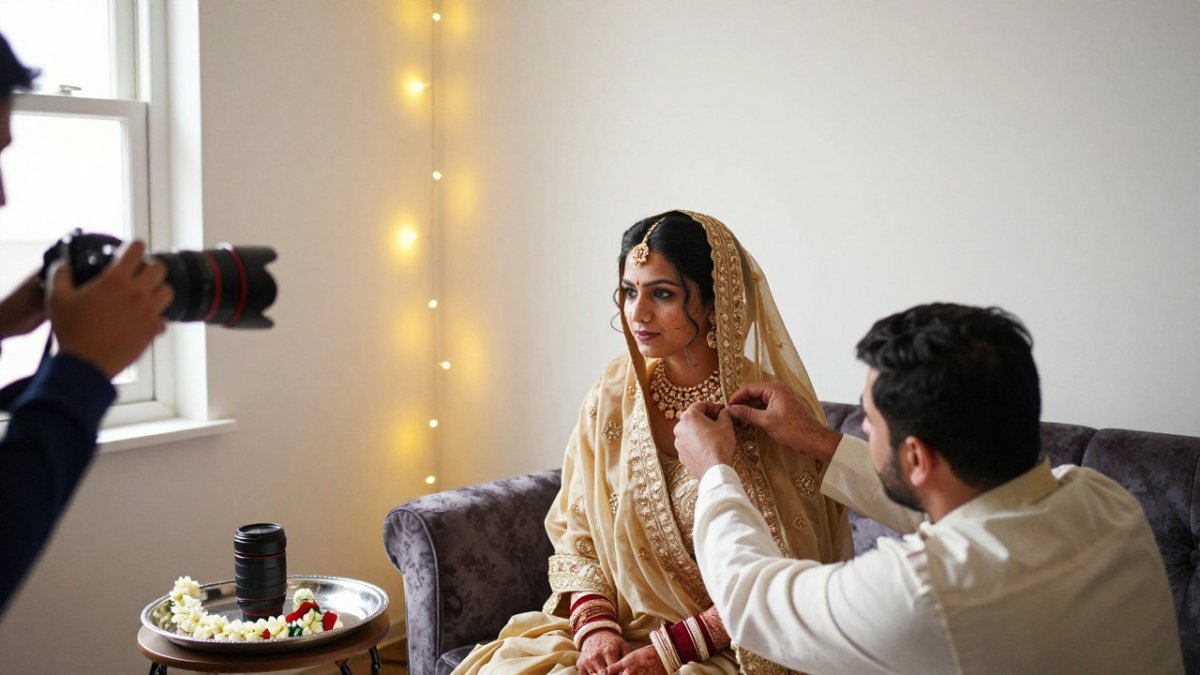
Documenting the nikah lets you keep a record of the moments that matter most. Khush Studio photographs Asian weddings with a discreet approach. Ask the studio how it would approach documenting a private nikah ceremony and respecting your privacy wishes.
Before you book, ask about:
- Which parts of the ceremony they will photograph or film
- How they handle guest privacy and online sharing
- Their approach to modest, respectful documentation
Pricing depends on coverage, dates and the level of documentation you want, so enquire directly with Khush Studio for a personalised quote.
Frequently Asked Questions
What do you need to arrange for a nikah ceremony?
A nikah needs a clear agreement between the couple, free consent from both partners, a wali where the couple's tradition requires one, at least two adult witnesses, an imam or officiant to conduct the ceremony, and an agreed mahr. Many couples also confirm the date, venue and marriage contract paperwork in advance. Because religious requirements vary between communities, check the specific expectations of your imam and family before fixing a date. Keep copies of the signed contract for your records.
How can you keep a nikah ceremony private?
Keep the guest list small, choose a private venue or home, and agree in advance who may take photographs and where those images may be shared. Ask guests not to post about the ceremony on social media until you say so. A discreet documentation approach, with photographers who understand privacy boundaries, helps keep the day personal. Agree these rules with both families before the invitations go out.
How long does a nikah ceremony usually take?
A straightforward nikah, including the consent, the khutbah, the signing of the contract and the dua, is often short, often short. Time for arrival, seating, photographs and any refreshments adds to the total. Confirm the exact running order with your imam, because the length depends on the sermon, the number of witnesses and how the contract is signed.
What is the difference between a nikah and a legal marriage in the UK?
A nikah is a religious ceremony and does not by itself create a legal marriage in England and Wales. To be legally married, couples must complete a civil marriage registered with the local authority. Many couples hold a civil ceremony alongside a nikah, or register their marriage separately. Speak to the local register office about notice periods and documents you will need.