 How-to
How to Prepare for Wedding Photography: A Complete Guide
Last Updated: November 22, 2026
Quick Summary
Prepare for wedding photography by building a time-stamped timeline with your photographer, packing a detail box, and sending a one-page shot list of rituals, family groups and details. Add 15 minutes of buffer to every transition, practise your entrance and first dance, and agree a backup indoor location and privacy preferences in advance.
- A professional photography session usually runs 60 to 90 minutes of guided portraits, family groups and detail shots.
- Share your shot list and family photo list about four weeks before the wedding.
- Add 15 minutes of buffer to every transition to prevent timeline gaps.
- Schedule family groups before the ceremony, largest households first, so relatives do not drift away.
- Book your hair and makeup trial at least a month before the wedding and check the look in daylight.
Table of Contents
- Why Preparation Makes or Breaks Your Wedding Photography
- Your Wedding Photography Checklist for Couples
- Building a Wedding Photography Timeline That Works
- How to Create a Wedding Photography Shot List
- What to Tell Your Wedding Photographer Before the Day
- Preparing for Getting Ready, Portraits, and Cultural Rituals
- Contingency Planning: Weather, Backup Locations, and Privacy
- Enquire About Your Wedding Photography Consultation
- Frequently Asked Questions
Why Preparation Makes or Breaks Your Wedding Photography
The best wedding photographs rarely happen by accident. They come from small decisions made weeks earlier: a buffer built into the schedule, a dupatta pinned in the right place, a family member briefed on where to stand during the Anand Karaj. The difference between a calm, flowing day and a frantic one almost always comes down to how well everyone prepared for wedding photography sessions.
This guide shows you exactly how to prepare, from the first consultation to the final portrait.
What to Expect from a Professional Photography Session
A professional photography session is a planned block of time, usually 60 to 90 minutes, where your photographer guides you through portraits, family groups and detail shots. You do not need to know how to pose.
Here is what a good session looks like:
- A short briefing before the camera comes out
- Gentle direction on where to stand, look and place your hands
- Natural prompts, not stiff commands
Nervous couples often worry most about this part. If that sounds like you, see how a relaxed session actually feels before the day arrives.
Your Wedding Photography Checklist for Couples
Think of this as your wedding photography checklist for couples: a simple list that covers the week before, the night before and the morning of. Work through it once, tick it off, and stop worrying.
| When | Task | Why It Matters |
|---|---|---|
| 4 weeks out | Share your shot list and family photo list | Avoids missed relatives |
| 2 weeks out | Confirm timings with every venue | Prevents gaps and overlaps |
| 1 week out | Pack the detail box and steamer | Keeps morning calm |
| 1 week out | Practise your first dance and entrance | Fewer nerves on camera |
| Night before | Charge phones, lay out outfits | No last-minute panic |
| Morning of | Eat a proper meal, drink water | Energy for a long day |
Plan every ritual with our Indian wedding photography checklist if you want a ready-made version with shot lists and multi-day timelines built in.
The Week Before: Packing and Practice
The week before is when small problems become visible. Pack a detail box for your photographer: invitations, jewellery, shoes, perfume and any heirlooms you want photographed.
Then practise. Walk through your entrance, your first dance and your seated poses. You will feel the difference on the day.
Watch out: tight underwear and unforgiving fabrics show lines in photographs. Choose smooth, breathable layers under your outfit and test the whole look in daylight first.
Building a Wedding Photography Timeline That Works
A wedding photography timeline is a written schedule that gives every part of the day a start time, a location and a person responsible. Because the schedule depends on how your photographer works, use it to clarify the fit between your timeline and your guide to choosing a wedding photographer.
Start with the fixed points: ceremony time, meal service and any religious readings. Then work backwards. Getting ready needs more time than most couples allow, especially with a large wedding party and several outfit changes.
A Time-Stamped Template You Can Adapt
Use this as a starting frame and adjust to your ceremony time.
| Time | Block | What Happens | Who Is Needed |
|---|---|---|---|
| 07:30 | Detail shots | Invitations, jewellery, shoes, perfume, heirlooms | Photographer only |
| 08:00 | Getting ready, one partner | Hair and makeup finishing, outfit being pinned | Photographer, one assistant |
| 09:30 | Getting ready, other partner | Outfit, turbans, dupattas, final touches | Second shooter |
| 10:30 | First look or private portraits | Couple portraits before guests arrive | Couple, photographer |
| 11:15 | Family groups | Largest households first, then smaller groups | Named family members |
| 12:00 | Ceremony | Rituals, readings, vows | Everyone |
| 13:30 | Drinks reception | Candid coverage, detail shots of decor | Photographer |
| 14:30 | Couple portraits | 20-30 minutes in a second location or garden | Couple, photographer |
| 15:30 | Meal service | Speeches, table details | Photographer |
| 17:00 | Golden-hour portraits | Soft light, 15 minutes | Couple, photographer |
| 18:00 | First dance and evening | Dance floor, candid coverage | Everyone |
The Sequencing Rules That Prevent Gaps
- Add 15 minutes of buffer to every transition. Travel between venues, outfit changes and family wrangling always take longer than planned.
- Keep portraits to one location where possible. Moving a couple and a photographer between three spots eats 40 minutes you will not get back.
- Schedule family groups before the ceremony, not after. After the ceremony, guests want to congratulate you and relatives drift towards the drinks reception.
Watch out: a timeline that looks generous on paper can still fail if the getting-ready room is crowded. Every extra person in the room adds noise and delay, so agree in advance who stays and who gets ready elsewhere.
What to Do Before, During and After the Session
A unified checklist covering the whole session is the part most guides leave out. Use this three-part version alongside the timeline.
Before the session (the week prior):
- Confirm the timeline with every venue and share it with the wedding party.
- Send the shot list and family group list to your photographer.
- Pack the detail box and steamer, and test the full outfit in daylight.
During the session:
- Assign one person to hold the outfit clear of the floor and one person to manage the family group list.
- Keep water and a touch-up kit within reach.
- Give the photographer a five-minute warning before any ritual begins.
Immediately after the session:
- Confirm the image delivery date and format in writing.
- Note any moments you want prioritised in the edit.
- Ask how long the gallery stays online and whether downloads are included.
If your day spans several venues, read our advice on handling multi-location logistics so travel time never eats into photo coverage.
How to Create a Wedding Photography Shot List
A wedding photography shot list is a short document naming the specific moments and people you cannot imagine missing. Keep it to one page. A useful shot list covers four things: must-have rituals, family groupings, detail shots and any sensitive moments to handle discreetly.
The Four-Part Structure
- Rituals in order. List the key rituals with the names of anyone leading them. For a Sikh ceremony, that means the Anand Karaj and the four laavan, with the names of the person conducting them. For a Nikah, note the order of the ceremony and who is signing the register.
- Family groups by household. Group family photos by household, largest first. Write each group as a single line with every name, so nobody is left waiting while the photographer works out who is missing.
- Details. Note mehndi, jewellery, shoes, invitations and any heirlooms. These are the shots that take two minutes on the day and are impossible to recreate later.
- Sensitive moments. Flag anything private, such as a quiet prayer before the Nikah or a moment with a grandparent who may not be able to stand for long.
A Worked Example
A one-page shot list for a Sikh wedding might read:
- Rituals: Milni (name the two families), Anand Karaj, four laavan, Ardas, Karah Parshad.
- Family groups: Immediate family of the bride (12 people), immediate family of the groom (14), grandparents and great-grandparents (6), siblings and cousins (18), extended family (30).
- Details: Mehndi on both hands, choora, kaleere, kirpan, shoes, invitation suite, floral decor.
Send it to your photographer well before the wedding.
Inclusive and Comfortable Posing
A shot list is also the right place to note comfort and access needs, which most guides ignore. Add a short section covering:
- Mobility: Note anyone who uses a wheelchair, walking stick or frame, and whether they can stand for group photos or need seated arrangements.
- Sensory comfort: Flag guests who find flash or crowded rooms difficult, and agree quieter moments for them.
- Body-image concerns: Tell your photographer which angles or poses you would rather avoid. A good photographer will note this without discussion on the day.
Watch out: a shot list that runs to three pages will be ignored on the day. If you cannot fit it on one side of A4, cut detail shots before you cut family groups.
What to Leave Off the List
Do not list every candid moment. Candid coverage works because the photographer is watching, not ticking boxes. Keep the list for the shots that need people assembled or access arranged, and let the rest of the day unfold.
What to Tell Your Wedding Photographer Before the Day
Tell your photographer three things: what matters most, what must be handled sensitively, and what you do not want. That conversation is worth more than any list.
Be specific. Explain the significance of each ceremony so nothing is missed. Say which moments are private. Mention family dynamics that might affect group photos.
If you are worried about this, read our guide to respecting cultural rituals and share it with your photographer.
Preparing for Getting Ready, Portraits, and Cultural Rituals
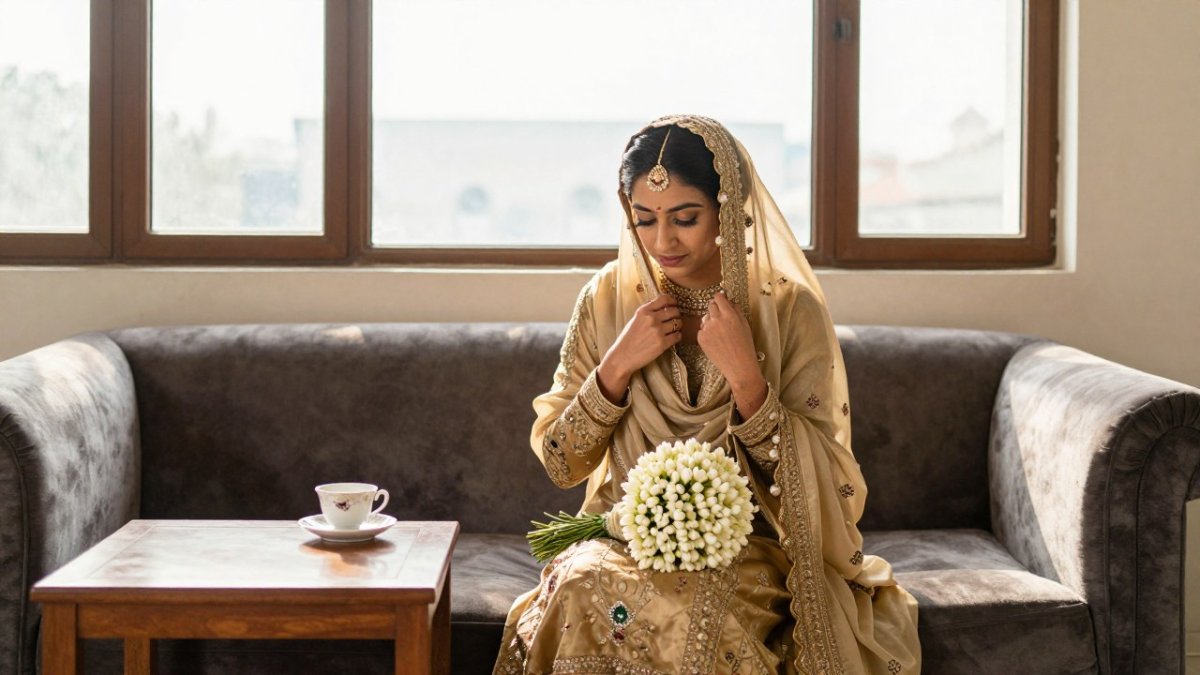
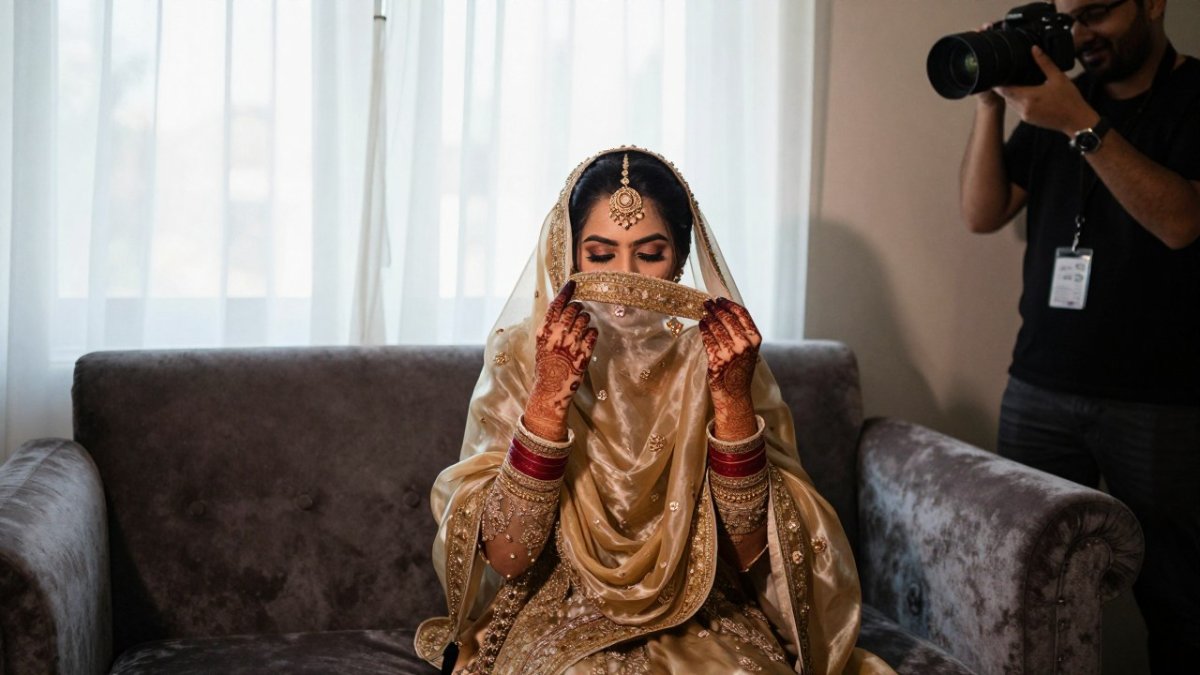
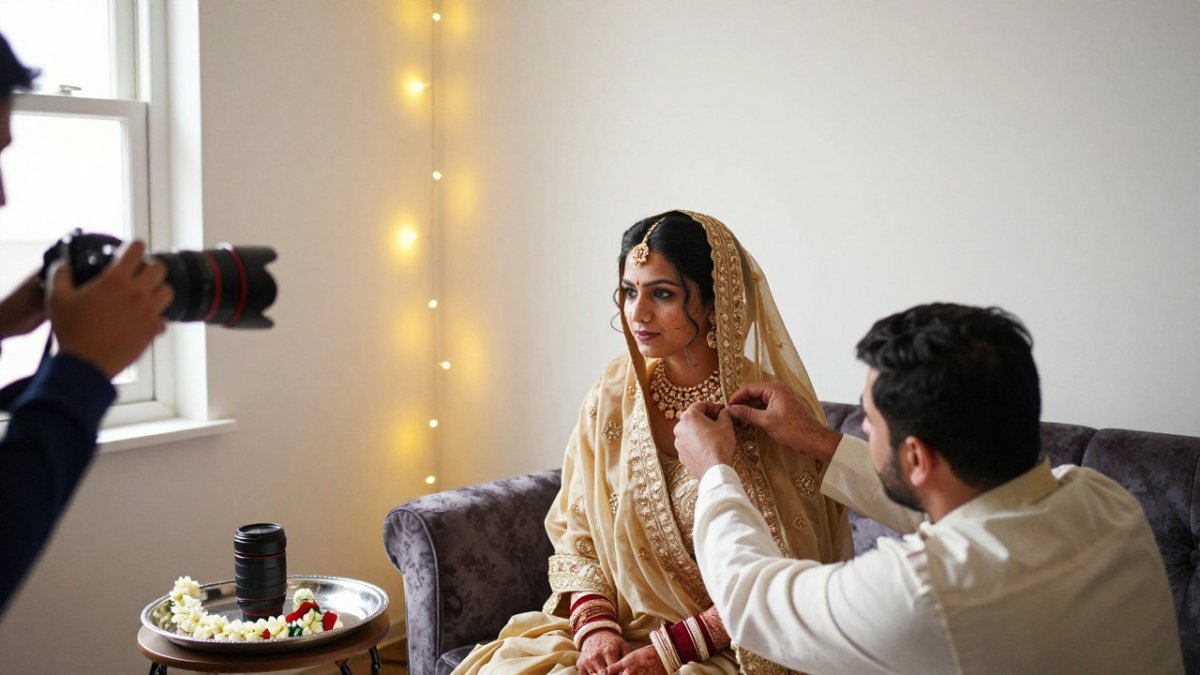
Getting ready sets the tone for every photograph that follows. Keep the room tidy, keep the light soft, and keep the number of people in the room small.
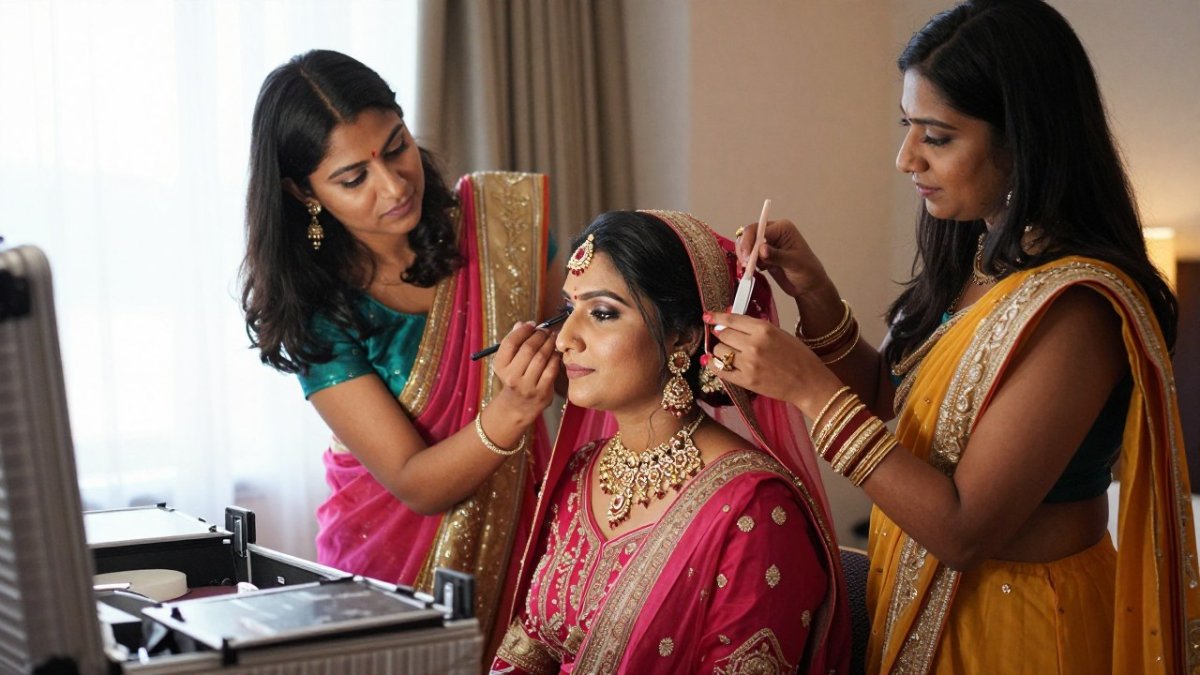
The woman is British.
Hair, Makeup, and Outfit Planning
Book your hair and makeup trial at least a month before the wedding, and photograph the finished look in daylight. What looks right in a mirror can look flat on camera.
Plan these details early:
- A touch-up kit with powder, lipstick and blotting papers
- Pins for dupattas, turbans and veils
- A steamer and a spare pair of shoes
Contingency Planning: Weather, Backup Locations, and Privacy
Every wedding needs a plan B. Check the forecast a week out and agree a backup location with your photographer in advance: a covered courtyard, a hotel lobby or a bright indoor room.
Agree your privacy preferences too. Tell your photographer which images must never be shared publicly, and confirm who may appear in your gallery. This is your day and your choice.
Enquire About Your Wedding Photography Consultation
A calm wedding day starts with one honest conversation. Bring your questions, your shot list and your worries.
At Khush Studio, we bring over 20 years of experience with Indian, Sikh and Muslim weddings, a discreet approach that respects private moments, and tailored packages built around your ceremonies. Get in touch to claim your free consultation and secure your date.
Preparing well is the difference between photographs you like and photographs you treasure for decades. Start with the timeline, build the shot list, and brief your photographer properly.
Get started with Khush Studio and capture every ritual with the care it deserves.
Frequently Asked Questions
How do you prepare for a wedding photography session?
Start with a conversation with your photographer about the schedule, key rituals, and family groupings. Build a wedding photography checklist covering outfits, accessories, touch-up kits, and a meal plan for the day. Confirm your wedding photography timeline so getting ready, portraits, and ceremony coverage all have realistic slots. Practise posing together in natural light, and pack a small bag with water, snacks, and a sewing kit. Good preparation keeps the day calm and gives your photographer room to capture genuine moments.
What should be included in a wedding photography shot list?
A useful wedding photography shot list covers family portraits, wedding party groupings, detail shots of outfits and jewellery, key ritual moments, and candid coverage of guests. List names and relationships for group photos so nobody is missed. Note any cultural moments you want prioritised, such as the Anand Karaj or Nikah. Keep the list to the essentials and share it at least two weeks before the wedding so your photographer can plan the wedding photography timeline around it.
How can you feel more relaxed in front of the camera on your wedding day?
Book a pre-wedding shoot or engagement session so you experience posing before the main event. On the day, slow down, breathe, and focus on each other rather than the lens. Tell your photographer what makes you uncomfortable so they can adjust their approach. Schedule buffer time in your wedding photography timeline so portraits do not feel rushed. Staying present and hydrated helps far more than rehearsing poses, and experienced photographers will guide you gently throughout.
How do you plan photography around cultural wedding traditions?
Share the order of ceremonies and their significance with your photographer well in advance. Explain which moments matter most, such as the Milni, Anand Karaj, or Walima, and where they will take place. Provide a wedding photography timeline that accounts for multi-day events and venue changes. Discuss sensitive moments, like getting ready coverage, so the team knows your preferences. A photographer experienced in Asian weddings will already understand the flow, but your input ensures nothing important is missed.