 blog
Asian Wedding Venues: A 2026 UK Comparison Guide
Table of Contents
- How to Compare Asian Wedding Venues in the UK
- Banqueting Halls, Heritage Estates and Reception Suites Compared
- Asian Wedding Venue Costs: What Drives the Price
- Asian Wedding Venue Packages and What They Include
- Asian Wedding Venues for Large Weddings
- Your Asian Wedding Venue Checklist Before You Book
- Frequently Asked Questions
Last Updated: October 21, 2026
How to Compare Asian Wedding Venues in the UK
Choosing between Asian wedding venues comes down to four things: capacity for your guest numbers, a layout that works for both ceremony and reception, catering control, and the dates available.
At Khush Studio, we have photographed Asian weddings for more than twenty years, from intimate Nikahs to three-day celebrations spread across multiple sites.
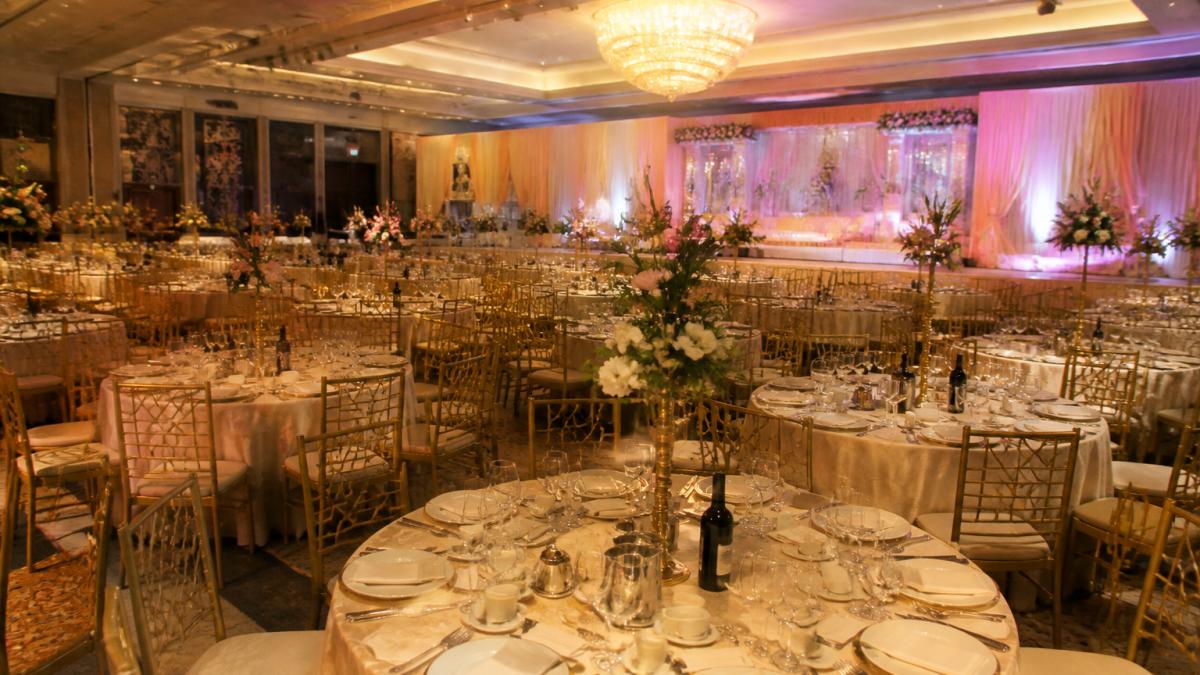
One thing most couples get wrong: they book on how a room looks empty. An empty banqueting suite photographs beautifully.
What Makes a Venue Suited to Indian, Sikh and Muslim Weddings
A venue suited to an Indian, Sikh or Muslim wedding is one that gives you control over catering, flexible timings, space for a religious ceremony and room for the traditions that run alongside it.
Look for these practical markers:
- Catering freedom. Many couples need halal catering or a specific caterer. Check whether the venue allows external caterers or dry hire, and whether its own kitchen is halal-certified.
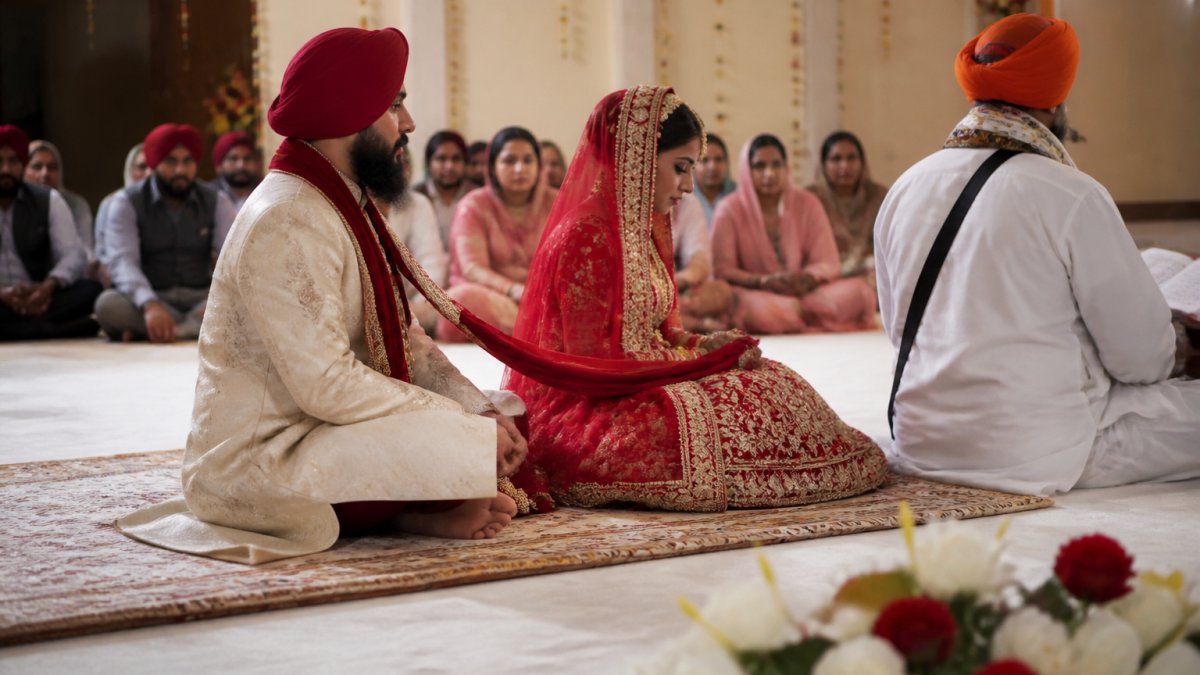
- Ceremony space. An Anand Karaj needs a clear area for the Guru Granth Sahib and a path for the couple. A Nikah needs a setting where the contract can be witnessed properly.
- Timing flexibility. Multi-day celebrations often run late. Confirm the venue's licence hours and whether an extension is possible.
According to guidance on wedding venue licensing from local authorities, venues must hold the correct premises licence for civil ceremonies and regulated entertainment, so confirm this early.
Banqueting Halls, Heritage Estates and Reception Suites Compared
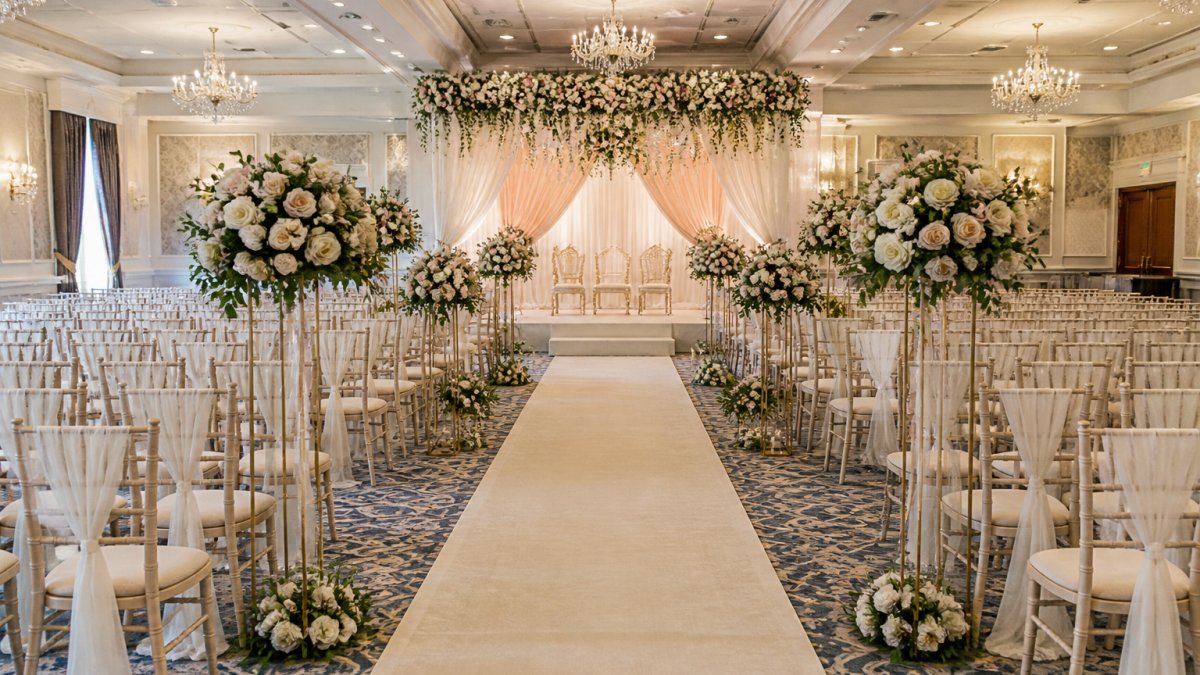
Three venue types dominate the market, and each suits a different kind of celebration. A banqueting hall gives you scale and a blank canvas. A heritage estate or country house gives you grounds, architecture and atmosphere.
Here is how they stack up:
| Venue type | Best for | Strengths | Watch out for |
|---|---|---|---|
| Banqueting hall | Large weddings, 300+ guests | High capacity, flexible layouts, often dry hire | Can feel impersonal without styling |
| Heritage estate / country house | Intimate to mid-size weddings | Grounds, character, photography backdrops | Tighter capacity, higher styling costs |
| Hotel reception suite | Out-of-town guests | Accommodation and parking on site | Less control over catering and timings |
Capacity Explained by Event Layout
Capacity is not one number. It is a set of numbers that change with your layout. A hall that seats 350 banquet-style may hold only 200 comfortably once you add a stage, a dance floor and a buffet.
Ask for capacity by layout: theatre-style for the ceremony, round tables for the reception, and standing for the evening. Then subtract space for the stage, the dance floor and any food stations.
Location, Parking and Travel Time
Location decides who comes and how relaxed they arrive. A venue twenty minutes from the motorway network with generous parking will always beat a prettier one that forces guests into a difficult town centre on a Saturday.
Check travel time from the main clusters of your guest list, parking capacity, and whether the venue has accessible routes and step-free access. For multi-day weddings, proximity to hotels matters as much as the venue itself.
Asian Wedding Venue Costs: What Drives the Price
Asian wedding venue costs depend on five factors: the day of the week, the season, the guest numbers, the length of hire and whether catering is in-house or external. A Saturday in peak season at a heritage estate will always cost more than a Friday in November at a banqueting hall. What most venue listings never tell you is how those factors translate into a comparable number, so here is the framework we use when couples ask us to help them budget.
The five cost drivers, in order of impact
- Day of the week. Saturday is the default for the reception and carries the highest hire fee. Friday and Sunday typically sit 15-30% lower at banqueting halls, and midweek dates can be lower still. If your religious ceremony falls on a weekday, hold the ceremony then and negotiate the reception separately.
- Season. May to September is peak. November to February is quiet, and venues are more willing to flex on minimum spend. If your date is fixed by a religious calendar, ask what the same room costs two weeks either side, the difference is often the deposit.
- Guest numbers. Most venues price per head for catering and a flat hire fee for the room. The per-head figure is where the budget actually lives: a £10 difference per cover at 350 guests is £3,500.
- Length of hire. A standard evening hire runs five to six hours. Multi-day celebrations, or a ceremony plus reception in one day, need extended access and setup time, which is usually charged separately.
- Catering model. In-house catering bundles food, staff and often linen into one per-head price. Dry hire gives you the room only and you bring in caterers, staff, crockery and linen, cheaper on paper, more work in practice.
What a written quote should break down
Ask every venue for a written breakdown covering:
- Hire fee, the room, separately from catering.
- Catering minimum spend, the figure you must reach on food and drink, not the hire fee.
- Service charge, often 10-15% and frequently forgotten in comparisons.
How to build a like-for-like comparison
Create a single spreadsheet with one column per venue and one row per cost line above. Enter the total at your actual guest count, not the maximum, and add the cost of anything the package excludes (caterer, décor, cake, DJ). The venue with the lowest hire fee is rarely the lowest total. A dry-hire hall at a lower room rate can overtake a hotel package once you add staff, linen and service charge, or it can undercut it comfortably if you have a caterer you trust.
Because pricing is quoted per venue and per date, we do not publish figures here. Use the framework above to force every quote into the same shape, and compare totals, not headlines.
Asian Wedding Venue Packages and What They Include
An Asian wedding venue package bundles the hire with extras, and the contents vary enormously. A typical package covers room hire, tables and chairs, linen, basic lighting, a stage and a set number of covers.
Build your own comparison by listing what each package includes and pricing the gaps. If a package excludes catering, add your caterer's quote. If it excludes décor, add that too.
Asian Wedding Venues for Large Weddings
Large weddings need venues built for volume, and not every hall is. For 400 guests or more, prioritise capacity by layout, parking, separate entrances for the couple and the baraat, and a kitchen that can serve that many covers hot. The headline capacity on a venue's website is a marketing number; the number that matters is how many guests the room holds once your stage, dance floor, buffet and bar are in place.
Capacity by layout, not by headline
Ask for capacity in each configuration you will actually use:
- Ceremony, theatre-style, rows of chairs facing the stage or the Guru Granth Sahib. This is usually the highest seated capacity.
- Reception, round tables, banquet rounds of 10 or 12 with a dance floor and stage. Expect this figure to be 20-30% lower than theatre-style.
- Evening, standing and mixed, high tables and a dance floor. Often higher than banquet but limited by fire regulations and licensed capacity.
Then subtract the space your event actually needs: a stage for the couple, a dance floor large enough for a baraat to enter and for guests to join, a buffet line or food stations, and a bar. A hall that seats 350 banquet-style may hold only 200 comfortably once those are added. That figure, not the maximum, is your real guest capacity.
Flow and service at scale
At 400-plus, how guests and food move matters more than floor area.
- Service points. Ask how many buffet lines or food stations the venue can run. One line for 400 guests creates a queue that eats into your evening. Two or three service points, or plated service, change the experience.
- Separate entrances. A baraat arrival needs a route in that does not collide with the reception setup or the bride's party. Ask whether the venue has a separate entrance or a holding area for the procession.
- Ceremony-to-reception turnaround. If both happen in the same room, ask how long the venue needs to reset and who provides the staff. A two-hour turnaround for 400 covers is a different operation from a one-hour one.
Parking, arrivals and guest comfort
Large weddings live or die on arrivals. Check parking capacity against your guest count (not the venue's maximum), whether there is overflow parking or a shuttle arrangement, and how the car park handles a baraat procession and dhol players. For winter weddings, confirm there is covered or indoor space for guests waiting to enter.
Multi-day and extended celebrations
If your celebration runs across more than one day, ask about setup time between events, whether the venue holds the room for the full period, and how storage works for décor and supplies. Multi-day bookings are often priced differently from single-day hire, so get the total in writing before you commit.
Your Asian Wedding Venue Checklist Before You Book
Work through this checklist before you sign, and take it to every viewing. It turns a pleasant afternoon into a real comparison.
- Capacity confirmed by layout at your actual guest count
- Catering policy: in-house, external, or dry hire
- Halal catering options and kitchen certification confirmed
Cultural and Ceremony-Specific Questions to Ask
Ask these before booking:
- Can we hold the religious ceremony on site, and are there any restrictions?
- Is there a private space for the bride's preparation and for the women getting ready?
- Can the venue accommodate a baraat arrival and a dhol player?
- Are there any restrictions on candles, flames or food brought in for rituals?
- What is the policy on multi-day bookings and setup time between events?
Frequently Asked Questions
What should you look for in an Asian wedding venue?
Start with capacity by layout, not headline numbers: a seated dinner and a standing reception hold very different guest counts. Check whether the venue allows the ceremonies you need, such as an Anand Karaj or Nikah, and whether there is a separate space for each. Confirm catering rules, including whether you can bring in halal or vegetarian caterers, and ask about dry hire versus in-house packages. Parking, accommodation nearby and travel time between venues across a multi-day schedule matter just as much as the room itself.
How much do Asian wedding venue costs typically depend on?
Asian wedding venue costs depend on guest numbers, the day of the week, the season, and whether you book dry hire or a full package. A Saturday in peak summer with a seated dinner for 500 guests will cost far more than a midweek reception for 150. Extras such as décor restrictions, late licences, and additional ceremony spaces add to the total. Ask every venue for a written breakdown covering hire, catering, staffing and any minimum spend, so quotes are genuinely comparable.
Can Asian wedding venues accommodate different ceremonies on the same day?
Many can, but the layout decides how smoothly it works. A venue with a separate ceremony room and reception suite lets you move guests without a full reset, while a single hall may need a turnover period of an hour or more. For a same-day Anand Karaj followed by a reception, confirm the changeover time, who handles the room reset, and whether your décor team can access the space early. Ask for the schedule in writing before you sign.
How far in advance should you book an Asian wedding venue?
For large weddings in peak season, booking 12 to 18 months ahead is common, and popular banqueting halls can go earlier. Multi-day celebrations need venues that can hold dates back to back, which narrows availability further. If your preferred dates fall around peak wedding periods, start viewings as soon as your guest list is roughly settled. Have a shortlist of two or three venues so a single unavailable date does not derail your planning.
Comparing venues is the easy part. Capturing what happens inside them is where experience counts. At Khush Studio, we have spent over twenty years documenting Indian, Sikh and Muslim weddings across the UK and abroad, with a discreet approach that respects every private moment and a tailored package built around your ceremonies. If you want your venue choice remembered properly, enquire with us and we will talk through how we cover your day.