 How-to
What Are the Best Muslim Wedding Photography Ideas?
Last Updated: November 5, 2026
Quick Summary
The best Muslim wedding photography ideas start with respect: plan halal poses, quiet ceremony coverage and privacy agreements around the Nikah rather than interrupting it. At Khush Studio, we plan portraits around the day, not the day around the portraits, so your Muslim wedding photography feels calm and looks beautiful.
- Halal poses include staggered standing, walking, seated, twirl and henna hand-detail shots.
- Position the photographer at the side of the room, not the front, during the Nikah.
- Ask the officiant where the photographer may stand and which moments are private.
- Put consent in writing: who approves images and whether they can be used in a portfolio.
- Map Mehndi, Nikah and Walima first, then build the shot list around light and energy.
Table of Contents
- Muslim Wedding Photography Ideas That Respect the Day
- Halal Wedding Poses for Natural, Modest Portraits
- Nikah Photography Ideas for the Ceremony Itself
- Modest Wedding Photography: Consent, Privacy and Image Sharing
- Muslim Wedding Photography Tips for the Whole Timeline
- Covering Women-Only, Men-Only and Mixed-Gender Events
- Lighting and Equipment Advice for Indoor Venues
- Briefing Khush Studio on Your Photography Preferences
- Frequently Asked Questions
Muslim Wedding Photography Ideas That Respect the Day
Muslim wedding photography ideas work best when they start with respect. A Nikah is a sacred contract, not a photo set, and the images that matter most are the ones taken without disturbing the moment. At Khush Studio, we have photographed Asian weddings for over 20 years, and we know that the best shots come from planning, not posing.
This guide covers halal poses, ceremony coverage, privacy, and a shot list you can hand to any photographer. To see the studio's actual Muslim wedding photography service and portfolio, explore Muslim Wedding Photography and Videography in West Midlands. Below, we show you exactly how to plan a Muslim wedding photography session that feels calm on the day and looks beautiful in the album.
Here is the core tension most guides miss: the more you chase dramatic images, the more you interrupt the ceremony. The solution is to plan the portraits around the day, not the day around the portraits.
Halal Wedding Poses for Natural, Modest Portraits
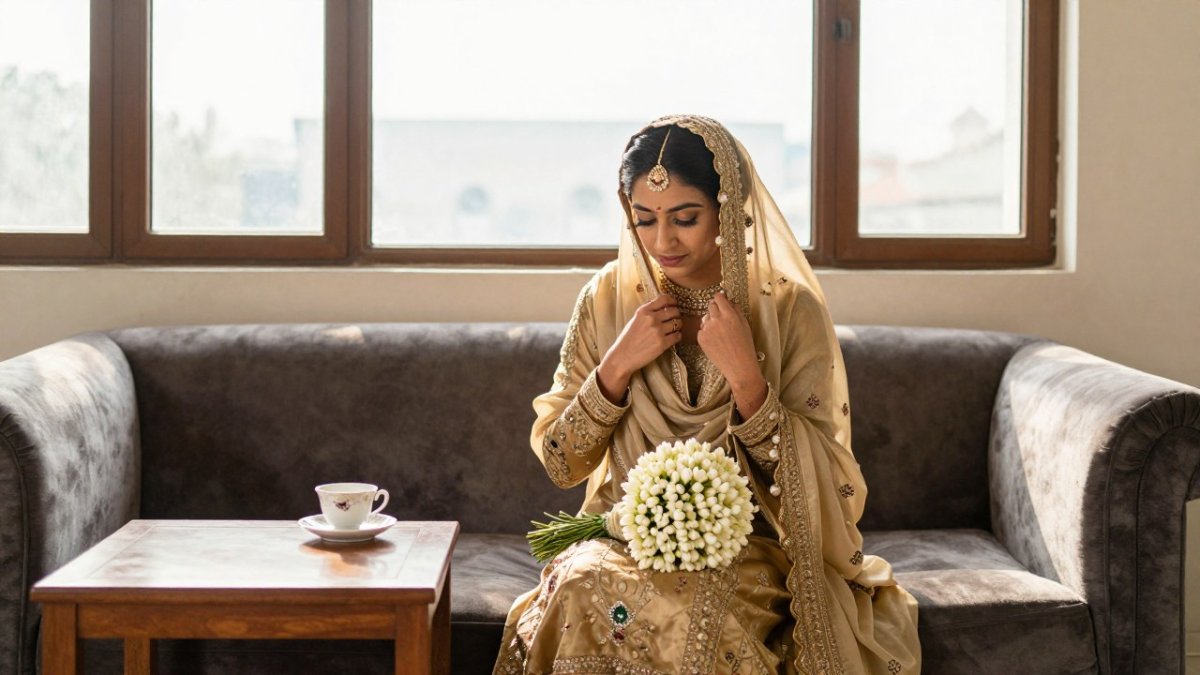
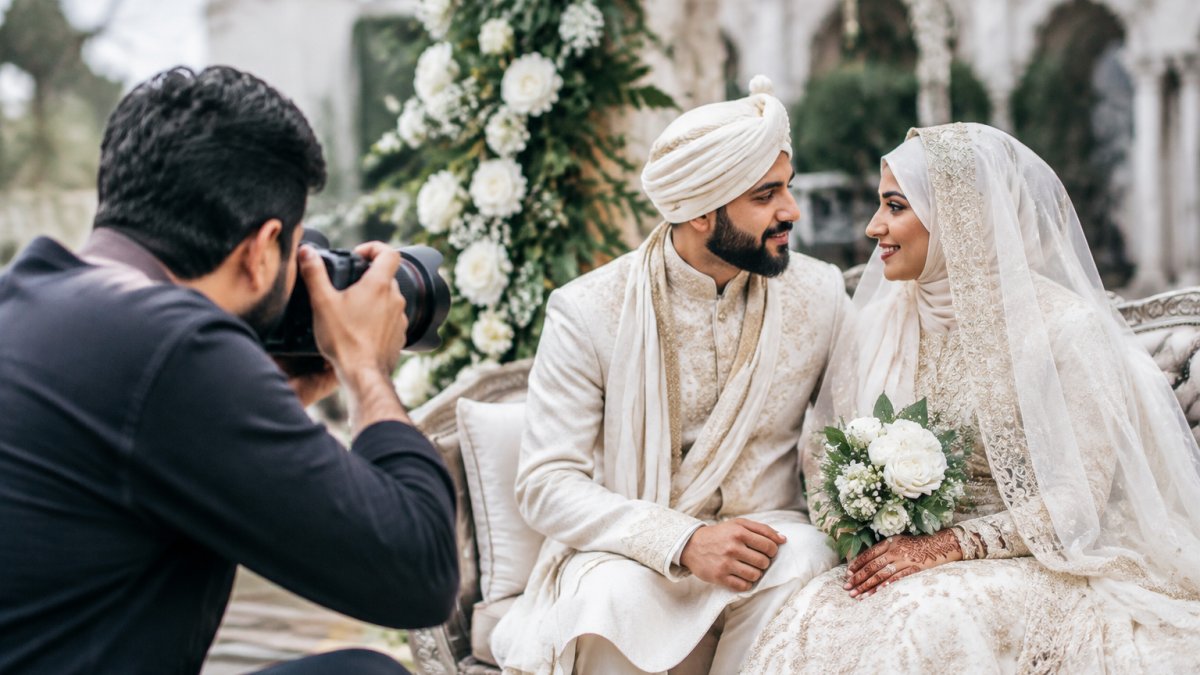
Halal wedding poses are about closeness without compromise. Modest wedding photography does not mean stiff or distant images. It means poses that respect modesty preferences while still showing warmth between the couple.
Start with these approaches:
- Staggered standing poses: the groom stands slightly behind and to one side, hands relaxed, both facing the camera.
- Walking shots: the couple walks toward the photographer, holding hands or with a small gap between them.
- Seated poses: both seated on a low bench or sofa, angled toward each other, eyes meeting.
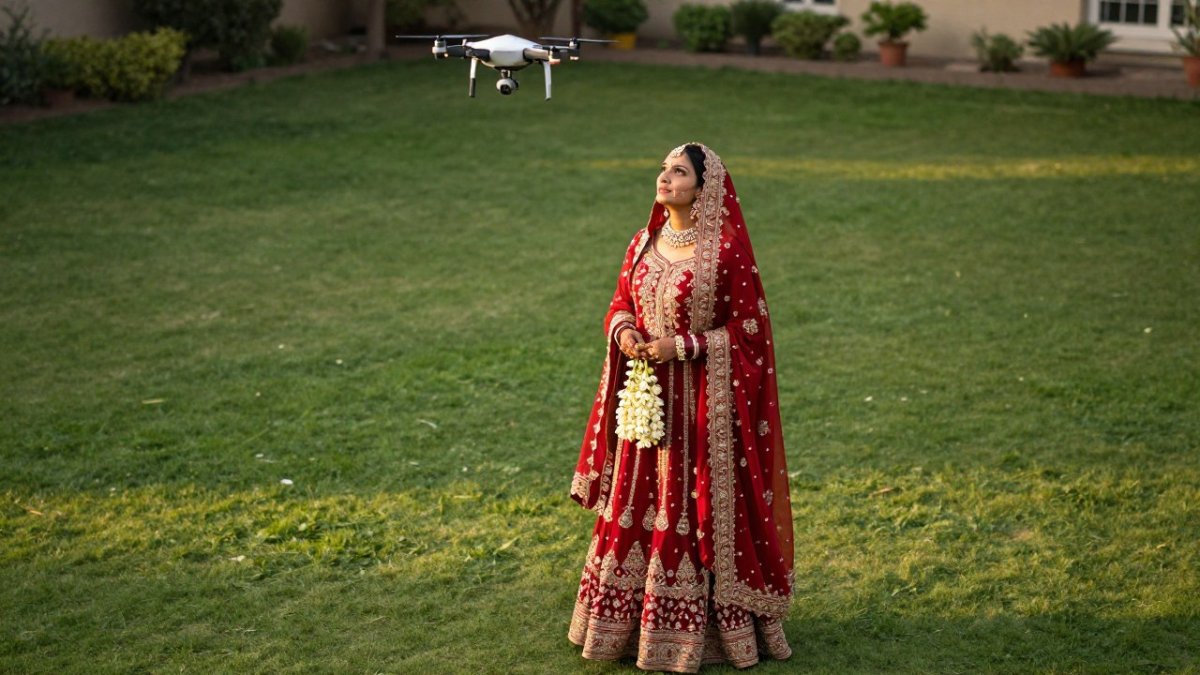
- Twirl shots: the bride's dupatta or lehenga caught mid-movement, groom watching from a respectful distance.
- Hand-detail shots: henna-covered hands resting together, no faces needed.
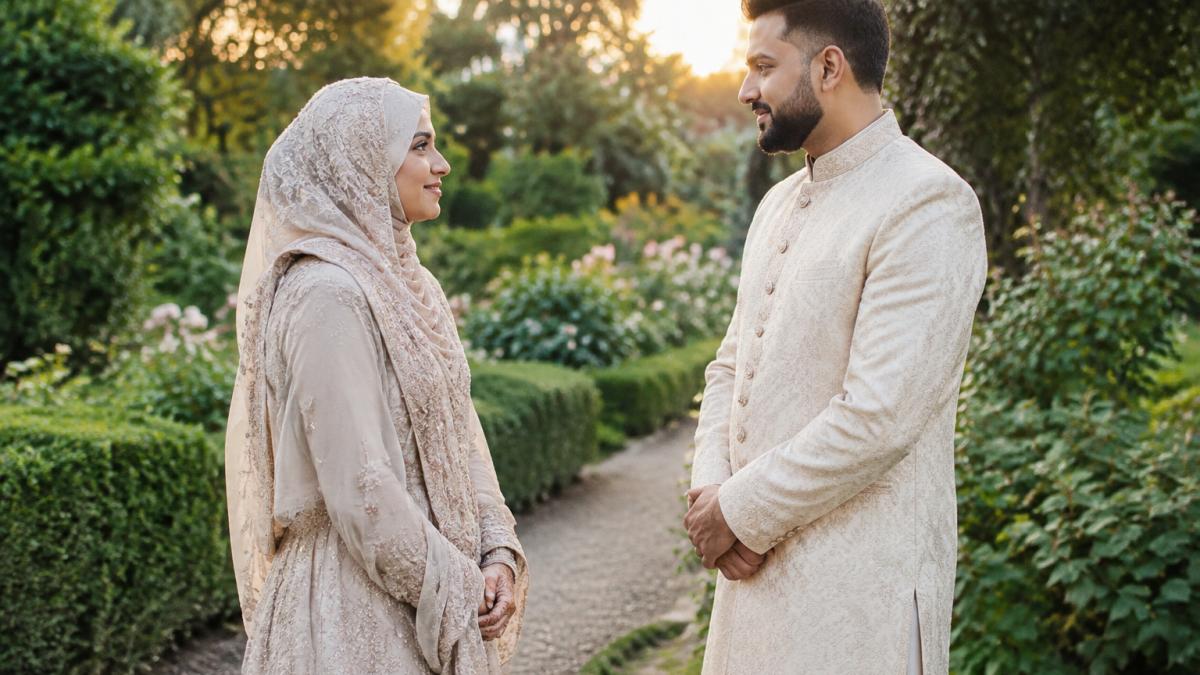
Standing, Walking and Seated Poses That Work
Standing poses give you the cleanest compositions. Place the couple against a plain backdrop or a garden wall, and let natural light do the work. Walking shots add movement and feel candid, which suits couples who dislike posing. Seated poses work well for older relatives joining the frame, and they keep everyone comfortable during long portrait sessions.
A common mistake is crowding the couple. Leave space between them if that matches their modesty preferences, and let the photographer use a longer lens to compress the frame.
Nikah Photography Ideas for the Ceremony Itself
Nikah photography ideas should focus on the contract, the witnesses, and the quiet moments around them. The ceremony is short and often intimate, so preparation matters more than improvisation. A pre-agreed plan with the officiant usually gives the most reliable Nikah coverage, rather than reacting on the day.
Key moments to capture:
- The bride and groom seated separately before the ceremony, with family around them.
- The imam or officiant leading the vows and explaining the contract terms.
- The signing of the Nikah contract, including the witnesses' signatures.
- The exchange of rings or gifts, if the family includes this.
- The first greetings between the couple after the ceremony.
- Duas and congratulations from family, especially grandparents and elders.
- The couple leaving the ceremony space together, if the family is comfortable with this being photographed.
Logistics: Where to Stand and What to Capture
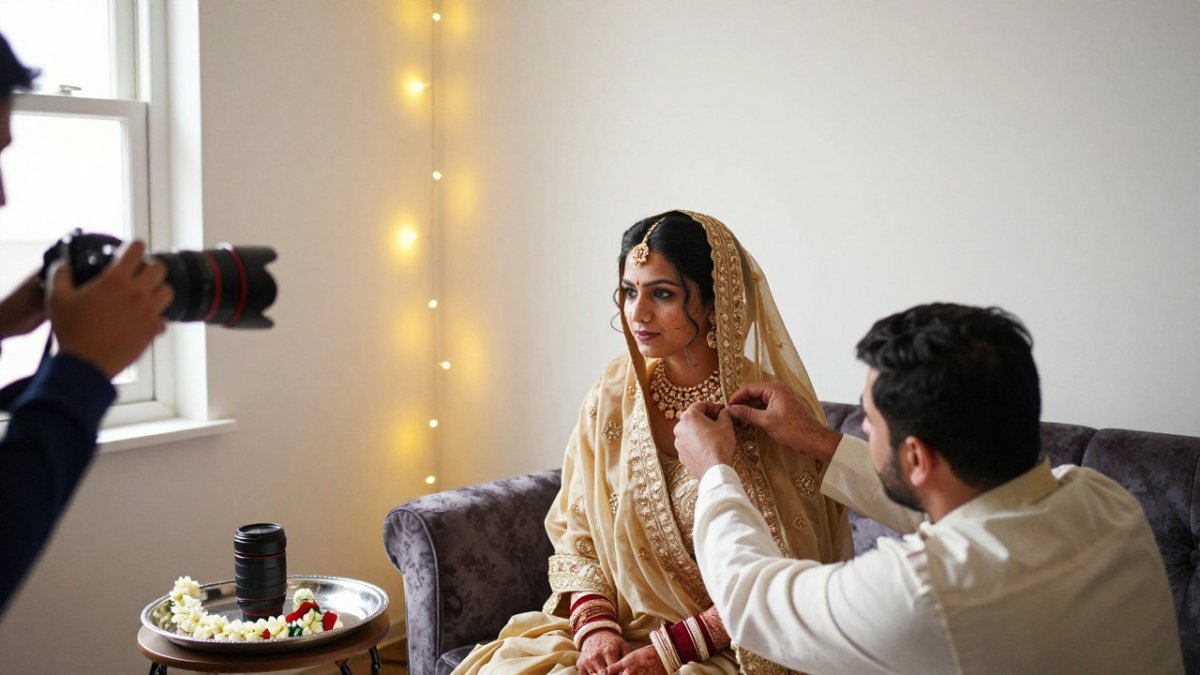
Position the photographer at the side of the room, not the front. This keeps them out of the family's eyeline and lets them catch reactions from the guests. Use a quiet shutter mode and avoid flash during prayers. If the venue allows it, a second camera angle from the back of the room gives you coverage without moving.
Before the ceremony, ask the officiant three questions: where the photographer may stand, whether movement is permitted during the vows, and which moments should not be photographed. Officiants often ask for no movement during the contract reading and no flash during dua. Write these answers down and share them with the photographer in advance.
Watch out: walking through the centre of the room during the vows is the fastest way to ruin a solemn moment. Brief the photographer on the room layout before the ceremony starts, and agree a hand signal with the officiant for when photography should pause.
For families who want the ceremony covered without intrusion, consider a two-camera plan: one photographer at the side for reactions and one at the back for wide shots. This avoids the need for anyone to cross the room mid-ceremony. If the venue is small, a single photographer with a longer lens at the side is usually enough.
A softly lit room keeps the Nikah signing intimate while preserving the details of the ceremony, and thoughtful reception lighting ideas can carry that same warmth into the celebration afterward.Modest Wedding Photography: Consent, Privacy and Image Sharing
Consent is the foundation of modest wedding photography. Before the wedding, agree on what can be photographed, who can see the images, and where they can be shared. Some families want no images of the bride before the ceremony. Others want women-only spaces kept completely private.
Put the agreement in writing:
- Which events allow photography
- Whether a female photographer is required for bridal prep
- Who approves images before they go online
- Whether any images can be used in a portfolio
- How images are stored and for how long
If privacy during the Nikah matters to you, our guide on how to respect privacy during a Nikah ceremony explains how to brief guests and photographers so the private moments stay private.
Muslim Wedding Photography Tips for the Whole Timeline
Muslim wedding photography tips only work if they match the timeline. Multi-day celebrations spread across several venues need a plan, not a wish list. Map the events first: Mehndi, Nikah, Walima, and any family gatherings in between.
Build the shot list around light and energy. Mehndi suits candid, colourful images. The Nikah needs quiet, respectful coverage. The Walima is where you can be bolder with group portraits and celebration shots. Assigning a rough time budget to each stage helps the photographer know where to prioritise.
A Shot List Organised by Wedding Day Timeline
| Stage | Key Shots | Timing | Practical Notes |
|---|---|---|---|
| Bridal prep | Hijab styling, henna hands, jewellery details, dress hanging | Morning, before guests arrive | Agree in advance whether a female photographer is required; keep the room private |
| Mehndi | Candid dancing, henna application, family groups, detail shots of decorations | Afternoon or evening | Use available light where possible; flash can flatten colourful decor |
| Nikah | Contract signing, vows, duas, first greetings, witness signatures | Ceremony hour | Position at the side; no flash during prayers; coordinate with the officiant |
| Portraits | Couple poses, family portraits, bridal solo, hand-detail shots | Golden hour if outdoor | Leave space between the couple if that matches their preferences |
| Walima | Reception entrance, speeches, group photos, cake cutting if included | Evening | Agree which parts of the room can be photographed |
For each stage, confirm three things with the family: who may be photographed, where the photographer may stand, and which moments are private. This is especially important for bridal prep and women-only gatherings, where a female photographer may be preferred.
Watch out: a shot list that ignores the venue's light will fail. Scout each space beforehand and note where natural light falls at the time of each event. If the Nikah is in a dim hall, plan for fast prime lenses and a quiet shutter rather than flash.
For a deeper look at documenting each tradition, our piece on documenting Muslim wedding traditions from Mehndi to Walima walks through the visual story of each event.
Covering Women-Only, Men-Only and Mixed-Gender Events
Separate events need separate plans. Women-only gatherings often allow more relaxed, joyful images because the atmosphere is private. Men-only events may focus on conversation, prayer, and group portraits. Mixed-gender receptions need careful positioning so the photographer respects the family's boundaries.
Practical guidance for each:
- Women-only: a female photographer is often preferred. Focus on candid laughter, henna, and dressing details.
- Men-only: group portraits, greetings, and ceremony coverage. Keep the camera unobtrusive.
- Mixed: agree in advance on which parts of the room can be photographed and which cannot.
A common mistake is assuming one photographer can cover every space. If the family wants strict separation, plan for two photographers or split coverage across the day.
Lighting and Equipment Advice for Indoor Venues
Indoor venues are where most Muslim wedding photography struggles. Halls are often dim, ceilings are high, and flash can feel intrusive during prayers. Preparation helps more than extra equipment.
Useful approaches for dim venues include:
- Use fast prime lenses to shoot in low light without flash.
Relying on auto settings in mixed lighting can cause colour problems. Test the room before the guests arrive.
Briefing Khush Studio on Your Photography Preferences
A good brief saves the day. Tell your photographer what matters, what is off-limits, and how you want to feel when you look at the album. A clear brief helps shape the whole approach.
Before you brief us, it helps to compare what different private Nikah photography packages include, so you know which questions to ask. Then share your timeline, your privacy rules, and your must-have shots with us.
When you are ready, get in touch to arrange a consultation and talk through your day.
Frequently Asked Questions
What are some respectful Muslim wedding photography ideas?
Focus on moments rather than forced poses: the bride's hands with henna, the groom adjusting his sherwani, a quiet glance during the nikah, and family greetings after the ceremony. Keep physical contact between the couple limited to what they are comfortable with, and let a female photographer cover the bridal preparation if that suits your family. A well-briefed photographer will build a shot list around your modesty preferences rather than a generic template.
What are halal poses for Muslim couples?
Halal wedding poses keep physical contact modest while still looking natural. Standing side by side with a small gap, walking together hand in hand only if you are comfortable, seated with a shared backdrop, or staggered poses where one partner stands slightly forward all work well. Twirl shots and candid laughter capture movement without closeness. Discuss any boundaries in advance so your photographer knows which poses to skip entirely.
How can we plan wedding photos around the nikah?
Treat the nikah as the anchor of your timeline. Agree with your photographer in advance where they can stand, whether they may photograph the contract signing, and which guests can appear in frame. Build in 15 to 20 minutes afterwards for couple portraits and family groups while everyone is still gathered. If the ceremony is in a separate room or behind a partition, plan a female photographer for the women's side so nothing is missed.
How can wedding photography respect modesty and privacy?
Share your preferences in writing before the day: who may be photographed, which images must never be shared publicly, and whether a female photographer is needed for preparation scenes. Ask how images are stored and how long they are kept. Khush Studio offers a discreet approach to documenting events.
Planning a Muslim wedding means trusting your photographer with moments that cannot be repeated. Khush Studio brings over 20 years of experience with Asian weddings, a discreet approach to ceremonies, and tailored packages built around your traditions. We would be honoured to document your day with the care it deserves. Get started with Khush Studio and preserve the moments that matter most.