 How-to
How Do You Respect Privacy During a Nikah Ceremony?
Last Updated: October 26, 2026
Quick Summary
Nikah privacy means controlling who sees, hears and shares the intimate moments of an Islamic marriage ceremony, from the bride's preparation room to a whispered conversation between spouses. Agree the rules in writing before the day: who may photograph, which rooms are off limits, and when images may be shared. Consent comes before capture, and the couple decides.
- Announce the marriage publicly after the ceremony, not during it, to balance openness with privacy.
- Send a one-page guest photography note with the invitation, not on the morning of the nikah.
- Name one person, often a sibling or cousin, to answer privacy questions on the day.
- Map the venue room by room and give the same map to venue staff and the photographer.
- Agree a code word or signal the couple can use if they want photography to stop.
Table of Contents
- Why Nikah Privacy Deserves a Plan, Not Just Good Intentions
- Consent and Mutual Agreement: The Foundation of a Private Nikah
- Balancing Publicising the Nikah With Personal Privacy
- Nikah Photography Guidelines for Guests
- Wedding Photography Consent Wording That Actually Works
- Nikah Photo Sharing Etiquette for Family and Friends
- Private Nikah Ceremony Photography: Planning for Sensitive Moments
- Enquire About Discreet Nikah Coverage With Khush Studio
- Frequently Asked Questions
Why Nikah Privacy Deserves a Plan, Not Just Good Intentions
Privacy during a nikah ceremony rarely fails because families do not care. It fails because nobody wrote anything down.
The distinction matters. Nikah privacy means controlling who sees, hears and shares the intimate moments of an Islamic marriage ceremony.
Most wedding advice treats privacy as a mood. In practice, it is a set of decisions. Who enters the bridal suite.
Consent and Mutual Agreement: The Foundation of a Private Nikah
A private nikah rests on consent, and consent starts with the couple themselves. Islamic marriage requires mutual agreement between bride and groom, witnessed and freely given.
If the couple has not agreed on what stays private, no guest list or photography plan will hold. Sit down together before the planning begins and answer three questions:
- What parts of the day are for family only?
- Which moments may be photographed, and which may not?
- Who is allowed to share images, and on which platforms?
Write the answers down. A short shared note between the couple and both families prevents most disputes.
Nikah privacy is not secrecy. It is a shared agreement about dignity, and it works best when everyone signs up to it early.
Balancing Publicising the Nikah With Personal Privacy
Islam encourages publicising the nikah, announcing the marriage so the community knows it is real and valid. That openness sits alongside a couple's right to keep the details of their day private.
Here is how to get both:
- Announce the marriage publicly after the ceremony, not during it.
- Keep the ceremony itself small if the couple prefers.
- Share one agreed photograph with the wider community, and nothing more.
A common mistake is treating the walima or reception as the public event and the nikah as the quiet one. That works well.
The couple decides the order. Families advise, but they do not overrule.
Nikah Photography Guidelines for Guests
Most privacy problems at a nikah are not caused by malice. They are caused by a guest with a phone, a good intention and no instructions.
The principle is simple: consent comes before capture. A guest should assume that no photograph of another person may be taken, kept or shared unless that person has agreed.
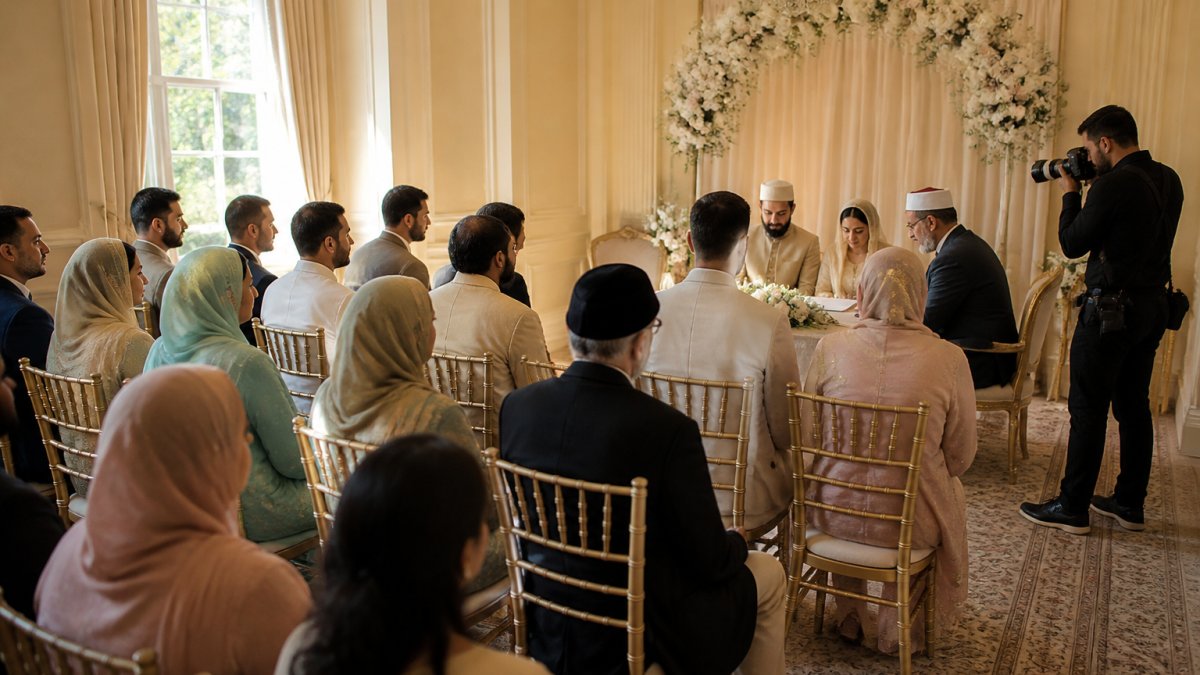
What the guidelines should cover
A one-page guest note, sent with the invitation and printed at the venue entrance, should answer five questions before anyone arrives:
- Is photography allowed during the nikah itself? Many couples prefer no guest photography during the vows. Say so plainly.
- Where may guests take photographs? Usually the reception, the entrance, and the family photographs, not the ceremony, not the preparation rooms.
- Who may be photographed? The couple only with their agreement; women guests only with their own; children only with a parent's agreement.
- When may images be shared? After the couple's own announcement, on the platforms the couple names.
- Who answers questions on the day? Name one person, often a sibling or cousin, so venue staff and guests are not guessing.
Handling the common flashpoints
A few situations cause most of the upset, and each has a workable answer:
- Group photographs. Guests often gather the couple for an impromptu group shot. Ask the photographer to run all group photographs to an agreed list, and ask guests to join only when invited.
- Women guests and phones. Some women will not want to be photographed without a hijab or in mixed company. A line in the guest note, "please ask before photographing any guest", covers this without singling anyone out.
- Children with phones. Children copy adults. A gentle word to parents before the ceremony is more effective than confiscating anything.
The pre-ceremony conversation
The guidelines only work if they are discussed, not just printed. A short conversation between the couple and both families, ideally before the guest list is finalised, settles who will speak to guests, who will brief the venue, and what happens if someone ignores the note. Most families find that one calm conversation, backed by a printed note, removes almost every grey area.
If you want to know how a relaxed, natural approach looks in practice, our page on letting everyone act naturally in front of the camera explains it well.
A one-page guest note should answer these questions before anyone arrives.
| Question | What the guest note should say |
|---|---|
| Is photography allowed during the nikah? | Many couples prefer no guest photography during the vows |
| Where may guests take photographs? | Reception, entrance and family photographs, not ceremony or preparation rooms |
| Who may be photographed? | Couple with agreement, women with their own, children with a parent's |
| When may images be shared? | After the couple's announcement, on platforms the couple names |
| Who answers questions on the day? | Name one person, often a sibling or cousin |
Wedding Photography Consent Wording That Actually Works
Wedding photography consent wording should name exactly what is permitted, who may share it and when. Vague permission like "feel free to take photos" causes the problems it was meant to prevent.
Use this template, adapted to your day:
Photography consent, [Couple's names], [date] We welcome photography of the ceremony by our booked photographer only. Guests may take photographs during [specify parts, e.g. the reception] but not during the nikah itself. No images of the bride in preparation may be taken or shared. No photographs may be posted on social media until [date or event]. Any image showing a family member must have their approval before sharing. Please direct questions to [name and contact].
Hand it to the photographer, print it for the venue, and send it with the invitation. It takes one page and removes almost every grey area.
Nikah Photo Sharing Etiquette for Family and Friends
Photo sharing etiquette comes down to one rule: nobody shares an image of another person without their agreement.
Some practical habits to set:
- Create one shared album controlled by the couple.
- Ask before tagging anyone.
- Remove any image on request, without debate.
If you are helping organise the day, our guide to planning the shots and family photographs gives you a checklist for shot lists and multi-day timelines.
Watch out: a single forwarded family photo can reach hundreds of people in minutes. Ask first, every time.
Private Nikah Ceremony Photography: Planning for Sensitive Moments
A private nikah is not a smaller wedding. It is a ceremony with its own geography: a preparation room, a prayer space, a seating arrangement that separates men and women, and a handful of moments that should never appear on a screen. Planning the photography means planning the space first and the camera second.
Map the spaces before the day
Walk the venue with the couple and agree, room by room, what the photographer may enter and under what conditions. A workable default is:
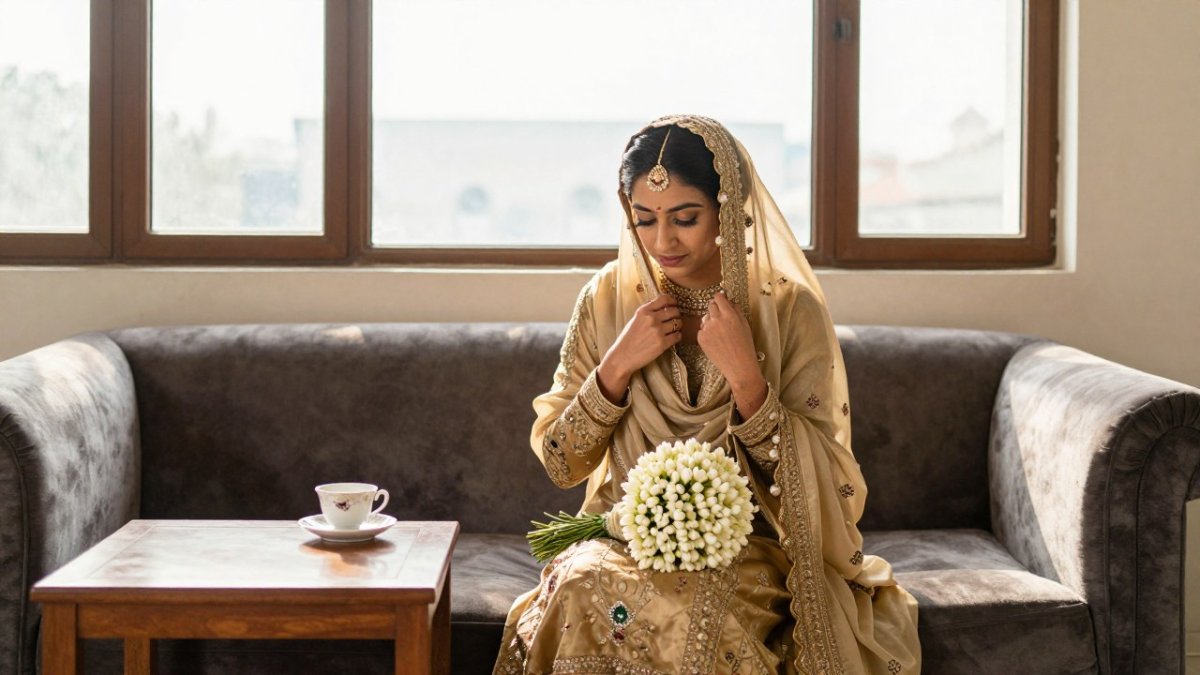
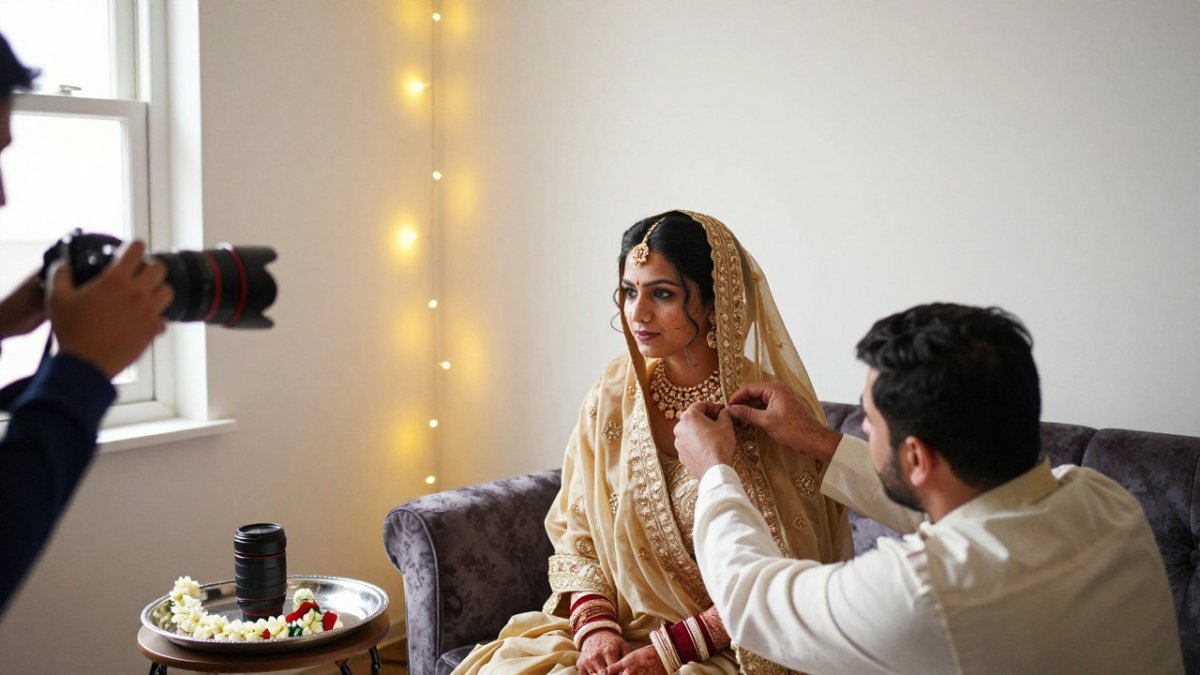
- Bridal preparation room: photographer invited in only, with the bride's agreement and a female assistant present where the family prefers it. Knock and wait every time.
- Groom's preparation room: usually simpler, but still by invitation.
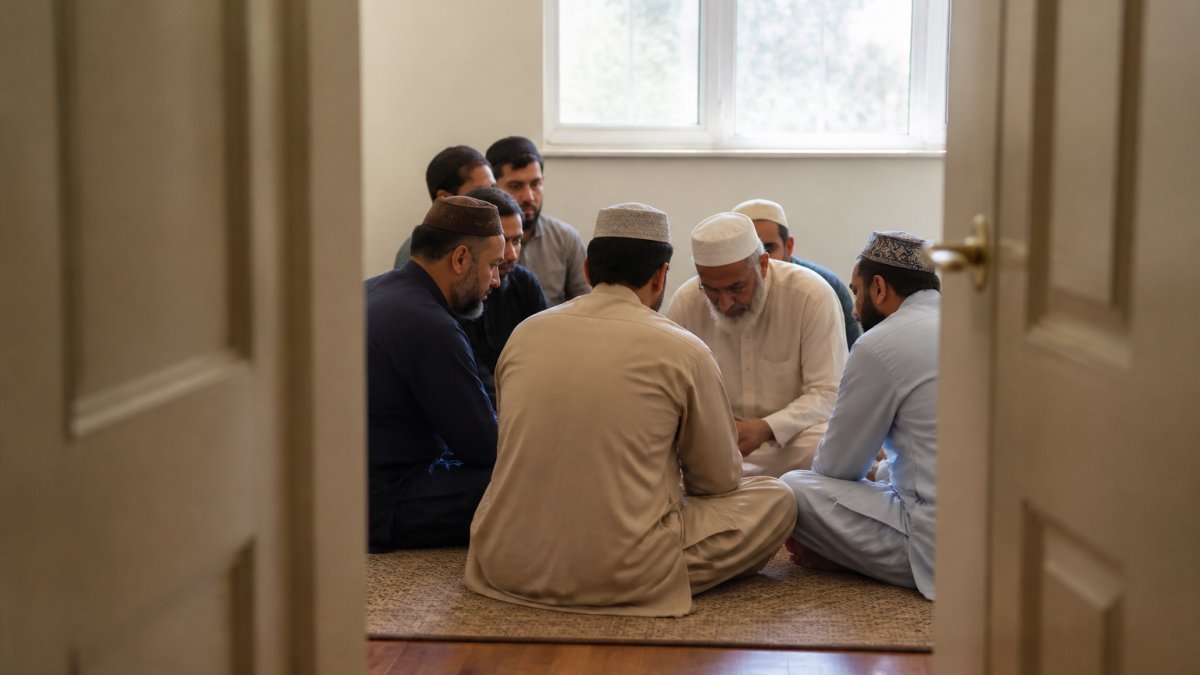
- Prayer space: no photography during du'a or recitation unless the couple has asked for it.
Give the same map to venue staff. A coordinator who knows which rooms are private will stop guests wandering into them, which is half the battle.
Brief the photographer in writing
A verbal brief is forgotten by the second hour. Put the following in writing and hand it to the photographer before the day:
- Which moments must not be captured (the bride's preparation, quiet du'a, any private conversation between spouses).
- Which rooms are off limits.
- Whether a second photographer is permitted, and where that person may stand.
Plan for sensitive and at-risk situations
Some couples need more than discretion; they need protection. Where there is family conflict, a risk of coercion, or a concern about a person's safety, broad publicity is inappropriate. In those cases:
- Keep the guest list small and the location undisclosed beyond those who need it.
- Ask the photographer not to publish any image, even in a portfolio, without written agreement.
- Agree a code word or signal the couple can use if they want photography to stop.
A studio that has photographed Asian weddings for years will have seen these situations before and should treat them as routine, not exceptional.
Documentary coverage suits a private nikah
Documentary-style coverage records without interrupting, which is why it suits a ceremony where guests should barely notice the camera. Our explanation of documentary style wedding photography covers how that works in practice.
At Khush Studio, we have photographed Asian weddings since 2002, and our approach is built around this kind of discretion. We ask before we enter a room, we follow the couple's brief, and we never publish a frame without permission.
Enquire About Discreet Nikah Coverage With Khush Studio
Discretion is a skill, and it is one we have practised for more than twenty years.
Our team works quietly at the edge of the room, respects separate spaces, and follows your written brief on what may be photographed and shared.
Ready to talk it through? You can see our Muslim wedding photography and videography service and then start a discreet conversation with our team.
Frequently Asked Questions
How can guests respect privacy during a nikah ceremony?
The simplest rule guests can follow is to keep phones away unless the couple has explicitly invited photos. Wait to be told, rather than assuming. Ask before taking pictures of anyone outside the immediate family, and never photograph the bride in a private getting-ready space. If you are unsure whether a moment is shareable, treat it as private. Many couples now include a short line in the invitation or a sign at the venue setting out their nikah privacy wishes, and following that guidance is the clearest way to show respect.
Should you ask permission before taking photos at a nikah?
Yes, always. A nikah is a religious ceremony with moments that some families consider deeply private, including the signing of the contract and any quiet dua. Asking the couple or a nominated family contact beforehand takes seconds and avoids awkwardness later. If the couple has hired a professional photographer, assume that person is covering the ceremony and that guest photos are not needed. For a private nikah ceremony, permission should come directly from the bride and groom rather than a relative acting on their behalf.
Can nikah photos be shared on social media without the couple's permission?
No. Sharing images of someone else's wedding on social media without consent breaks basic nikah photo sharing etiquette and can cause real harm, particularly where modesty preferences or family sensitivities are involved. Wait until the couple posts their own images first, then ask before reposting. Tagging people who have not agreed to appear on a public platform is a common mistake. A short, clear photo sharing policy agreed before the day removes the guesswork and lets everyone celebrate without worrying about what might appear online.
How can a couple have a private nikah while still celebrating with family?
Many couples split the day into two parts: a small, private nikah ceremony with close family and witnesses, followed by a larger walima or reception where photos and video are more freely shared. This satisfies the Islamic encouragement to publicise the marriage while keeping the intimate, sacred moments protected. Brief your photographer on which parts are off-limits, agree consent wording in advance, and nominate one family member to manage guest phones. Khush Studio has covered Asian weddings since 2002 and can plan coverage around exactly these boundaries.
Privacy during a nikah is not about hiding a marriage. It is about protecting the people in it. If you want a photography team that understands that distinction, get in touch with Khush Studio and we will plan your coverage around your boundaries, not around a template.