 how-to
Three Day Asian Wedding Videography Coverage: 2026 Guide
Last Updated: October 23, 2026
Quick Summary
Three day Asian wedding videography coverage means filming every function across a multi-day celebration with one continuous creative team, treating each day as its own production. Plan coverage function by function, with clear crew calls, handover points and audio plans for the mehndi, ceremony and reception.
- Assign each day a clear job: day one atmosphere and preparation, day two the full ceremony, day three celebration and speeches.
- Many couples find eight to ten hours works for the ceremony day, six to eight for the mehndi or sangeet, and eight to ten for the reception.
- Multi-day coverage usually needs two videographers plus a photographer, with an assistant on the ceremony day.
- Ask whether the same lead videographer attends all three days, since a rotating crew produces three different visual styles.
- Never accept a contract without a stated delivery deadline and overtime rate.
Table of Contents
- Why Three Day Asian Wedding Videography Coverage Needs Its Own Plan
- A Practical Three-Day Coverage Timeline
- Asian Wedding Videography Packages: What Should Be Inside
- Wedding Videography Coverage Hours: How Much Film Time You Actually Need
- Crew, Equipment and Audio for Multi-Day Ceremonies
- Three-Day Wedding Videography Cost: What Drives the Quote
- Your Asian Wedding Videographer Checklist Before You Book
- Deliverables, Editing and What to Expect After the Last Dance
- Frequently Asked Questions
Why Three Day Asian Wedding Videography Coverage Needs Its Own Plan
Three day Asian wedding videography coverage is the practice of filming every function across a multi-day celebration, from the pre-wedding rituals through to the reception, with one continuous creative team. It is not a single wedding day stretched over 72 hours. It is three separate productions that share a cast, a wardrobe and a story.
That distinction matters. A one-day shoot has one light arc, one schedule and one set of nerves; a three-day celebration has three. The mehndi is loud, crowded and lit by coloured uplighting. The ceremony is quiet and dependent on natural light. The reception is a stage show with speeches and dancing.
At Khush Studio, we have filmed Indian, Sikh and Muslim weddings since 2002, and the pattern is consistent: couples who plan coverage function by function get a coherent film, while couples who buy "three days" as a single lump get three disconnected highlight reels. Below, we break down how to plan the schedule, crew, audio and budget.
A Practical Three-Day Coverage Timeline
A workable three-day plan assigns a clear job to each day: day one captures atmosphere and preparation, day two the ceremony in full, day three celebration and speeches. This keeps the crew fresh and stops ceremony footage from being an afterthought.
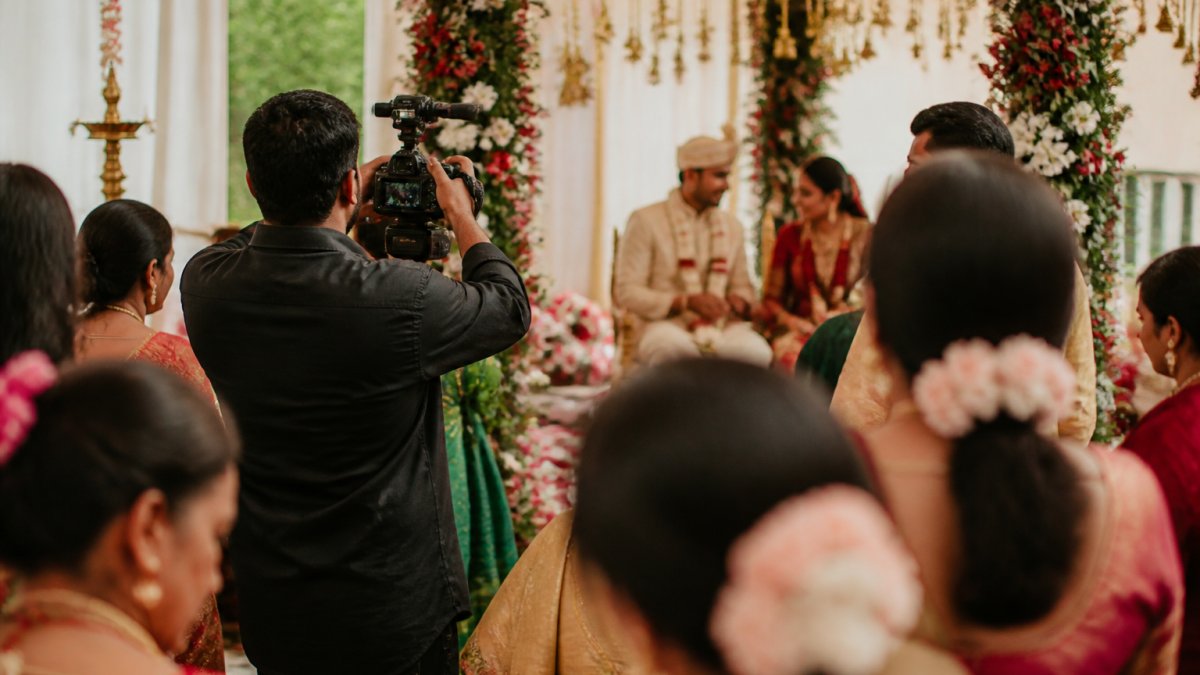
What most guides miss is the operational layer: crew arrival, shooter handovers, audio patching and what happens if a ceremony runs late. Below is a sample schedule.
Day one: pre-wedding events (mehndi, sangeet or haldi).
- Crew call: 90 minutes before the first guest arrives, to film decor, the mendhi table and the empty room.
- Primary shooter: roams for candid guest arrivals, dance performances and family interactions.
- Second shooter: stationed near the mehndi application or haldi station for close-up detail and reactions.
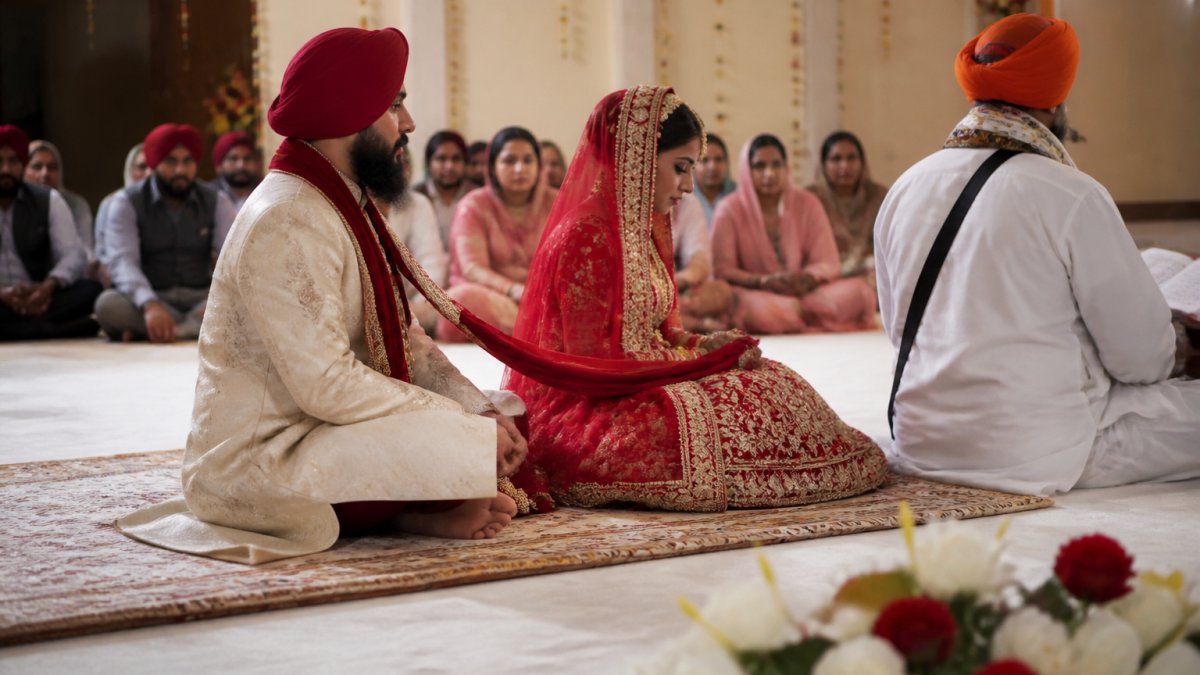
Day two: the ceremony (Anand Karaj, Nikah or Hindu vivah).
- Crew call: two to three hours before the ceremony, to capture preparation, the first look if requested, and close family arrivals.
- Primary shooter: covers the ceremony from a fixed side angle, with a clear view of the couple and officiant.
- Second shooter: roams for reaction shots, family members, and detail footage of ritual objects and garments.
Day three: reception and speeches.
- Crew call: two hours before guest arrival, to film the room set-up, table details and couple's portraits.
- Primary shooter: covers the entrance, first dance, speeches and last dance from a central position.
- Second shooter: covers guest reactions during speeches, table-level candids, and the dance floor from a second angle.
| Day | Typical Focus | Crew Call | Coverage Window | Priority |
|---|---|---|---|---|
| Day one | Mehndi, sangeet, haldi | 90 minutes before guests | Late afternoon to evening | Atmosphere, candid moments |
| Day two | Ceremony and rituals | 2-3 hours before ceremony | Morning to mid-afternoon | Full ritual sequence, clean audio |
| Day three | Reception and speeches | 2 hours before guests | Evening | Speeches, first and last dance |
Asian Wedding Videography Packages: What Should Be Inside
A well-built Asian wedding videography package states four things plainly: days covered, hours per day, crew members attending, and what is delivered. Anything vaguer is a conversation, not a contract.
Look for these inclusions:
- Day count and hours per day, with the overtime rate stated
- Crew size per day, including whether a second shooter or assistant attends
- Audio equipment for ceremony and speeches
- Deliverables: highlight film length, full ceremony edit, teaser for social media
Per-day pricing suits couples who want the ceremony documented in depth and smaller events covered lightly; full coverage suits families who want every function filmed end to end.
Wedding Videography Coverage Hours: How Much Film Time You Actually Need
Wedding videography coverage hours should be set per function, not per day. A ceremony needs fewer hours than a reception, but those hours must be precisely placed: arriving two hours early is often more valuable than staying two hours late.
As a starting point, many couples find eight to ten hours works for the ceremony day, six to eight for the mehndi or sangeet, and eight to ten for the reception. Add hours where the schedule includes a long gap between rituals, because gaps are where the best candid moments happen.
The practical rule: cover from the start of preparation to the point where the energy drops. Filming an empty dance floor at midnight adds nothing. Filming the bride's mother adjusting her dupatta before guests arrive adds everything.
Crew, Equipment and Audio for Multi-Day Ceremonies
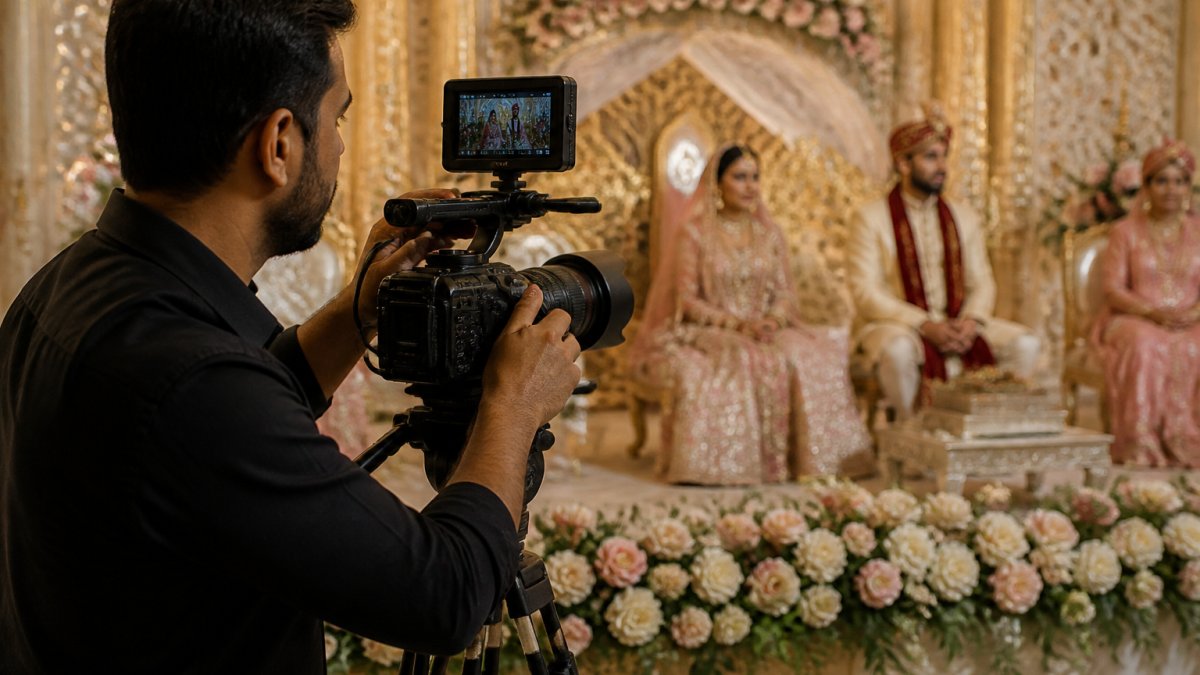
Multi-day coverage needs a crew that can sustain quality across three days: usually two videographers plus a photographer, with an assistant on the ceremony day. One person cannot cover a processional, a reaction shot and a wide shot simultaneously.
Equipment planning comes down to redundancy: two camera bodies minimum per shooter, spare batteries charged overnight, and enough storage to avoid offloading cards mid-event. Drone footage is a strong addition for outdoor venues, but depends on permissions and weather, so treat it as a bonus.
Audio is where most multi-day films fall apart. Ceremony readings, the Nikah, the Ardas and reception speeches all need their own microphone, an on-camera shotgun picks up room noise and the videographer's breathing.
Three-Day Wedding Videography Cost: What Drives the Quote
Three-day wedding videography cost in the UK is driven by days, hours, crew size, travel and edit complexity, not a single flat rate.
Rather than publish a figure that fits nobody, here is the budgeting framework we would use to build a quote, plus the contract terms to expect.
The variables that move the number:
- Number of days and total hours covered. A three-day booking with 30 total hours is a different job from one with 45, even if both are called "three days".
- Crew size. Each additional videographer or assistant is an additional day rate, plus travel and accommodation where overnight stays are needed.
- Travel and overnight accommodation. Multi-venue celebrations often require an overnight stay between day two and day three. Ask whether travel is charged at cost or as a flat fee.
- Drone work and additional equipment. Drone use may require a trained operator, venue permission and insurance, and some venues prohibit it entirely.
A transparent budgeting framework.
A three-day booking often breaks into four cost blocks: crew time (days × hours × crew size), travel and accommodation, equipment and specialist work such as drone or additional audio, and post-production. Ask for the quote split along those lines so you can see where to reduce scope.
Contract terms to confirm before signing:
- Overtime rate per hour, per crew member, and how it is triggered.
- Cancellation and rescheduling terms, including what happens if a ceremony date moves.
- Deposit and payment schedule, with the final balance date stated.
- Travel and accommodation charged at cost or as a fixed fee.
Pricing depends on quantity, dates and delivery, so we would rather quote after understanding your schedule. For current pricing, check our packages page or send an enquiry with your dates and venues.
Your Asian Wedding Videographer Checklist Before You Book
Use this checklist before signing anything. It is the difference between a team that understands your ceremony and one that films it as background.
- Can they name the key moments of your specific ceremony, including the Anand Karaj, Nikah or vivah rituals?
- Have they filmed a multi-day wedding at your venues before?
- Is the same lead videographer attending all three days?
- Are coverage hours, overtime rates and crew size written into the contract?
That last point is often missed. Many venues require public liability insurance and advance notice before filming, and some restrict drone use entirely. Confirm permissions early rather than on the morning of the event.
Deliverables, Editing and What to Expect After the Last Dance
Deliverables should be agreed in writing before the wedding, because expectations set afterwards are harder to manage.
Editing a three-day wedding is a storytelling job, not a sorting job.
Turnaround varies with the scope of the edit and the time of year, so ask for a dated delivery schedule rather than a vague estimate. Confirm how many revision rounds are included and how feedback is submitted.
Planning three days of coverage is more work than planning one, but the reward is a film that reflects the whole celebration rather than a single day. If you want a team that has spent more than two decades filming Indian, Sikh and Muslim weddings and understands what each ritual means, Khush Studio can build a tailored package around your schedule, venues and priorities. Our approach is discreet, our packages are built function by function, and our storytelling is shaped around your family's traditions. Enquire with Khush Studio to check availability for your dates and start with a conversation about how your three days actually unfold.
Frequently Asked Questions
What does three day Asian wedding videography coverage include?
Full coverage across each function, typically the pre-wedding event, the ceremony day and the reception. That means a videographer present from preparation through to the last dance, audio capture for vows and speeches, and a cinematic highlights film plus a longer edit. Package inclusions vary, so confirm exactly which events, hours and deliverables are listed before you book. Khush Studio builds packages around your specific schedule rather than a fixed template.
How many hours of wedding videography coverage hours do you need for a three-day wedding?
Most three-day celebrations need roughly 8 to 12 hours of filming per day, depending on how early preparations start and how late the reception runs. Getting-ready footage, the ceremony, family portraits and the evening programme all add time. Ask your videographer to map hours against your actual running order rather than guessing. Any hours beyond the agreed window usually attract an additional per-hour rate, so build a small buffer into the contract.
How much does a three-day Asian wedding videographer cost?
Three-day wedding videography cost depends on the number of events, crew size, coverage hours, travel and the length of the final edits. A single videographer across three days sits at a different level to a two-person team with drone footage and multi-camera audio. Because every schedule differs, pricing is quoted per wedding. Contact Khush Studio with your dates and venue list for a tailored figure rather than relying on generic online averages.
Should you book one videographer or a team for a three-day wedding?
A team is usually the safer choice. Three days across multiple venues means setup time, equipment changes and moments happening in two places at once, such as the bride getting ready while guests arrive. Two videographers can split coverage and keep audio and camera angles clean. Use your Asian wedding videographer checklist to confirm who will actually attend each day, and ask for backup cover in case of illness.