 How-to
Artistic Wedding Videography for Muslim Ceremonies
Last Updated: November 17, 2026
Quick Summary
Artistic wedding videography for muslim ceremonies documents the Nikah, Mehndi and Walima as a story rather than a sequence of clips, using considered framing, natural light and respectful positioning to preserve both the emotion and the religious significance of the day. It demands cultural fluency as much as technical skill, so the videographer understands what they are watching.
- Nikah vows are quiet and often spoken in Arabic, so positioning must be planned before the day.
- Cover the Mehndi and Walima as two different films with one continuous story.
- A highlight film is a short, music-led edit, not a shortened documentary.
- Ask for both a highlight film and a full ceremony edit at the consultation stage.
- Agree in writing which moments must not be filmed and whether a female videographer is required.
Table of Contents
- What Artistic Wedding Videography Brings to Muslim Ceremonies
- Nikah Ceremony Videography: Filming the Vows With Care
- Capturing the Walima and Mehndi Without Missing a Moment
- How a Wedding Video Highlight Film Tells Your Story
- Muslim Wedding Video Packages: Full-Day Coverage Explained
- Pakistani Muslim Wedding Videography and Regional Traditions
- Privacy, Cultural Sensitivity and Lighting in Sensitive Spaces
- Briefing Your Videographer: A Checklist Before the Day
- Frequently Asked Questions
What Artistic Wedding Videography Brings to Muslim Ceremonies
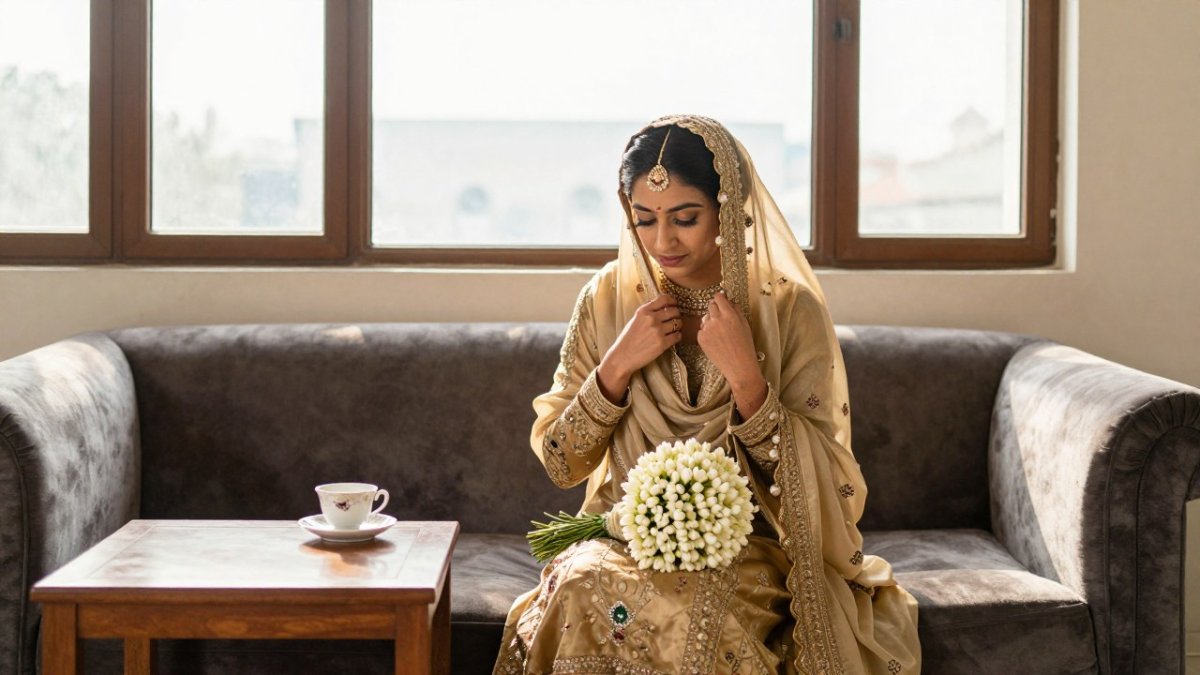
Artistic wedding videography for muslim ceremonies is the craft of documenting the Nikah, Mehndi and Walima as a story rather than a sequence of clips, using considered framing, natural light and respectful positioning to preserve both the emotion and the religious significance of the day, which is why artistic wedding videography for muslim ceremonies demands cultural fluency as much as technical skill. At Khush Studio, we have been documenting Asian weddings for over 20 years, and the difference between footage couples rewatch and footage that sits on a hard drive almost always comes down to whether the videographer understood what they were watching.
A Nikah is not a backdrop. The vows carry legal and spiritual weight, the families hold generations of expectation, and the room often separates men and women in ways a generalist crew will not anticipate.
That is the throughline of this guide: technical skill is the entry ticket, cultural fluency is what makes the film worth keeping.
Below, we break down how each ceremony is covered, what full-day packages include, and the exact questions to ask before you book. If you want to see how we document Muslim weddings specifically, you can explore our Muslim wedding photography and videography.
Nikah Ceremony Videography: Filming the Vows With Care
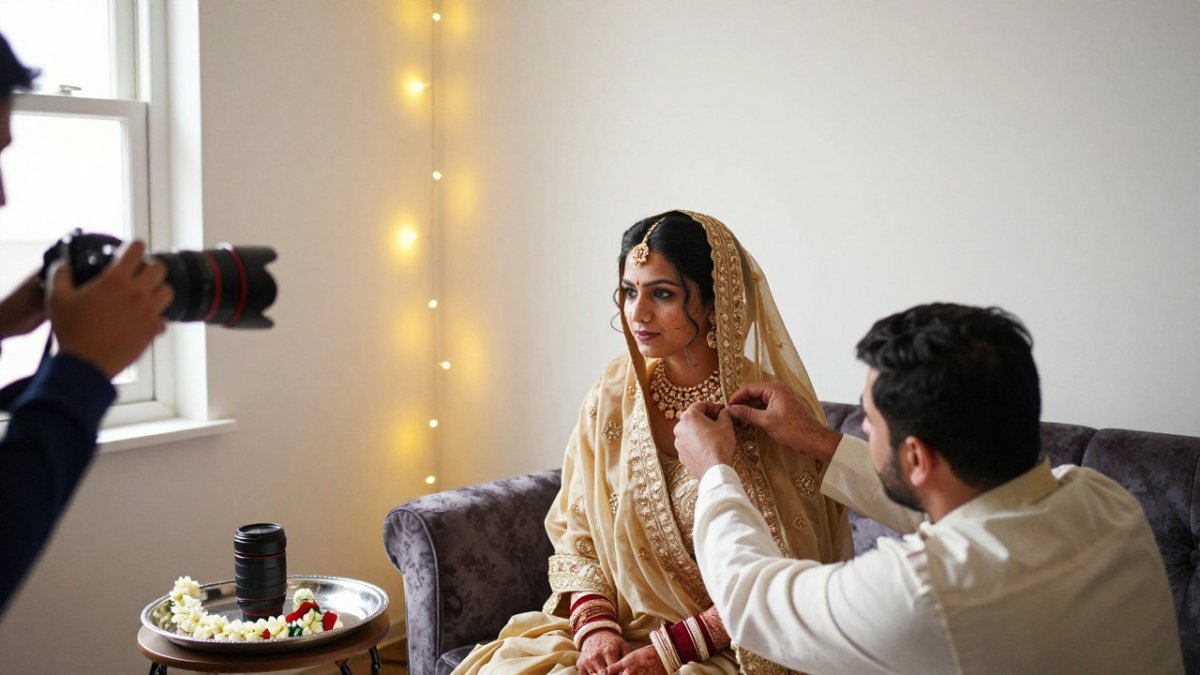
Nikah ceremony videography succeeds or fails on positioning. The vows are quiet, often spoken in Arabic, and the moment the contract is agreed passes in seconds. A videographer who has not planned for that will capture the room and miss the marriage.
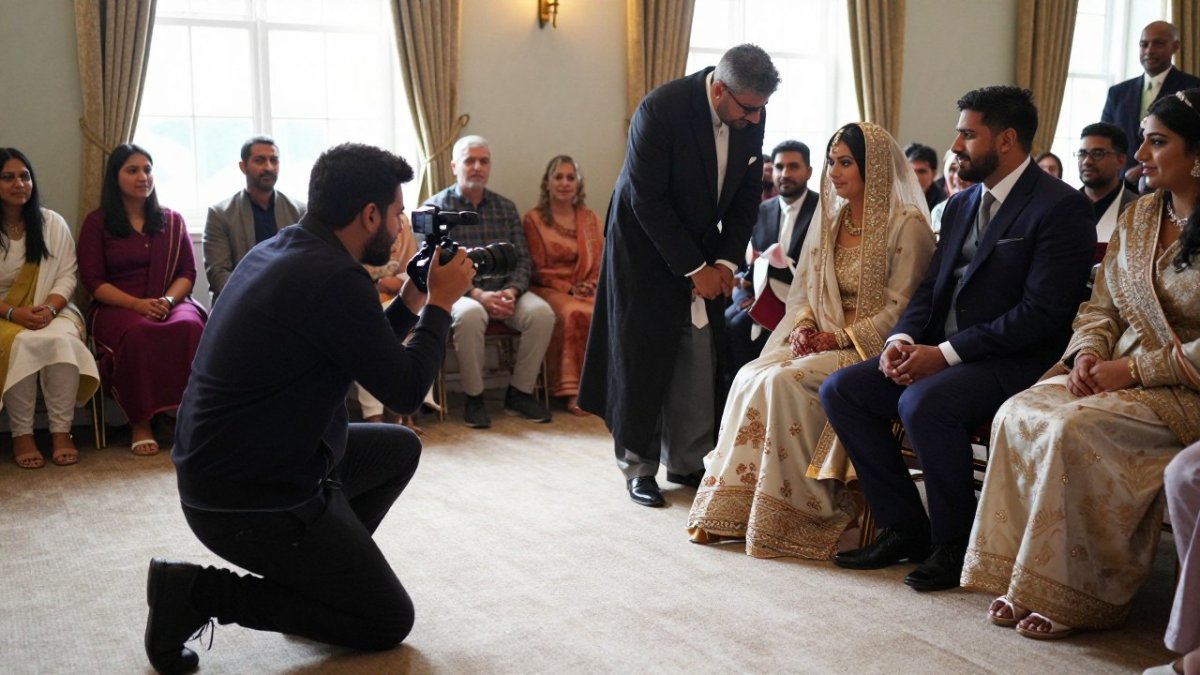
A common mistake is treating the Nikah as the quiet part before the real celebration. In practice, it is the part couples cry over.
Capturing the Walima and Mehndi Without Missing a Moment
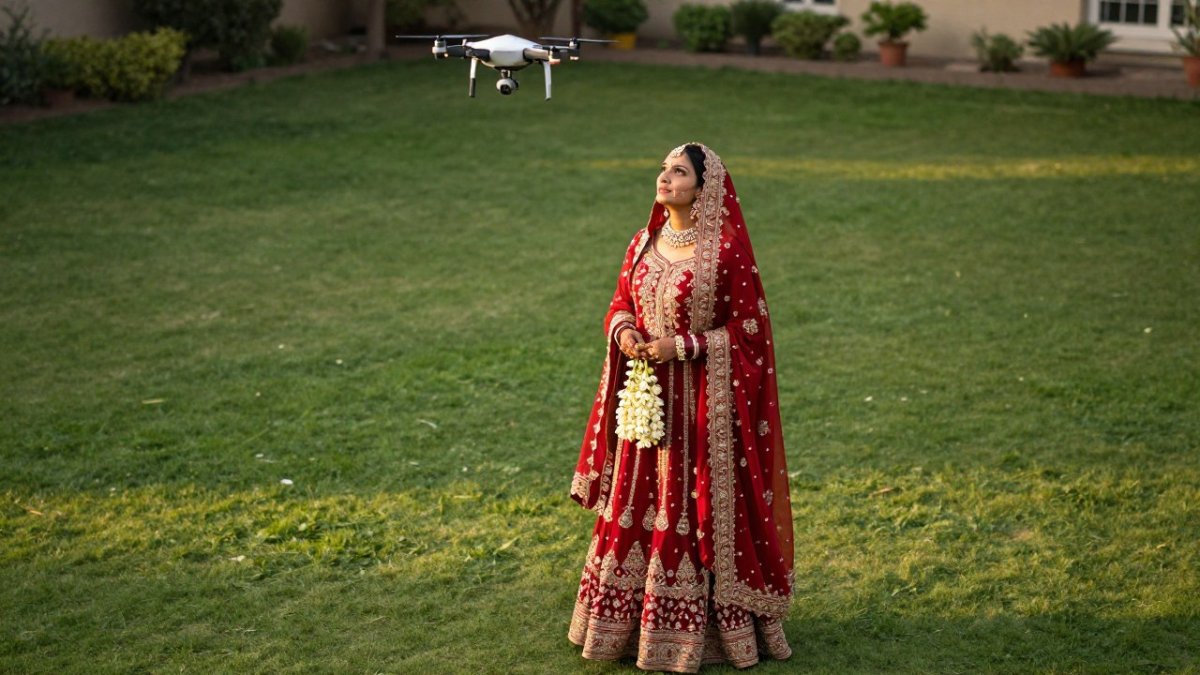
The Walima is where the energy changes. Mehndi is intimate, close-lit and full of music; the Walima is a large reception with staged entrances, speeches and a room that moves fast. Covering both well means planning them as two different films with one continuous story.
To see how we document the full arc from Mehndi to Walima, read our piece on documenting the vibrancy of Muslim wedding traditions.
How a Wedding Video Highlight Film Tells Your Story
A wedding video highlight film is a short, edited film, usually a few minutes long, that condenses the day into its emotional core: the preparation, the ceremony, the reactions and the celebration, cut to a music-led narrative rather than shown in real time. It is the piece most couples share with family and the one they return to on anniversaries.
A highlight film is not a shortened documentary. It is an argument about what your wedding felt like.
Couples who want the full record alongside the short film should ask for both at the consultation stage, because the edit decisions differ.
Muslim Wedding Video Packages: Full-Day Coverage Explained
Muslim wedding video packages vary with the scope of the day. A single-day Nikah and Walima needs a different crew and schedule than a multi-day celebration across several venues. Pricing depends on quantity, dates and the delivery formats you choose, so visit the Khush Studio website for current prices or a quote.
As a working guide, most full-day packages in the UK fall into these bands. Treat the figures as indicative ranges to anchor a conversation, not as a quote:
| Coverage Type | Typical Scope | Indicative Budget | Best For | What to Confirm |
|---|---|---|---|---|
| Ceremony only | Nikah, up to 5 hours, one videographer | £800-£1,500 | Small, intimate Nikahs | Whether the Walima is separate |
| Single-day | Preparation, Nikah, Walima, 10-12 hours, two videographers | £1,800-£3,500 | One-venue celebrations | Hours beyond the stated finish |
| Multi-day | Mehndi, Nikah, Walima, full crew, 3 days | £3,500-£7,000+ | Three-day celebrations | Travel between venues and crew split |
| Full record | Highlight film plus full ceremony edit | Add 30-50% to the above | Families wanting the complete archive | Delivery formats and turnaround |
Pricing depends on quantity, dates and delivery, so visit the Khush Studio website for current prices or a quote.
For a fuller breakdown of hours, costs and planning a multi-day schedule, see our three-day Asian wedding videography coverage guide.
Pakistani Muslim Wedding Videography and Regional Traditions
Pakistani Muslim wedding videography carries its own rhythms, and families rightly expect a crew that recognises them. The Mehndi, the Baraat arrival, the Rukhsati and the Walima each have a shape, and a videographer who does not know the order will be in the wrong place at the wrong moment. Knowing the order of each celebration also helps families make thoughtful choices about choosing Islamic wedding gifts that suit the occasion.
Regional customs shift between families as much as between countries. Sunni and Shia ceremonies differ in structure and in which moments carry the most weight. Turkish, Arab and South Asian celebrations share the essentials of Nikah and Walima but differ in dress, music and pacing.
We ask, rather than assume. Before every wedding we go through the order of events with the family and note which rituals matter most to them, so the film reflects their tradition rather than a generic template.
Privacy, Cultural Sensitivity and Lighting in Sensitive Spaces
Privacy and cultural sensitivity are the two areas where a videographer's judgement matters more than their equipment, and lighting is the technical partner to both. Most guides stop at 'be respectful'. The practical work is more specific than that.
Start with consent. Many families ask that certain moments are not filmed, or that the women's gathering is filmed only by a female crew member. Those instructions should be agreed in advance and discussed with your videographer at the consultation.
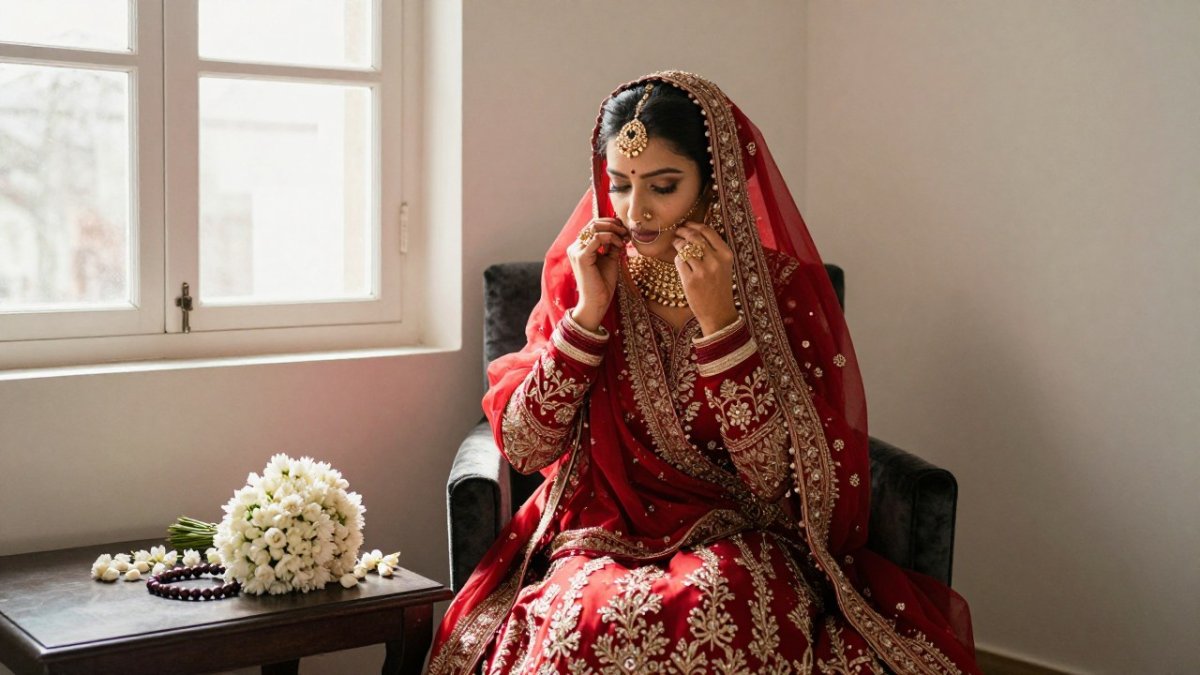
A Nikah in a community hall or at home often mixes cool daylight from one side with warm tungsten or LED from another, and the imam may sit in the darkest part of the room. Three mechanisms do most of the work:
- Fast prime lenses. An f/1.4 or f/1.8 lens lets you shoot at ISO 1600-3200 without a visible noise penalty on modern full-frame bodies, which is usually enough for a seated ceremony.
- Bounced, diffused light. A small LED panel bounced off a pale wall or ceiling adds a stop or two without a hard shadow or a flash that distracts guests during prayer.
- Locked exposure and white balance. Mixed colour temperature is the main reason indoor footage looks amateur. Set white balance manually to the dominant source and lock it, rather than letting auto white balance drift as the camera pans.
Watch out: a crew that lights the room for the camera rather than for the guests will be remembered for the wrong reason.
Privacy does not end when the camera is packed away. When discussing privacy, ask your videographer how they handle guests who prefer not to appear, and whether final files are delivered privately rather than shared publicly. For a practical walkthrough of consent, briefing guests and protecting what stays private, read our guide on respecting privacy during a Nikah ceremony.
Briefing Your Videographer: A Checklist Before the Day
The brief is where most disappointment is prevented. Couples who spell out their expectations before booking get films that match them; couples who assume get surprises. Use this checklist when you speak with your videographer.
- Confirm the order of events for each day and who leads each ritual
- Agree where the videographers may and may not stand during the Nikah
- State any moments that must not be filmed, in writing
- Confirm whether a female videographer is required for the women's gathering
- Share the venue addresses and travel time between them
- Ask for the turnaround time and the delivery formats in the contract
- Request sample full films, not only highlight reels
- Name the family member who will direct the crew on the day
A common mistake is hiring on the strength of a short reel alone. Ask to see a complete ceremony film, because that is where continuity, audio and editing discipline show. Our team has captured more than 2,800 wedding photos, and we are happy to walk you through full examples. These seven questions to ask a wedding videographer for cultural ceremonies will sharpen the conversation further.
Every wedding film is a set of decisions made before the camera is switched on: where to stand, what not to film, whose tradition is being honoured. Get those right and the footage takes care of itself. Khush Studio brings over 20 years of Asian wedding experience, a discreet two-crew approach for separated ceremonies, and bespoke packages built around your dates and venues. Get started with Khush Studio and commission a film that reflects your ceremony as it truly was.
Frequently Asked Questions
What should I look for in a Muslim wedding videographer?
Look for a videographer who understands the order of your ceremonies and knows which moments matter, from the Nikah vows to the Walima entrance. Ask about experience with Muslim wedding videography, how they handle gender-separated spaces, and whether they film discreetly. Check that they offer a consultation so you can discuss your family's traditions, and confirm what your Muslim wedding video packages include before you book.
How can a wedding film respectfully capture a Nikah ceremony?
Respectful Nikah ceremony videography starts with agreeing camera positions in advance, often from the back or side of the room, and using long lenses rather than moving close to the couple. A videographer should dress modestly, avoid crossing in front of guests during prayers, and follow your family's guidance on who can be filmed. Discuss any privacy requests during the consultation so nothing sensitive ends up in the final edit.
How do I choose between a cinematic highlight film and full ceremony coverage?
A wedding video highlight film condenses the day into a short, story-driven edit set to music, which suits couples who want something emotional to share with family. Full ceremony coverage keeps complete, unedited recordings of the Nikah, Walima speeches and rituals for archival purposes. Many couples choose both: full-day coverage as the record and a highlight film as the keepsake. Ask how each option is delivered and how long post-production takes.
Can a videographer accommodate separate men's and women's spaces?
Yes, and it should be planned in advance. Discuss gender separation with your videographer during the consultation so they can assign crew appropriately, agree where cameras can be placed, and confirm which footage may be shared. Privacy-conscious editing means certain clips stay private or are removed entirely. Ask for their workflow in writing so your family knows exactly how sensitive spaces will be handled on the day.