 blog
7 Best Photographers for Intimate Asian Weddings
Last Updated: November 23, 2026
Quick Summary
The best photographers for intimate Asian weddings combine cultural fluency with a calm, unobtrusive presence and a portfolio that proves both. Start with ceremony knowledge, then test for small-guest logistics, style fit and clear deliverables before comparing anyone on price.
- Khush Studio has photographed Indian, Sikh and Muslim weddings since 2002.
- Confirm early whether the same lead photographer attends every event.
- Ask to see a full gallery from an indoor, artificially lit event before booking.
- Build in at least 30 minutes of buffer between multi-day events for travel.
- Agree a short list of non-negotiable family groups and shoot them in one five-to-ten-minute window.
Table of Contents
- How Do You Choose the Best Photographers for Intimate Asian Weddings?
- Our Shortlist of 7 Photographers for Intimate Asian Weddings
- Asian Wedding Photographer Questions to Ask Before Booking
- What Asian Wedding Photography Packages Should Include
- Planning Your Asian Wedding Photography Timeline
- Why Intimate Asian Wedding Photography Needs a Different Approach
- Enquire About Your Intimate Wedding Coverage
- Frequently Asked Questions
How Do You Choose the Best Photographers for Intimate Asian Weddings?
The best photographers for intimate Asian weddings combine genuine cultural fluency with a calm, unobtrusive presence and a portfolio that proves both.
That order matters. Most couples shortlist on style first and discover the gaps later, usually when an uncle asks why nobody photographed the milni.
At Khush Studio, we have photographed Indian, Sikh and Muslim weddings since 2002.
Our Shortlist of 7 Photographers for Intimate Asian Weddings
No single photographer suits every intimate wedding, so this shortlist is organised by strength rather than ranking. Match the type to your ceremony, guest count and how much of the day you want documented.
| Photographer type | Best for | Style | Watch for |
|---|---|---|---|
| Cultural storytelling studio | Multi-faith and multi-day weddings | Documentary with portraits | Limited peak-date availability |
| Documentary specialist | Quiet, unposed ceremonies | Candid, observational | Fewer posed family groups |
| Editorial stylist | Design-led venues and decor | Creative, contemporary | Poses can slow a tight schedule |
| Multi-day coverage expert | Mehndi, haldi, ceremony, reception | Consistent across events | Higher total coverage hours |
| Natural light photographer | Daytime and outdoor ceremonies | Soft, authentic | Weaker in dim reception halls |
| Family-focused storyteller | Large immediate families | Warm, people-led | Less emphasis on decor detail |
| Hybrid photo and video team | Couples wanting both | Coordinated film and stills | One team covers both roles |
1. Khush Studio: 20+ Years of Cultural Storytelling
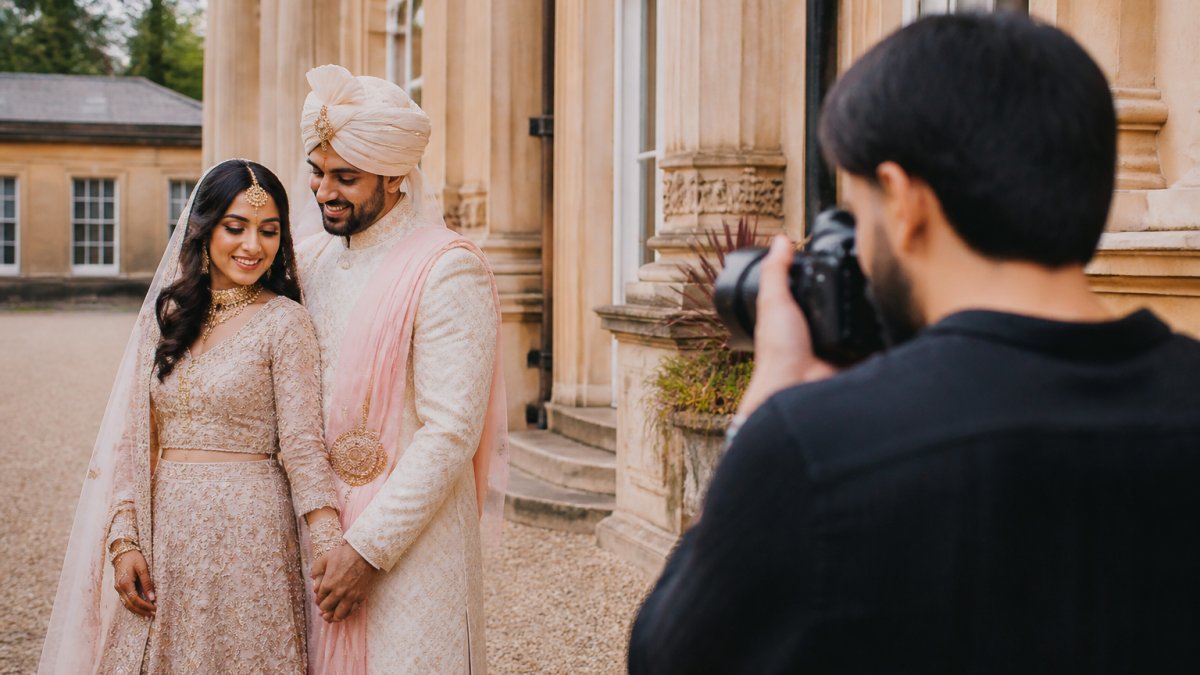
Khush Studio has photographed Asian weddings since 2002, covering Indian, Sikh and Muslim ceremonies, with a discreet approach to documenting events. You can see their Indian wedding photography services and portfolio on their site.
Couples planning these celebrations often want confidence in their photographer's cultural understanding.
Couples including Simran, Sonia and Mariah have shared their testimonials about working with Khush Studio.
2. The Documentary Specialist
A documentary specialist photographs what happens without arranging it. For a small ceremony, this suits couples who find posed line-ups awkward and want the day to feel as it actually felt.
The trade-off is real: you will likely get fewer formal family portraits, so agree in advance which group shots are non-negotiable. Don't assume "documentary" means "no family photos at all."
3. The Editorial Stylist
Editorial photographers bring a creative, contemporary eye to composition, light and colour. They suit couples marrying in design-led venues where the decor is part of the story.
Ask how much direction they expect. Editorial work can involve re-staging moments, and at a small wedding with a tight ceremony window, that costs time you may not have.
4. The Multi-Day Coverage Expert
Asian weddings often span several days, with mehndi, haldi, the ceremony and a reception at different venues. A multi-day specialist plans the whole run as one story rather than four separate bookings.
Confirm one thing early: whether the same lead photographer attends every event. Consistency of style across days depends on it.
5. The Natural Light Photographer
Natural light photographers work best in daytime ceremonies, outdoor venues and rooms with large windows. The results look soft and authentic, which suits intimate celebrations well.
Where this falls short is the evening reception in a dim hall. Ask to see a full gallery from an indoor, artificially lit event before you book.
6. The Family-Focused Storyteller
Some photographers specialise in people over decor, prioritising grandparents, children and the small interactions between relatives. At an intimate wedding, those moments carry the emotional weight.
This style suits families who want the album to read as a portrait of the people present. Expect less emphasis on table settings and floral detail.
7. The Hybrid Photo and Video Team
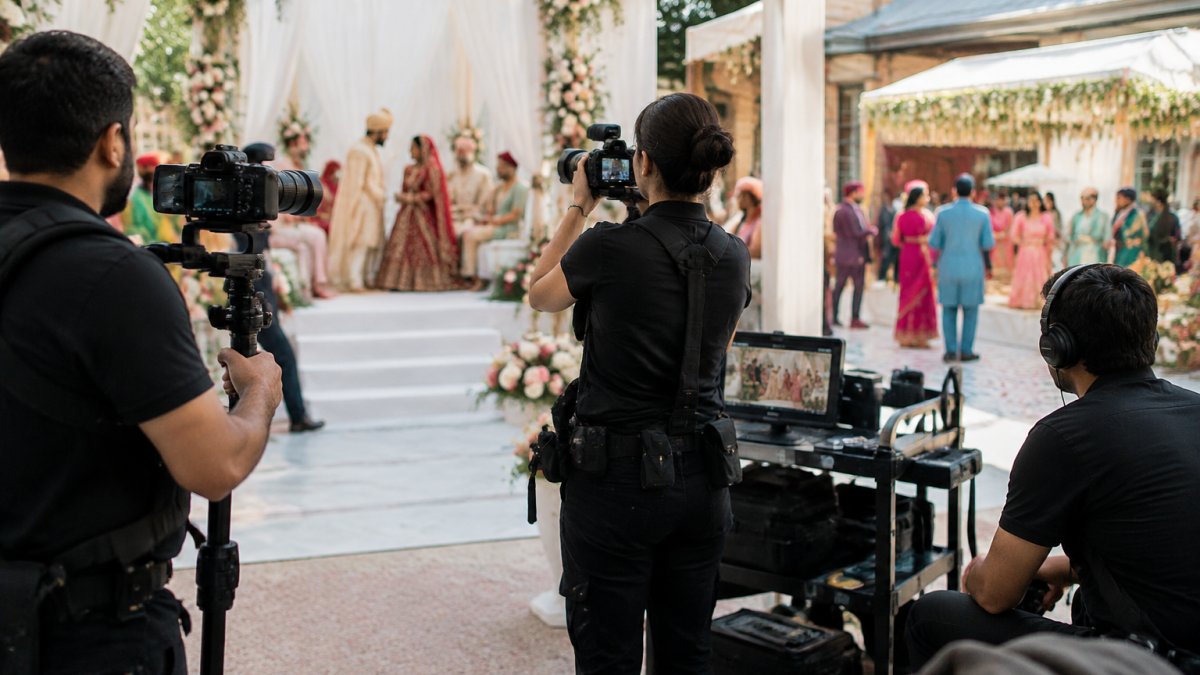
A hybrid team covers stills and film together, coordinating so the videographer is never in the photographer's frame. For a small wedding, one coordinated team is often less intrusive than two separate suppliers.
Ask how they divide attention. A team that treats video as an add-on will deliver weaker highlights than one built for both from the start.
Asian Wedding Photographer Questions to Ask Before Booking
The right questions separate a confident supplier from an unprepared one. Ask these before you pay a deposit, and listen for specific answers rather than reassurances.
- Can you describe the key moments of our ceremony and where you would stand for each?
- How many events of this size have you covered, and can I see a full gallery from one?
- Who exactly will photograph our wedding, and will I meet them beforehand?
For a deeper checklist, our guide to what to look for in an Indian wedding photographer covers the criteria and follow-up questions in more detail.
What Asian Wedding Photography Packages Should Include
A complete Asian wedding photography package should state coverage hours, the number of photographers, edited image counts, delivery times and usage rights in writing. Anything vague about deliverables tends to become a disagreement later.
What a complete package itemises
Check that these are itemised in the written quote, not just mentioned in an email:
- Coverage hours per event, with start and finish times
- Whether one or two photographers attend, and who the lead is
- A minimum number of edited images, or a realistic estimate
Realistic price ranges in the UK
Pricing depends on date, coverage hours, guest count and deliverables, so treat any headline figure as a starting point rather than a quote. As a working guide for intimate Asian weddings in the UK:
Pricing depends on date, coverage hours, guest count and deliverables. For current prices or a quote for your dates, please visit the Khush Studio website.
What changes the price
The biggest cost drivers are coverage hours, the number of events, the number of photographers and the delivery format. An album adds production cost; a second shooter adds a day rate; travel and overnight stays add a line item. Ask for the quote broken down by these factors so you can see what you are paying for and remove what you do not need.
Deliverables and rights to confirm in writing
Confirm the edited image count, the preview turnaround (days, not weeks), the full gallery delivery window, how long files stay online, and whether you receive print and social media rights. Ask what happens if the photographer is ill or equipment fails, and what backup arrangements are in place. For context on how packages are structured across the market, see our guide to Asian wedding photography prices.
Planning Your Asian Wedding Photography Timeline
Build the photography timeline backwards from the ceremony, not forwards from the start of the day. Rituals have fixed sequences, and the photographer needs buffer before each one. At an intimate wedding the margin for error is smaller, because there is no crowd to absorb a delay and no second chance at a moment that has already passed.
A workable structure for a single ceremony day
- Getting-ready coverage, finishing before the first family arrival
- Guest arrival and pre-ceremony family moments
- Ceremony coverage, with the photographer briefed on each ritual
- Family portraits immediately after, before guests disperse
- Couple portraits during the golden hour or a planned window
- Reception coverage through the first dances and speeches
Planning for compact venues and limited light
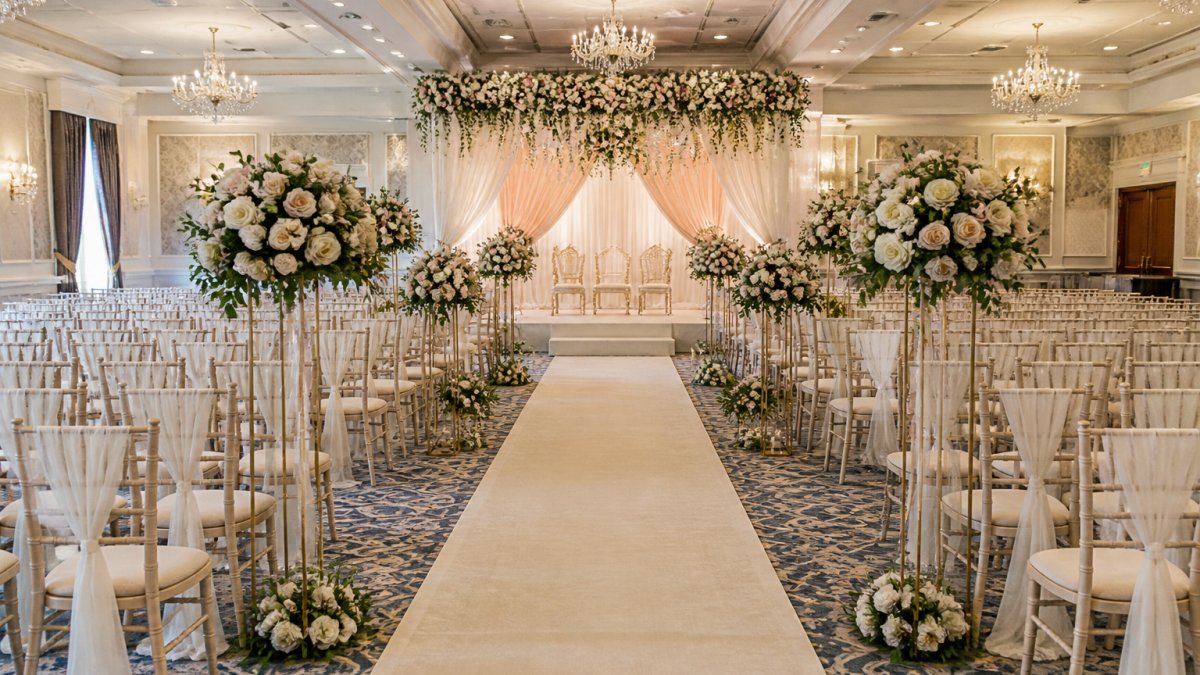
Small Asian weddings are often held in venues that were not designed for photography: community halls, restaurant private rooms, marquees and family homes. These spaces bring three recurring problems, and each has a fix you can agree before the day.
- Low ceilings and tight rooms limit where a photographer can stand. Ask them to walk the venue beforehand and identify positions that keep them out of the family's eyeline.
- Mixed lighting, tungsten, daylight through windows and coloured uplighting, causes colour casts. A photographer who shoots in raw and colour-corrects in editing will handle this; ask to see an indoor gallery from a similar room.
- Dim reception halls defeat natural-light-only shooters. If your evening event is in a low-light room, confirm the photographer carries fast lenses and off-camera flash, and ask to see examples.
Capturing rituals without disrupting an intimate gathering
With fewer guests, every movement is visible. Brief the photographer on the sequence of each ritual, the milni, the Anand Karaj, the Nikah, the vidaai, and agree where they will stand for each. A photographer who knows the order can move once, quietly, rather than repositioning throughout. Ask them to use silent shutter mode during prayers and to avoid flash during any moment the family considers sacred.
Family portraits in a small space
At a large wedding, group portraits can be staged in a side room with a queue of relatives. At an intimate wedding, the same approach disrupts the atmosphere. Instead, agree a short list of non-negotiable groups, immediate family, grandparents, siblings, and shoot them in one five-to-ten-minute window immediately after the ceremony, before guests disperse.
Multi-day and multi-venue planning
For multi-day weddings, plan each event separately and confirm travel time between venues. Build in at least 30 minutes of buffer between events for equipment changes and travel, and confirm whether the same lead photographer attends every day, consistency of style across days depends on it. Our Indian wedding photography checklist includes shot lists and multi-day timelines you can adapt.
Why Intimate Asian Wedding Photography Needs a Different Approach
Small guest lists change the job entirely. With fewer people, a photographer cannot blend into a crowd, so presence and discretion matter more than at a large celebration.
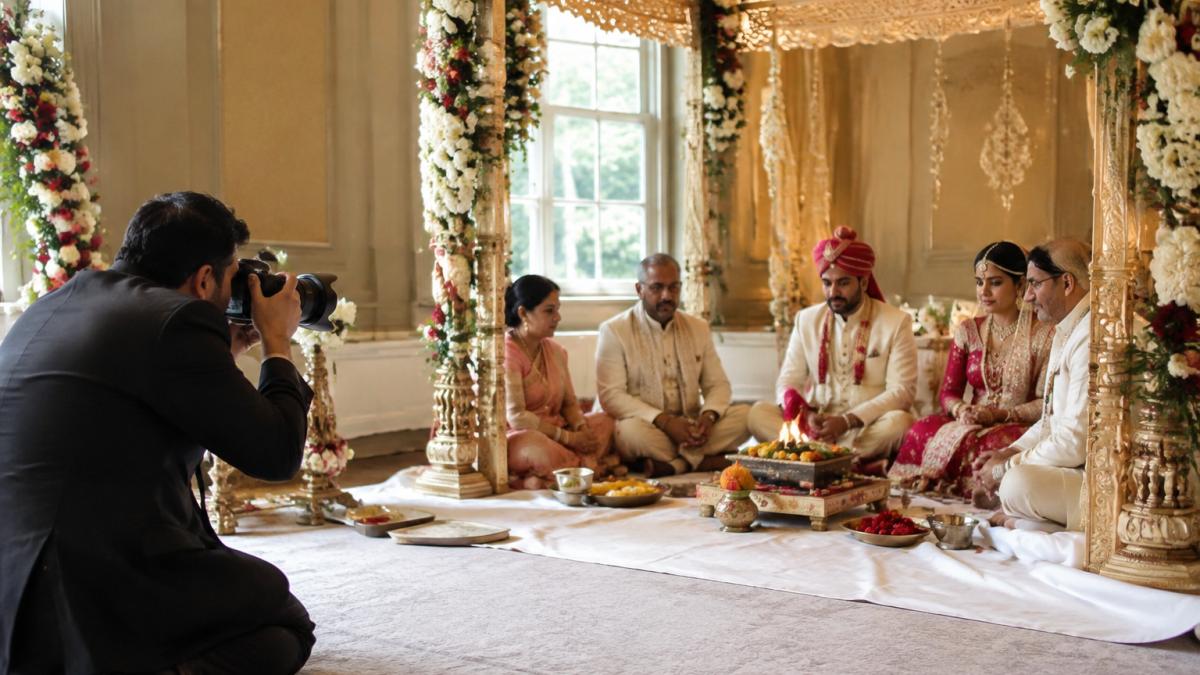
Cultural fluency is the second difference.
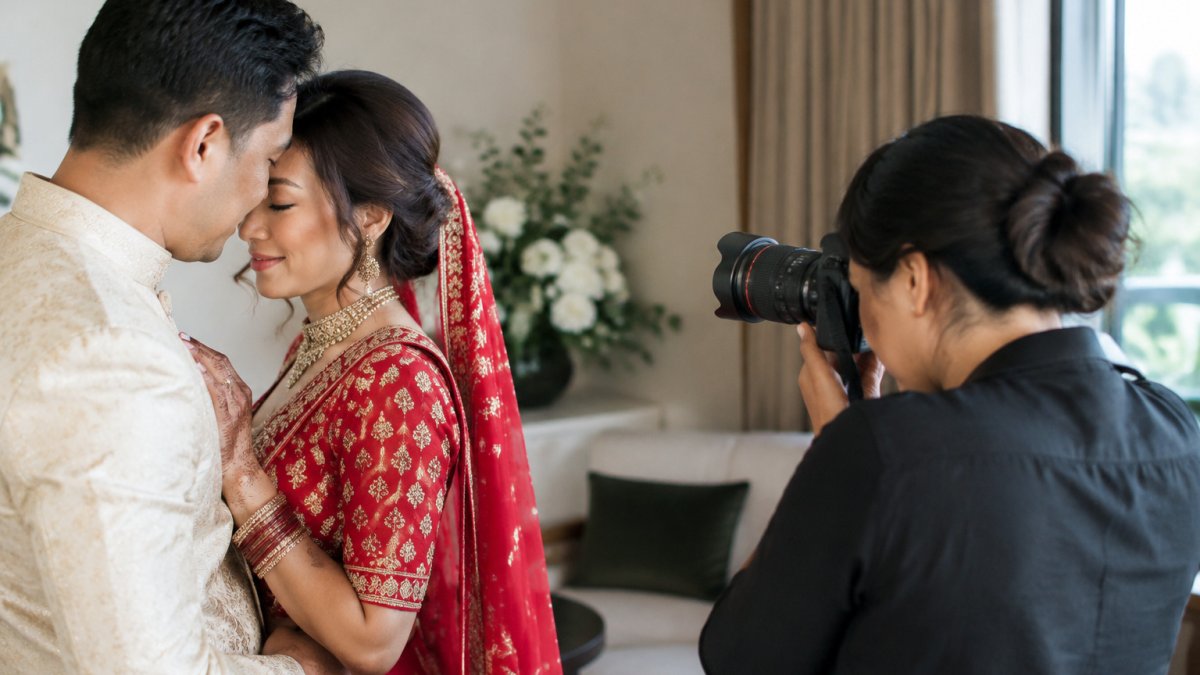
Family dynamics matter too. Sensitive moments, from the bride getting ready to quiet prayer, need a photographer who asks permission and reads the room, a conversation to have before the day, not during it.
Enquire About Your Intimate Wedding Coverage
The hardest part of choosing photographers for intimate Asian weddings is not finding talent.
If that is the standard you are holding suppliers to, we would like to talk.
Get started with Khush Studio and secure coverage that preserves your traditions with warmth and care. You can get in touch to enquire about your dates.
Your wedding will only happen once, and the photographs are what remain.
Frequently Asked Questions
How many hours of photography do we need for an intimate Asian wedding?
For a small single-day ceremony with 40 to 60 guests, six to eight hours usually covers getting ready, the ceremony, family portraits, and the first part of the reception. If your celebration runs across several days, such as a Mehndi, a Nikah or Anand Karaj, and a Walima, plan for separate coverage blocks per event. Build the timeline around the rituals you cannot miss, then add buffer for late starts, which are common when family blessings and photographs run long.
What should we look for in an Asian wedding photographer?
Look for a portfolio that shows real ceremony knowledge: does the photographer know where to stand during the Anand Karaj or the Nikah without being told? Check whether they have shot your specific tradition before, how they handle family portraits with large groups, and whether their style suits a smaller guest count. Ask about backup equipment, insurance, and how images are delivered. An experienced photographer will ask you about rituals and family dynamics before quoting, not after.
How can a photographer respectfully capture our cultural and religious traditions?
A respectful photographer learns the order of your ceremonies in advance and asks where photography is welcome and where it is not. During getting-ready moments and the Nikah, many families prefer a female photographer or a discreet, unobtrusive presence, so discuss this at the enquiry stage. The best approach is documentary: capturing rituals as they happen rather than directing them. Share a written ceremony schedule and name the moments that matter most so nothing is missed.
Should we choose photography, videography, or both for an intimate Asian wedding?
Both, if your budget allows. Photography gives you timeless images for albums and family walls, while video captures the sound of vows, prayers, and speeches that stills cannot. For intimate weddings, a single hybrid team often works better than two separate suppliers because one crew moves quietly through a small space. If you must pick one, choose photography for heirloom value, but ask whether short highlight films can be added to your package later.