 Listicle
Choosing an Indian wedding venue that honours your traditions
Last Updated: October 26, 2026
Quick Summary
An Indian wedding venue must honour your traditions whilst providing distinct spaces for Mehndi, Sangeet, ceremony, and reception, with flexibility to accommodate your multi-day celebration and varying guest counts across different events.
- Confirm the venue allows outside caterers or has expertise in your dietary needs, halal requirements, and allergen management.
- Check for on-site accommodation or nearby hotel partnerships with group rates to keep guests comfortable between events.
- Ask whether the venue has hosted Indian weddings before and allows unrestricted photographer access during ceremonies and preparation.
- Verify parking availability, accessibility for guests with mobility needs, and level pathways between all celebration spaces.
- Visit the space at the time of day your events will happen to assess natural lighting and sightlines to the mandap.
Table of Contents
- What makes an Indian wedding venue suitable for your celebration
- Indian wedding venue capacity and guest accommodation
- Indian wedding venue catering and dietary requirements
- Questions to ask a wedding venue before you commit
- Indian wedding venue checklist for your site visit
- Booking your Indian wedding venue with confidence
- Frequently Asked Questions
What makes an Indian wedding venue suitable for your celebration
An Indian wedding venue must honour your traditions whilst providing the practical spaces and flexibility your multi-day celebration demands. Compare Asian wedding venues across the UK by capacity, layout, costs and cultural requirements to find the right fit for your celebration.
The core difference between a standard event space and a true Indian wedding venue comes down to three things: understanding ceremony requirements, accommodating your guest count across multiple events, and respecting the cultural significance of each celebration moment. A venue that ticks these boxes transforms how your wedding unfolds.
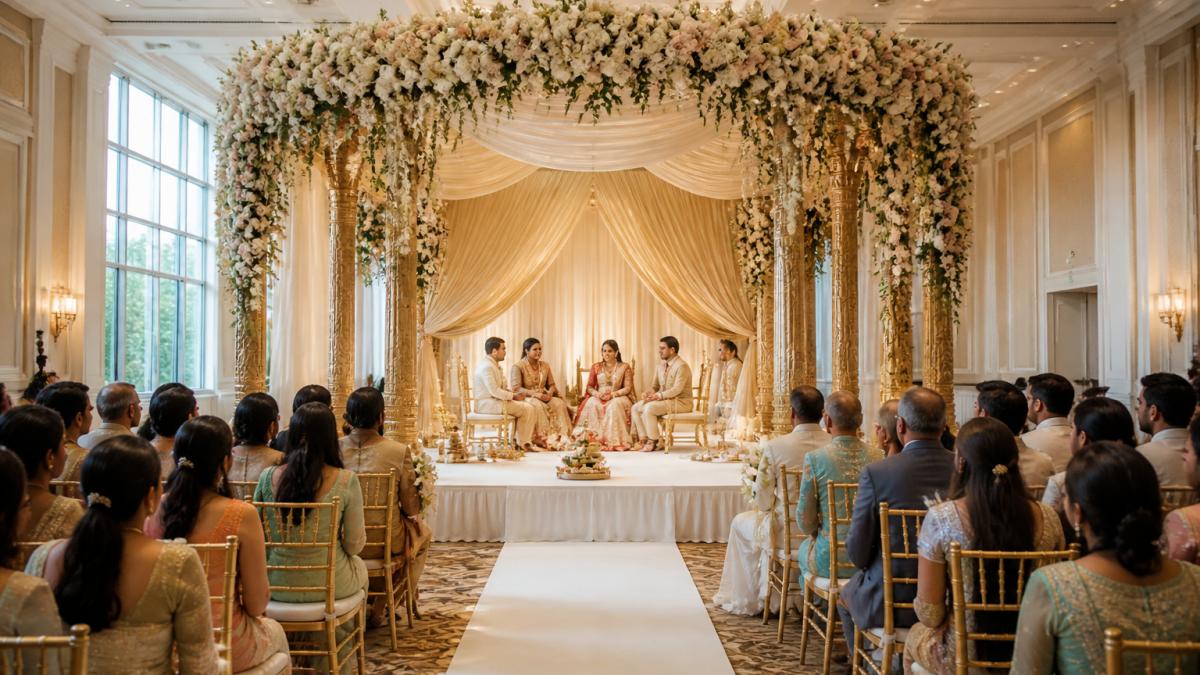
Ceremony and reception spaces that work for your traditions
Your venue needs distinct spaces for Mehndi, Sangeet, the main ceremony, and reception, ideally without moving far between them. Some couples prefer one stunning multi-purpose space; others need flexibility across different rooms or outdoor areas.
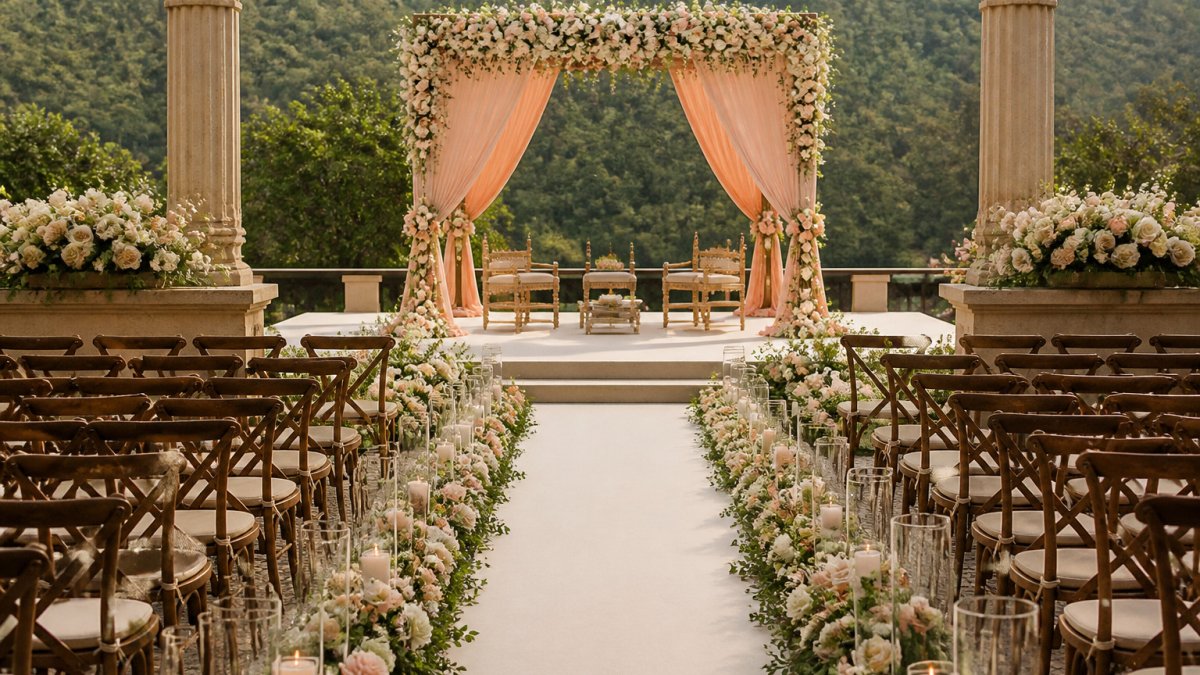
The mandap setup is non-negotiable. Whether you're planning a Hindu wedding, Sikh Anand Karaj, or Muslim Nikah, the venue must accommodate your ceremony's specific spatial needs. A good Indian wedding venue understands this isn't just decoration, it's the heart of your celebration.
Reception spaces should flow naturally from ceremony to celebration. Many couples want the ability to move guests from a formal ceremony area into a more relaxed dining and dancing space.
Multi-day event flexibility for Mehndi, Sangeet, and beyond
A three-day or four-day wedding requires venues that can accommodate you across multiple days without feeling like you're starting from scratch each time. The best Indian wedding venues offer package options that include setup, styling, and catering coordination across all your events.
Consider whether the venue allows you to use different spaces for different events. Your Mehndi might work beautifully in the gardens; your Sangeet could take over the main ballroom; your ceremony might need the dedicated mandap space.
Accommodation on-site or within walking distance becomes critical for multi-day weddings. Guests travelling from across the country or internationally need somewhere to rest between events.
Indian wedding venue capacity and guest accommodation
Getting your numbers right shapes everything else. Underestimate, and you're cramped; overestimate, and the space feels empty.
Calculating numbers for your guest list
Start with your core ceremony guest list, then work outward. Many Indian weddings see different guest counts for different events, your Mehndi might be 150 people, your main ceremony 400, your reception 300.
The venue should be able to show you floor plans for different layouts. Banquet-style seating takes more space than cocktail-style; mandap placement changes how many people fit comfortably.
Ask the venue about their minimum guest count. Some require you to book for 200+ guests even if you're planning 150. Others offer tiered pricing based on actual headcount. This affects both your budget and your planning flexibility.
On-site and nearby accommodation options
For multi-day weddings, on-site accommodation is a major selling point. Even if the venue doesn't have rooms, they should have partnerships with nearby hotels offering group rates.
Check whether the venue offers guest accommodation packages. Some include room blocks at discounted rates; others coordinate shuttle services from nearby hotels. This is especially important if you're hosting guests from overseas or from other regions who can't commute easily.
Accessibility matters here too. Can guests with mobility needs easily reach the accommodation from the ceremony spaces? Are there lifts, accessible parking, and clear pathways? These details determine whether all your guests can fully participate in your celebration.
Indian wedding venue catering and dietary requirements
Catering is where many venue choices either unlock or limit your options. The best Indian wedding venues work with your preferences rather than against them.
Outside caterers and flexibility policies
This is crucial: confirm whether the venue allows outside caterers or requires you to use their in-house team. Many couples have family recipes, specific regional cuisines, or dietary expertise that matters deeply to their celebration.
If the venue requires their catering, ask for detailed menus, tasting options, and references from other couples. You're committing to a significant portion of your budget, make sure the food aligns with your vision.
Outside catering policies should be clear in writing. Confirm the corkage fees if you're bringing wine or spirits, whether the caterer can set up in the kitchen, and what equipment is provided. Hidden costs here can derail your budget.
Halal, vegetarian, and allergen considerations
Your venue needs to demonstrate genuine understanding of dietary requirements beyond generic "vegetarian option" checkboxes. Halal requirements, jain dietary restrictions, severe allergies, and religious observances aren't afterthoughts, they're central to your celebration.
Ask the venue how they handle allergen management. Cross-contamination matters for severe allergies; proper labelling and separate preparation areas are non-negotiable. For Halal requirements, confirm whether they source certified Halal meat and understand the specific preparation methods.
The venue should be willing to work with your caterer on these requirements or demonstrate expertise in-house. References from other couples with similar dietary needs give you confidence that this won't become a stressful conversation on your wedding day.
Questions to ask a wedding venue before you commit
The right questions separate venues that understand Indian weddings from those just renting space.
Essential logistics and backup arrangements
Ask about weather contingencies. If you're planning an outdoor ceremony or garden Mehndi, what happens if it rains? Does the venue have covered spaces or indoor alternatives? For multi-day events, weather planning becomes even more critical.
Confirm the timeline flexibility. Can you have early setup the day before? How late can your celebration run? Some venues have strict cutoff times; others offer extended hours for an additional fee.
Ask about parking, both for guests and for vendors. Your photographer, caterer, and florist all need vehicle access. Confirm whether parking is free, whether there's adequate space for guest vehicles, and whether disabled access parking is available.
Cultural understanding and photographer access
This question matters more than you might expect: "Have you hosted Indian weddings before?" Experienced venues understand the flow of your celebration, the importance of specific moments, and the logistics of multi-day events.
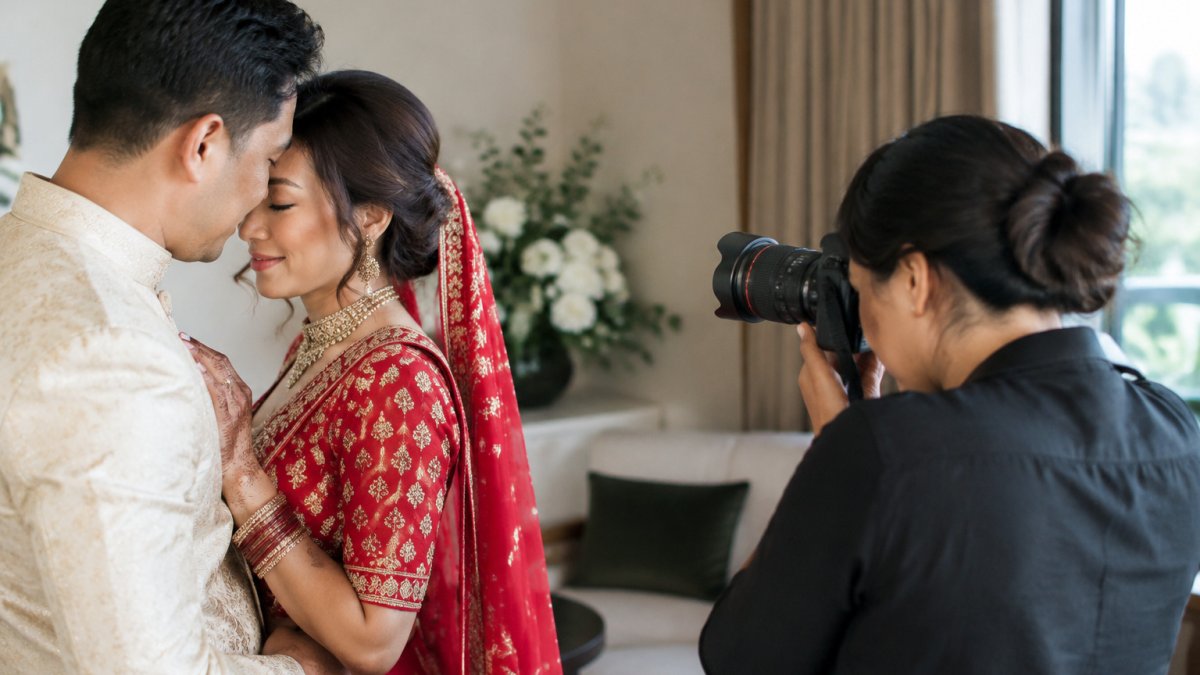
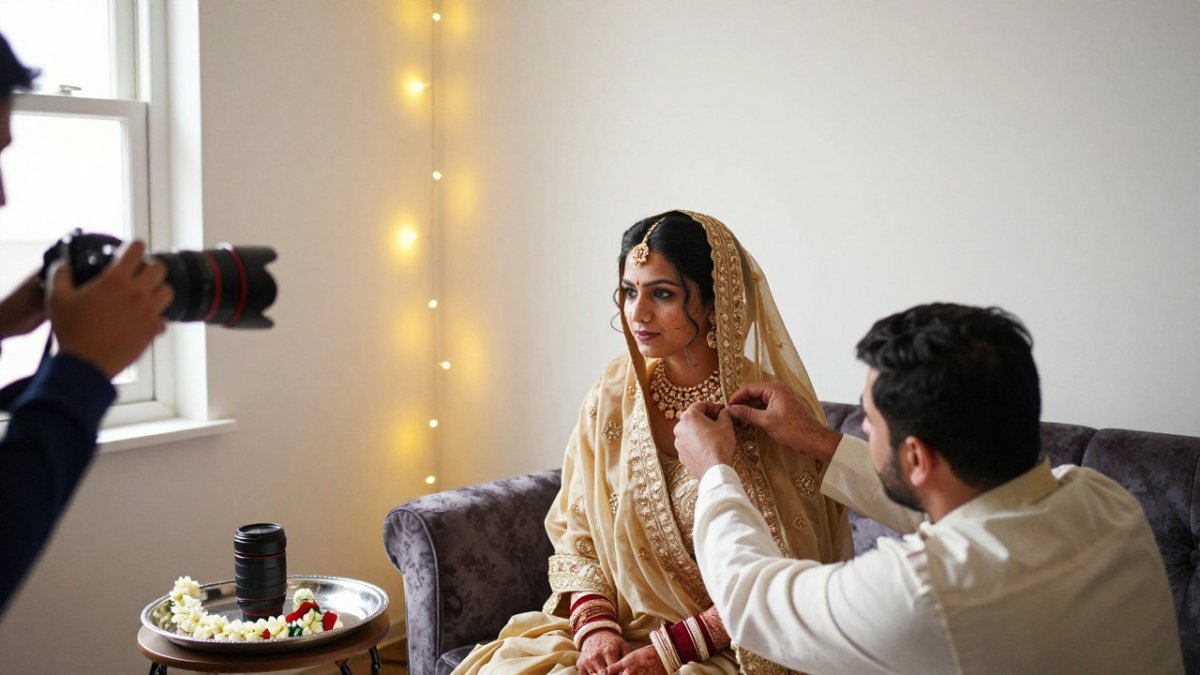
Ask directly about photographer and videographer access. Can they move freely during the ceremony? Are there restricted areas? Will the venue's own lighting interfere with professional photography?
Confirm whether the venue allows external vendors or requires you to use their preferred suppliers. Some venues have exclusive catering or photography arrangements; others welcome your chosen professionals. This affects both your creative control and your budget.
Indian wedding venue checklist for your site visit
Seeing the space in person reveals details no photo or description captures.
Layout, lighting, and accessibility
Walk through the space at the time of day your events will happen. Morning light differs dramatically from evening light. If your Mehndi is at 2pm, visit at 2pm.
Check sightlines. Stand where guests will sit during the ceremony. Can you see the mandap clearly? Are there pillars or structural elements blocking views? Walk the path your bride will take, is it level, well-lit, and dignified?
Accessibility is non-negotiable. Are there steps between spaces? Can guests with mobility aids navigate easily? Is there accessible parking close to entrances? Are there accessible toilets? These details determine whether all your guests feel welcomed and included.
Documenting your visit and comparing venues
Take photos and videos of each space. Walk through slowly, capturing the light, the dimensions, the flow between areas. When you're comparing multiple venues weeks later, these recordings help you remember details that photos alone miss.
Create a simple comparison table for the venues you're considering. Note capacity for each event type, catering policies, accommodation options, outdoor space, and parking. This makes your decision process clearer and helps you discuss options with your family.
Ask the venue for floor plans and renderings. Can they show you how your Mehndi setup would look? How would the mandap be positioned for your ceremony? Visual confirmation reduces surprises on the day.
Booking your Indian wedding venue with confidence
Once you've found your venue, the booking process should feel straightforward.
Clarify what's included in the package. Does it cover tables, chairs, linens, basic lighting, and setup? What's an additional cost?
Request a final walkthrough closer to your wedding date. Confirm setup plans, vendor access times, and any last-minute changes to the space.
When you're ready to move forward with your venue choice, the next critical step is securing your photography and videography team. Your venue choice influences how your celebration can be documented, the lighting, the flow between spaces, the access to intimate moments. Tips for multi-day wedding photography explains how to plan coverage across your Mehndi, Sangeet, ceremony, and reception so every precious moment is captured beautifully.
For personalized guidance on how your venue choice affects your photography planning, or to discuss your specific celebration needs, get in touch with Khush Studio.
Choosing an Indian wedding venue is one of the most consequential decisions in your planning journey.
| Venue Consideration | What to Look For | Why It Matters |
|---|---|---|
| Ceremony spaces | Dedicated mandap area, clear sightlines, flexible positioning | Ensures your ceremony feels sacred and is photographed beautifully |
| Multi-day flexibility | Separate spaces for Mehndi, Sangeet, reception or one adaptable space | Allows distinct atmospheres for each celebration without moving venues |
| Guest accommodation | On-site rooms or nearby hotel partnerships with group rates | Keeps guests comfortable and reduces travel fatigue between events |
| Catering policy | Outside caterers allowed or in-house expertise in your dietary needs | Gives you control over food that reflects your family's traditions |
| Photographer access | Unrestricted movement during ceremony, access to preparation spaces | Enables authentic documentation of intimate moments |
| Parking and accessibility | Dedicated disabled access, adequate guest parking, level pathways | Ensures all guests feel welcomed and can navigate comfortably |
The UK catering standards guide outlines requirements for allergen management and dietary accommodation, useful reference points when discussing your venue's catering capabilities.
Frequently Asked Questions
What should you look for when choosing an Indian wedding venue?
Look for a venue that offers separate ceremony and reception spaces, can accommodate your guest count comfortably, and allows flexibility for multi-day events like Mehndi and Sangeet. Check whether the venue permits outside caterers, understands cultural requirements like mandap setup, and provides adequate accommodation nearby. Verify that staff respect the significance of your traditions and that the venue has experience hosting Indian weddings.
What questions should you ask an Indian wedding venue before booking?
Ask about exclusive hire options, backup indoor space if your ceremony is outdoors, and policies on outside caterers. Enquire how the venue handles dietary requirements like Halal and vegetarian options, whether photographers have full access to all events, and what happens if key moments are missed or quality issues arise. Confirm their experience with multi-day Asian weddings and whether they understand the cultural significance of your specific traditions.
How do you check whether a venue can accommodate an Indian wedding ceremony?
Visit the venue in person and assess both ceremony and reception spaces. Check that there's room for a mandap or altar setup, adequate space for guests to move comfortably, and suitable lighting for photography. Ask about outdoor options and indoor backup, electrical access for sound systems, and parking. Confirm the venue has hosted similar weddings before and can provide references from previous Indian or Asian wedding clients.
What capacity should your Indian wedding venue have?
Capacity depends on your guest list, but consider that Indian weddings often include extended family and community. A typical celebration might accommodate 100 to 400+ guests across multiple events. Factor in separate spaces for ceremonies, receptions, and pre-wedding celebrations like Mehndi. Ensure the venue can comfortably fit your numbers without feeling cramped, and verify that nearby accommodation can house out-of-town guests.