 How-to
Tips for Multi Day Wedding Photography: A Complete Guide
Last Updated: October 23, 2026
Quick Summary
Multi day wedding photography is the practice of planning camera coverage across several separate events so the full story holds together as one set of images. Allocate hours by event importance, build a timeline event by event, and plan rest, travel and backup equipment between days.
- A Mehndi or Sangeet needs 4-5 hours, the ceremony day 8-10 hours and the reception 5-6 hours.
- Add 45 minutes before each event start for setup and detail shots.
- Schedule a rest block between events, because a tired team misses moments on day three.
- Pack two camera bodies and at least two spare lenses for a multi-day booking.
- Use the same editing style across every event to keep the weekend consistent.
Table of Contents
- Why Multi Day Wedding Photography Needs a Different Plan
- How to Allocate Wedding Photography Coverage Hours Across Events
- Building a Wedding Photography Timeline That Works Across Days
- The Multi Day Wedding Photography Shot List and Family Photo System
- Indian Wedding Photography Lighting Tips for Changing Venues and Times
- Logistics Between Events: Travel, Rest and Backup Equipment
- Keeping Visual Storytelling Consistent Across the Wedding Weekend
- Conclusion
- Frequently Asked Questions
Why Multi Day Wedding Photography Needs a Different Plan
A three-day wedding is not one long wedding day. It is three separate events, each with its own light, its own schedule and its own emotional weight. Treating multi day wedding photography like a single-day shoot is the fastest way to end up with gaps in the story.
At Khush Studio, we have covered Asian weddings since 2002, and the pattern is always the same. Couples who plan coverage event by event get a complete album. Couples who book one long day and hope for the best end up missing the quieter moments.
Here is the core idea: multi day wedding photography is the practice of planning camera coverage across several separate events so the full story holds together as one set of images. The plan comes first. The photographs follow.
What most guides miss is the rest between events. A photographer who is exhausted by day three produces flat work. Build recovery into the schedule from the start.
How to Allocate Wedding Photography Coverage Hours Across Events
Start with the event, not the clock. Each function has a natural arc, and your wedding photography coverage hours should follow it. Here is how we would split a typical three-day celebration:
- Mehndi or Sangeet: 4-5 hours, mostly evening, focus on henna details, dancing and candid guest moments
- Ceremony day (Anand Karaj, Nikah or Hindu ceremony): 8-10 hours, covering getting ready through to the first meal
- Reception: 5-6 hours, from guest arrivals to the final speeches
Half-day coverage suits a single intimate function. Full-day coverage suits the ceremony day. Multi-day coverage suits the whole weekend.
For couples weighing up a three-day booking, our guide to three day Asian wedding videography coverage walks through the same planning logic for film.
Here is how we would split coverage hours across a typical three-day celebration.
| Event | Coverage hours | Focus |
|---|---|---|
| Mehndi or Sangeet | 4-5 hours, mostly evening | Henna details, dancing, candid guest moments |
| Ceremony day | 8-10 hours | Getting ready through to the first meal |
| Reception | 5-6 hours | Guest arrivals to the final speeches |
| Half-day coverage | Single intimate function | Suits one function only |
| Full-day coverage | Ceremony day | Suits the longest single event |
| Multi-day coverage | Whole weekend | Suits the full celebration |
Building a Wedding Photography Timeline That Works Across Days
The wedding photography timeline is the backbone of the whole booking. Build it backwards from each event's ceremony start time, then repeat the process for every day. What most guides skip is the actual shape of a multi-day schedule, so here is a workable template you can adapt. Refining the flow of these individual days requires a broader wedding planning timeline to ensure that logistical transitions remain seamless throughout the entire celebration.
A sample three-day coverage plan
Day one, welcome event (Mehndi or Sangeet)
- 14:00, photographer arrives, scouts the room and photographs décor and detail shots
- 15:00, henna application, close-ups of hands and patterns
- 17:00, guest arrivals and candid interactions
- 18:30, dancing, performances and family group shots
- 21:00, coverage ends (roughly 7 hours)
Day two, ceremony day
- 08:00, getting-ready coverage, attire and accessories
- 09:30, first look or family portraits before the ceremony
- 11:00, ceremony begins; ceremony coverage through to the first meal
- 14:00, family photos immediately after the ceremony
- 15:30, couple portraits during the calmest window
- 18:00, coverage ends (roughly 10 hours)
Day three, reception
- 16:00, venue and tablescape details before guests arrive
- 17:30, guest arrivals and drinks reception
- 19:00, speeches and formal moments
- 20:30, dancing and candid celebration
- 22:30, coverage ends (roughly 6.5 hours)
How to build your own version
- Confirm each event's official start and end time with the venue, in writing
- Add 45 minutes before each start for setup and detail shots
- Block 20 minutes for couple portraits on the calmest day, usually day two
- Reserve 15 minutes for family photos immediately after the ceremony
- Leave a 30-minute buffer before any travel between venues
- Schedule a rest block between events; a tired team misses moments on day three
A common mistake is cramming portraits into a day that is already full. In practice, the second day is usually the kindest for portraits. Guests are settled, and the couple is less rushed.
The Multi Day Wedding Photography Shot List and Family Photo System
The wedding photography shot list is where multi-day weddings are won or lost. One list for three days does not work. Build a separate list per event, then a master list that ties them together.
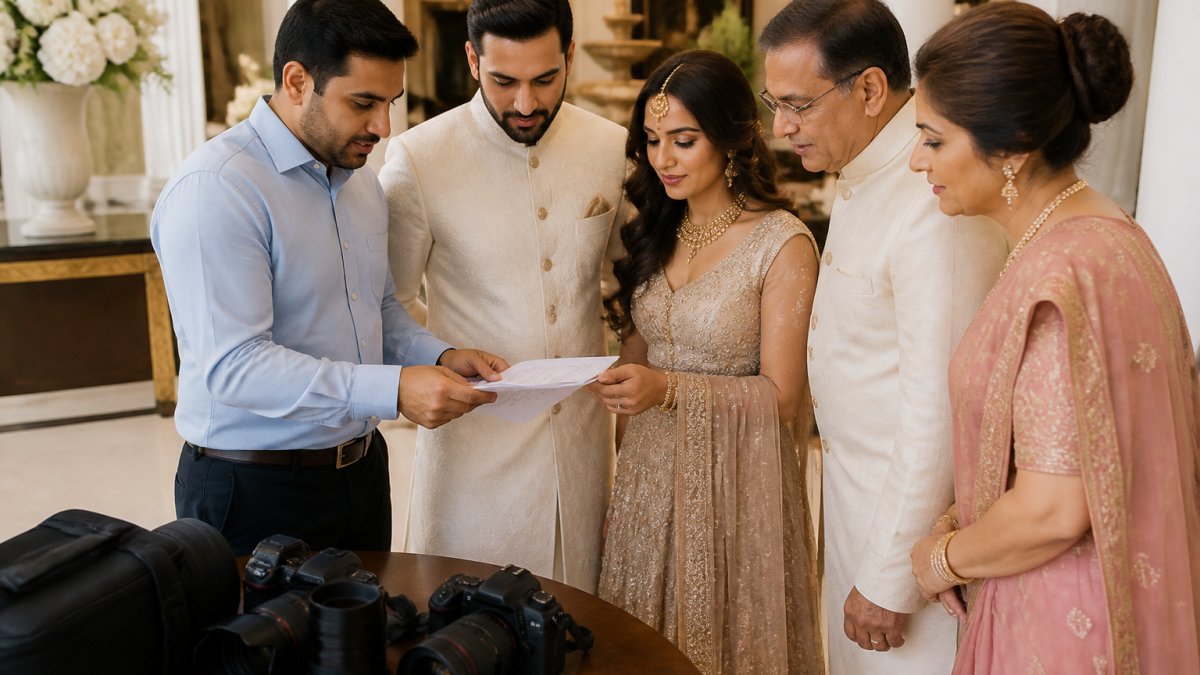
For family photos, use a simple system:
- Name one family coordinator per side
- List every group photo by name, not by description
- Cap each group shot at three minutes
- Schedule family photos right after the ceremony, before guests drift
For a ready-made starting point, our Indian wedding photography checklist gives you seven essential steps you can adapt across each day.
Indian Wedding Photography Lighting Tips for Changing Venues and Times
Light changes with every venue, and multi-day weddings move between venues constantly. Our Indian wedding photography lighting tips come down to one rule: scout the light before the event, not during it.
- Visit each venue at the same time of day as the event
- Note where natural light falls during the ceremony
- Test flash bounce off ceilings and walls before guests arrive
- Carry a fast lens for dim reception halls
- Keep flash batteries charged and swapped between events
If you are covering an Anand Karaj across venues, our guide to capturing Anand Karaj ceremony traditions goes deeper into the rituals and how light shifts around them.
Logistics Between Events: Travel, Rest and Backup Equipment
Logistics decide whether day three looks as strong as day one. Plan travel between venues before the wedding week, not on the morning of. The mechanism is simple: treat every transition as a scheduled block with its own buffer, and treat every piece of equipment as if it will fail.
Travel and venue transitions
- Map the drive between each venue and add 30 minutes to the estimate
- Check for roadworks, match-day traffic and school-run congestion on the actual day of the week
- Book accommodation near the ceremony venue, not the reception, so the longest day starts closest to home
- Confirm parking and loading access with each venue in advance; city-centre venues often have none
- Carry a printed route and a charged phone mount; sat-nav failures happen at the worst moment
Rest blocks and team rotation
A multi-day booking is a stamina event. Build recovery into the schedule from the start:
- Schedule a real rest block between events, not a working lunch, an actual break
- Rotate a second photographer so no one covers more than two consecutive long days
- Agree a cut-off time each night; editing and culling can wait until the morning
- Keep hydration and food in the plan; a team that skips meals produces flat work by day three
Equipment redundancy
Backup equipment is not optional on a multi-day booking. A failed card on day two cannot be reshot. We treat every event as if it is the only one:
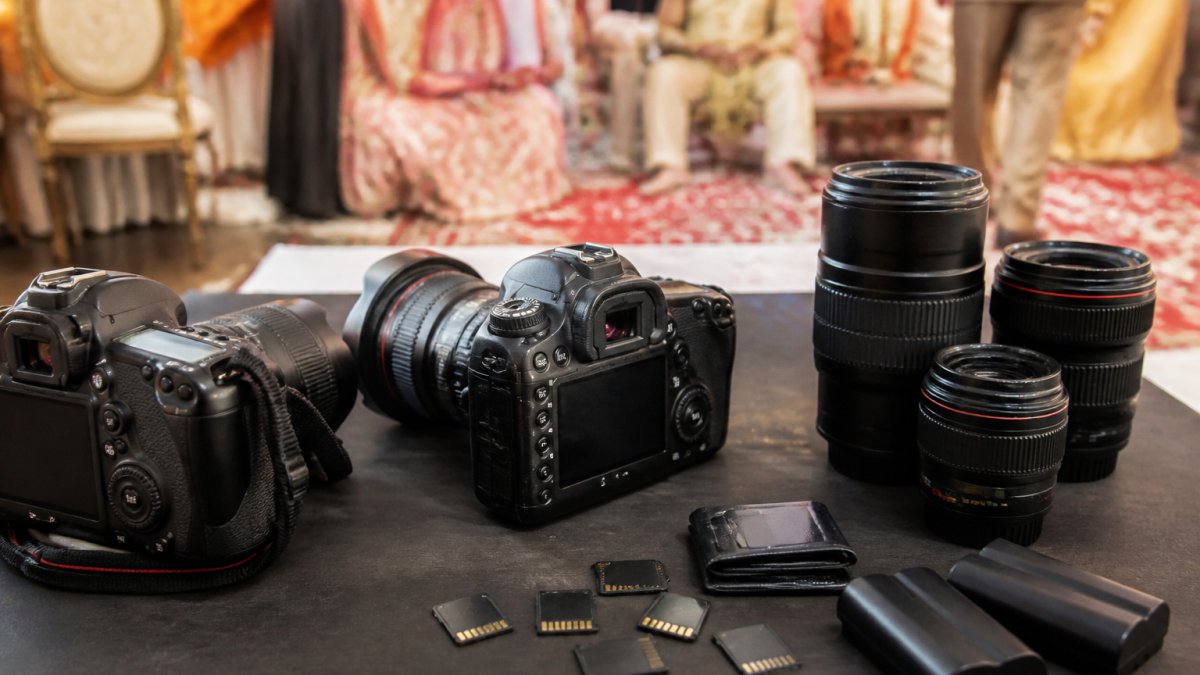
- Pack two camera bodies and at least two spare lenses
- Double the memory cards you think you need and swap cards between events, not during them
- Charge every battery overnight, every night, and carry a second charger
- Bring a backup flash and spare batteries for dim reception halls
- Offload and back up cards at the end of each day, not at the end of the weekend
If you want to talk through your own schedule and logistics, you can get in touch with our team to discuss the plan.
Keeping Visual Storytelling Consistent Across the Wedding Weekend
Consistency is what separates a set of photos from a story. The wedding weekend should feel like one narrative, even when it spans three venues and three days.
How we keep it consistent:
- Use the same editing style across every event
- Carry a consistent colour palette through the album
- Sequence images by emotion, not strictly by time
- Include quiet, candid moments alongside the big rituals
For a deeper look at how storytelling shapes the final set, read can storytelling bring your wedding photography to life.
Conclusion
A multi-day wedding asks more of your photography plan than any single-day booking. Hours, timelines, shot lists and logistics all need to work together across every event.
At Khush Studio, we have spent over 20 years photographing Indian, Sikh and Muslim weddings, and we build every multi-day booking around a plan made for your specific schedule. Our team offers tailored packages, a discreet approach and artistic storytelling that carries across the whole weekend.
Get started with Khush Studio and capture every day of your celebration as one complete story.
Frequently Asked Questions
How many hours of wedding photography coverage do you need for a multi-day wedding?
It depends on how many events you are holding. A common split is six to eight hours for the first day, eight to ten for the main ceremony day, and four to six for a reception or final brunch. Add travel time between venues and a short buffer before key rituals. Khush Studio builds coverage hours around your event schedule rather than selling a fixed block, so you only pay for the time that matters.
How do you keep photos consistent across several days and venues?
Consistency comes from planning, not luck. Share a mood board and a list of must-have photos with your photographer before the first event. Ask them to keep editing style, colour grading and framing consistent across the gallery. Where venues differ in lighting, the photographer adjusts camera settings and flash use while keeping the final look the same. A single photographer or team covering all days, as Khush Studio does, makes this far easier.
What should we ask a photographer before booking multi-day coverage?
Ask how many events they have covered in a single weekend, whether the same lead photographer attends every day, and how they handle travel between venues. Confirm what is included in the package: hours, number of edited images, delivery time and backup arrangements. Also ask how they prepare for cultural and religious traditions such as the Anand Karaj or Nikah. Khush Studio has covered Asian weddings for over 20 years and can walk you through this on enquiry.
What lighting challenges should we expect across multiple events?
Expect a mix of natural light, low-light indoor ceremonies, and mixed artificial lighting at receptions. Getting-ready rooms are often dim, while mandaps and stages can be lit with coloured uplighting. Share the event schedule and venue details in advance so your photographer can plan flash, lenses and backup equipment. Indian wedding photography lighting tips often include arriving early to test light and using off-camera flash for evening rituals.