 How-to
How Do You Plan Candid Photos at a Mehndi Party?
Last Updated: November 2, 2026
Quick Summary
Plan candid photos at a mehndi party with a clear timeline, a focused shot list and a photographer who understands the customs. Build in 20 to 30 minutes after the henna is finished for portraits, group shots and candid moments, and share your shot list a week before the event.
- Your photographer should arrive early to shoot the room, decor and henna trays before guests arrive.
- The henna application usually runs for an hour or more, depending on the design.
- Share the shot list a week before the event and leave room for the unexpected.
- Ask the venue to keep coloured lighting away from the henna station and the bride's seat.
- Point out three or four key guests and give the photographer their names and likely seating.
Table of Contents
- Start with a Mehndi Party Photography Timeline
- Build a Mehndi Party Photography Shot List
- Plan Mehndi Ceremony Photography Lighting
- Choose Mehndi Photoshoot Poses That Feel Natural
- Brief Your Photographer on Henna and Ceremony Customs
- Cover Every Guest, Family Member and Friend
- Select, Share and Preserve Your Mehndi Party Photos
- Enquire About Mehndi Party Coverage
- Frequently Asked Questions
Start with a Mehndi Party Photography Timeline
Great candid photos don't happen by accident. They come from a plan that gives your photographer room to move while the celebration unfolds around them. The best mehndi party images usually come from a simple, well-shared schedule.
A mehndi party is the pre-wedding celebration where henna is applied to the bride's hands and feet, usually amid music, food and family. Establishing a loose flow for the festivities ensures that the most meaningful interactions are not missed, much like the deliberate steps one might take to create wedding timeline without relying on digital tools.
Here's a timeline that works well for most mehndi parties.
Before the Mehndi Application Begins
This is the calm before the colour. Your photographer should arrive early to shoot the room, the decor and the henna trays before guests fill the space.
- The bride's outfit, jewellery and bangles laid out
- Empty hands and feet, ready for the first strokes
- Close-ups of the henna cones and design books
These early shots anchor your album. They also give the photographer time to check light and angles before the room gets busy.
During the Henna Session
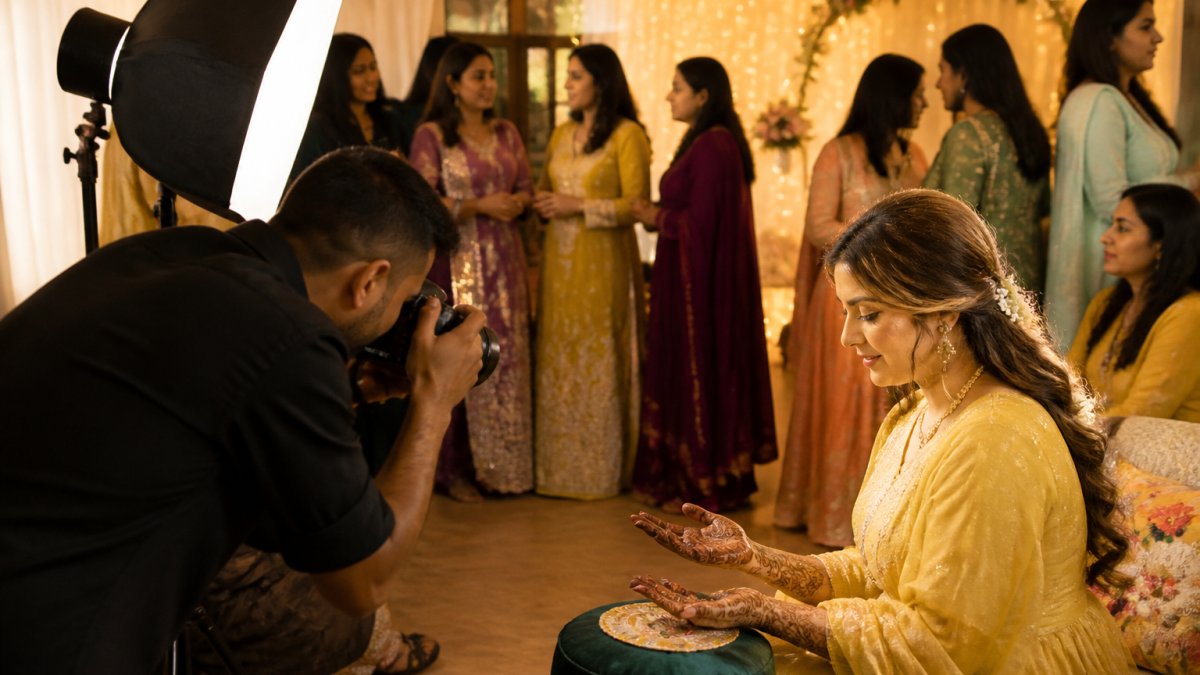
The application itself is the heart of the coverage. Expect this to run for an hour or more, depending on the design.
Your photographer should move between wide shots of the gathering and tight shots of the artist at work. Candid laughter, guests peeking at the design and the bride's patient expression all belong here.
After the Designs Are Finished
Once the henna is complete, the mood lifts. This is the time for portraits, group shots and the couple's first quiet moment together.
It's also when the best candid photos often appear: friends admiring the design, the bride holding her hands up to the light, a grandmother's reaction.
If your mehndi spans several days alongside other events, our guide to multi day wedding photography covers how to plan coverage hours across every function.
Build a Mehndi Party Photography Shot List
A shot list turns good intentions into a reliable plan. It tells your photographer what matters most, so nothing important is left to chance.
Share the list a week before the event. Keep it to the moments you truly care about, and leave room for the unexpected.
Henna Design Close-Ups and Details
These are the shots that freeze the frame on the artistry itself.
- Overhead shots of both palms, fully decorated
- Macro close-ups of intricate henna lines and swirls
- The artist's hand mid-stroke, cone in position
Henna darkens over the following days, so the fresh, deep colour at the party is worth capturing properly.
Bride, Couple and Group Poses
This is where your mehndi party photography shot list earns its keep. Plan the groupings in advance so nobody waits around.
- Bride solo, hands raised and turned to camera
- Bride with her mother and sisters
- Bride with her closest friends, seated and standing
Plan Mehndi Ceremony Photography Lighting
Light is the difference between flat snapshots and rich, warm images. Most mehndi parties happen indoors or in the evening, so plan the light before the day arrives.
Match the lighting plan to the venue type
- Community halls and banqueting suites: These usually have high ceilings and mixed tungsten and fluorescent light. Ask the venue whether the fluorescents can be switched off or dimmed, as mixed lighting can make henna read differently in photos.
- Marquees and tipis: Daylight through fabric is soft and flattering, but it falls away fast after sunset. Ask the marquee supplier what lighting is included and whether extra circuits are available for a photographer's lights.
- Family homes: Ceiling lights directly overhead cast hard shadows under hands and faces. Move the henna station near a window for daytime coverage, and use a single off-camera flash bounced off a pale wall for the evening.
Control the colour of the henna
Henna is a deep red-brown that shifts depending on the light source. Coloured uplighting, LED dance floors and coloured marquee washes will tint the bride's hands and make the design look orange, purple or green in the final images. Ask the venue to keep coloured lighting away from the henna station and the bride's seat, and brief the photographer to check white balance against a grey card at the start of the session.
Plan for the light you cannot control
Even with a plan, light changes. A few practical steps make a big difference:
- Ask the venue about existing light, dimming controls and whether the room has windows that will darken during the event.
- Visit or request photos of the space at the same time of day as your party, so the photographer can plan positions in advance.
- Consider bringing lighting equipment for evening coverage, such as off-camera flash, so the photographer can work in darker rooms.
Good mehndi ceremony photography lighting keeps skin tones natural and shows the true colour of the henna. If you're planning coverage across multiple venues, ask your photographer to visit or review photos of each space beforehand, and agree a simple fallback plan for when the room is darker than expected.
Choose Mehndi Photoshoot Poses That Feel Natural
Stiff, over-directed poses look exactly like what they are. The best mehndi photoshoot poses are barely poses at all.
Start with movement. Ask the bride to turn her hands slowly, adjust a bangle or share a joke with her friends.
A few poses that consistently work:
- Hands held up together, palms facing out
- One hand resting on the other, rings visible
- Bride looking down at her henna, then lifting her eyes
The less you perform, the better the images. For more on relaxing in front of the camera, see lay back, act natural.
Brief Your Photographer on Henna and Ceremony Customs
This step is often skipped, and it's the one that matters most. A photographer who understands the customs will anticipate moments instead of chasing them. See how one photographer documents Muslim wedding traditions from mehndi to walima.
Tell your photographer:
- Which rituals will happen and in what order
- Who applies the henna and whether there are family traditions involved
- Any moments that are private or sensitive
A common mistake is assuming the photographer already knows. They may not. A short brief protects your ceremony and your photos.
Cover Every Guest, Family Member and Friend
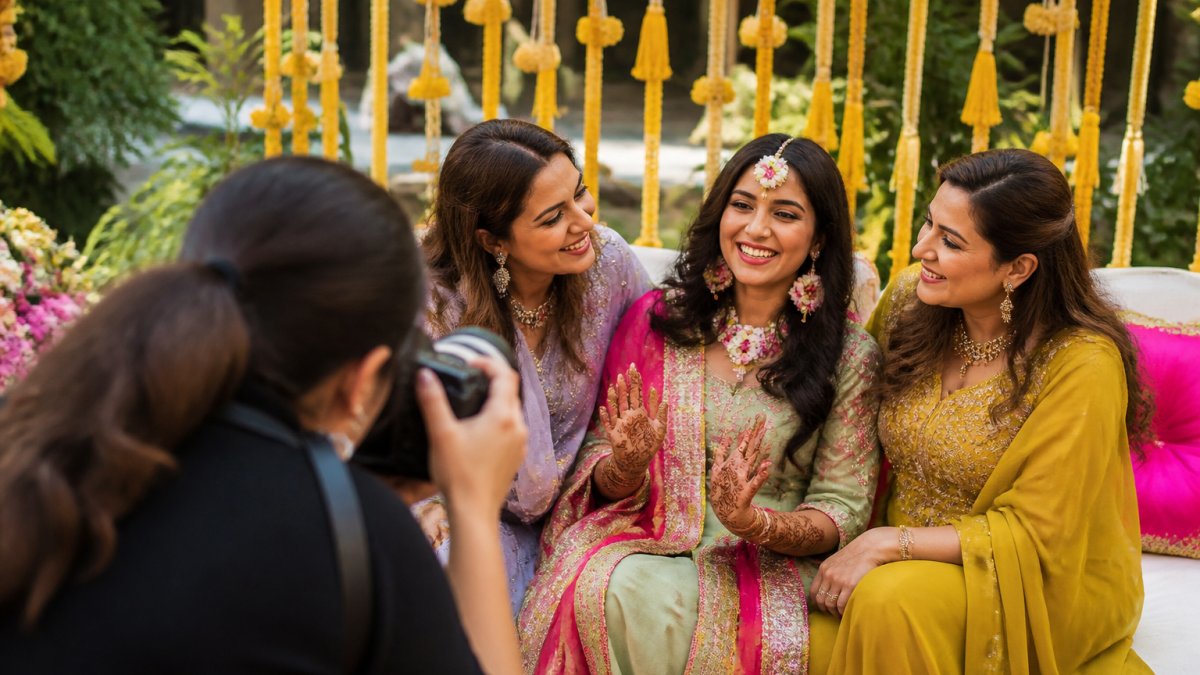
Candid coverage should reach beyond the bride. The guests are half the story, and they're the people you'll want to remember years later. Most pose-led guides stop at a list of group shots; the gap is inclusive coverage that works for every generation and every guest.
Capture the generations
Ask your photographer to spend time on:
- Grandparents and elders: Seat them where the light is good and the henna station is visible, and ask the photographer to spend five quiet minutes with them early, before the room gets busy. Elders often relax once they have been photographed once.
- Children: They are naturally curious about the henna cones and the artist's work. Crouch to their eye level and shoot the moment they lean in to watch, rather than asking them to pose.
- Friends in the background: The laughter, the shared plates of food and the arrivals in colourful outfits are the texture of the party. Ask for a mix of wide frames and tighter candid moments.
Make coverage inclusive
Inclusive coverage means every guest appears in the album, including those who are often left out of the frame:
- Guests with mobility needs: Check access to the henna station and seating in advance, and ask the photographer to frame seated guests at eye level rather than shooting down at them.
- Guests who do not want posed photos: Brief the photographer to capture them candidly from a distance, and respect a clear no. A discreet long lens is better than pressure.
- Guests from different cultural backgrounds: Explain any customs they may not know, and ask the photographer to capture their reactions and participation rather than only the rituals.
Give the photographer names, not just numbers
A useful tip: point out three or four guests who mean the most to you, and give the photographer their names and where they are likely to be sitting. A photographer who knows that a particular aunt has travelled from abroad, or that a grandfather is the last surviving elder of his generation, will make sure they are in the frame. This is the single most useful thing you can add to a shot list.
Inclusive coverage means every generation appears in the album, giving you spontaneous shots that make a mehndi party feel alive.
Select, Share and Preserve Your Mehndi Party Photos
The event ends, but the work isn't done. Plan how you'll handle the images afterwards.
- Ask how and when your gallery will be delivered
- Request a mix of edited highlights and full-resolution files
- Choose a shortlist for printing and framing
A short reel or highlight video of the mehndi party is also worth requesting. It captures the music, laughter and movement that stills can't hold.
| Stage | What to Do | When |
|---|---|---|
| Before henna | Shoot decor, outfit, empty hands | Arrival |
| During henna | Capture artist, guests, candid moments | Application |
| After henna | Portraits, groups, couple shots | Final 30 minutes |
| After the event | Select, back up and share | Within two weeks |
Enquire About Mehndi Party Coverage
Planning candid photos at a mehndi party comes down to a clear timeline, a focused shot list and a photographer who understands the customs.
Khush Studio has covered Asian weddings since 2002, with over 20 years of experience across Indian, Sikh and Muslim ceremonies. We offer a discreet approach and tailored packages.
Ready to talk through your mehndi party? Get in touch to enquire about coverage.
Frequently Asked Questions
Which moments should a photographer capture at a mehndi party?
A strong mehndi party gallery covers the arrival of the bride and close family, the first strokes of henna on the bride's hands, close-ups of intricate henna designs, candid laughter among friends, group poses with the wedding party, couple portraits, and family and guest interactions. Also include the decor, colourful outfits, rings and jewellery, and the quiet moments when the bride inspects her finished mehndi. A written shot list agreed in advance means nothing important is missed.
How long should a photographer stay at a mehndi party?
Most mehndi parties need three to four hours of coverage. Arrive before the henna application starts to capture the room and decor, stay through the main henna session and group photos, and finish with couple portraits and guest candids. If the bride's henna takes longer or the party moves into dinner and dancing, add an hour. Discuss the schedule with your photographer so the mehndi party photography timeline matches the actual running order.
How should you plan lighting for mehndi party photos?
Mehndi parties often happen indoors with mixed lighting, so plan ahead. Ask the photographer to visit the venue or review photos of the space before the day. Keep the bride near a window or a controlled light source during the application. For evening celebrations, use warm, subtle flash that doesn't overpower the decor. Good mehndi ceremony photography lighting keeps skin tones natural and henna detail sharp.
How can you get natural-looking candid wedding photos?
The best candids come from a relaxed room. Brief your photographer to blend in, use a longer lens and avoid directing every moment. Give guests a rough idea of when key events happen so they aren't caught off guard, but let conversations and laughter unfold on their own. A few gentle prompts for group poses help, then step back. The result is spontaneous shots that feel like memories, not a staged photoshoot.
Your mehndi party only happens once. Let Khush Studio document it with the care it deserves, from the first henna stroke to the last shared laugh. Get started with Khush Studio and preserve every candid moment in a gallery you'll return to for years.