 How-to
Respecting Cultural Rituals in Wedding Photography: A Guide
Last Updated: November 11, 2026
Quick Summary
Respecting cultural rituals during wedding photography means learning what each moment means before shooting, asking the photographer direct questions, and agreeing a shot list and privacy rules in advance. Since rituals vary from family to family, each wedding needs its own preparation, with clear limits on which moments are photographed and who makes the final call.
- Ask prospective photographers which ceremony moments they know well and how they handle private ones.
- Agree a short shot list of about 20 focused shots with the couple and key family members months ahead.
- At Sikh weddings, remove shoes where required, cover your head, avoid flash, and keep still during the Laavan.
- Settle consent in three decisions: what may be photographed, what may be shared, and how long files are kept.
- Nominate one trusted family contact to resolve conflicting instructions on the day, and stop shooting when a restriction is raised.
Table of Contents
- Why Cultural Rituals Need Careful Handling in Wedding Photography
- Questions to Ask a Wedding Photographer About Cultural Traditions
- Building a Shot List for Cultural Ceremonies
- Sikh Wedding Photography Etiquette
- Privacy and Consent in Wedding Photography
- Handling Uncertainty and Sensitive Moments on the Day
- Booking Your Consultation and Preparing Your Photography Team
- Frequently Asked Questions
Why Cultural Rituals Need Careful Handling in Wedding Photography
Respecting cultural rituals during wedding photography means knowing what each moment means before you raise a camera. The rituals are rarely the same from one family to the next, which is why each wedding needs its own preparation. A ceremony that feels routine to a photographer can carry deep religious weight for the couple and their elders.
Couples often worry about this most. Many have heard stories of photographers missing key moments because they did not know what to look for. Others fear a photographer will wander into a private space or interrupt a sacred part of the day. These are reasonable concerns, and a good photographer should answer them before the wedding.
Treat the ceremony as the family's story, not the photographer's. Rituals like the Laavan or the Nikah have set meanings, timing and etiquette. Knowing those details helps a photographer work without getting in the way.
Questions to Ask a Wedding Photographer About Cultural Traditions
Ask direct questions before you book. A photographer who understands your traditions will answer clearly and without hesitation.
Useful questions include:
- Have you photographed our specific ceremony before, and which parts do you know well?
- Which moments do you regard as private, and how do you handle them?
- How do you prepare for ceremonies held in a gurdwara, mosque or home?
- Who decides where you can stand during the ceremony?
- What do you do if a family member asks you not to photograph something?
The answers tell you more than a portfolio can. To see what an Anand Karaj photographer covers from pre-ceremony to Gurdwara rules, read what to expect from your Anand Karaj photographer. Listen for specific detail rather than general reassurance.
Building a Shot List for Cultural Ceremonies
A shot list keeps the important moments from being missed on a busy day. Agree it with your photographer months ahead, then share it with the family members who will guide the photographer during the day.
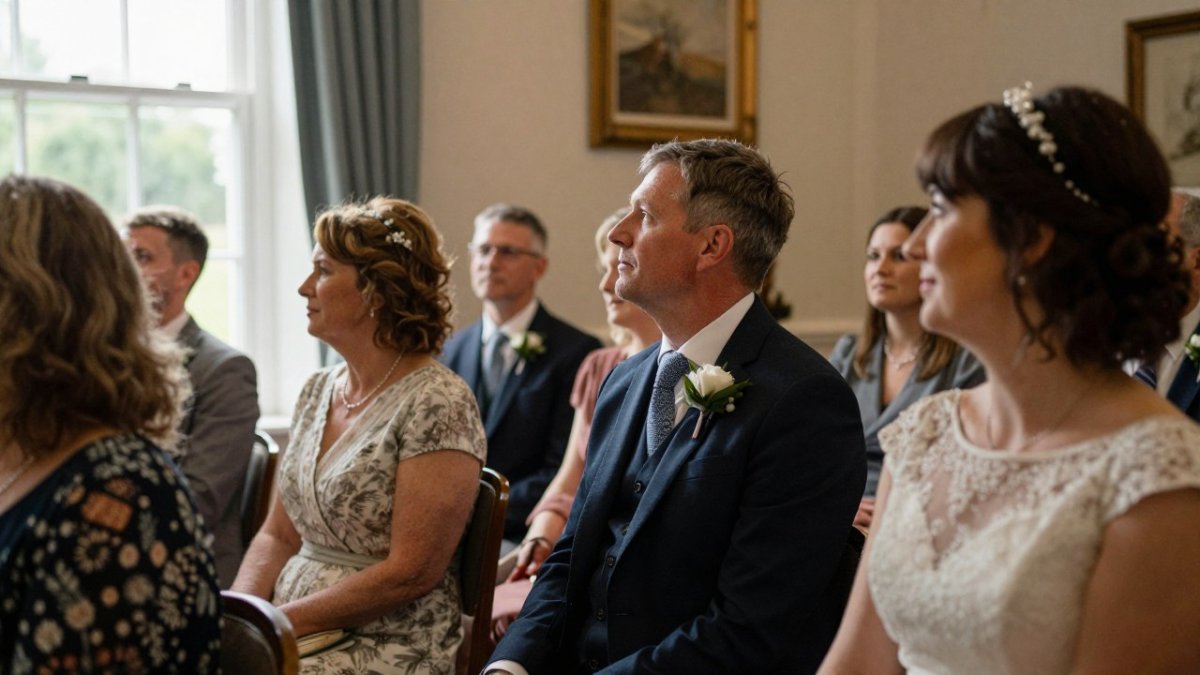
A practical list includes:
- The arrival of the groom's family and the welcome
- Key ritual moments, such as the exchange of garlands or the Laavan circles
- Close family portraits with elders
- Details like attire, jewellery and the decor of the venue
- Candid moments with guests between rituals
Keep the list short enough to be useful. A list of 20 focused shots works better than 100 vague ones.
Sikh Wedding Photography Etiquette
Sikh weddings take place in a gurdwara, and the setting calls for quiet respect. Photographers should remove shoes where required, cover their heads, and avoid flash during the Anand Karaj. Stand where you will not block the Guru Granth Sahib or the path of the couple and the granthi.
Many families prefer the photographer to stay still during the most sacred moments, such as the Laavan. A good photographer keeps movement to a minimum and works from a discreet position. For a deeper walkthrough of Anand Karaj traditions, the Laavan and the ceremony order, read the photographer's guide to capturing Anand Karaj traditions. This approach helps avoid disturbing the ceremony.
Privacy and Consent in Wedding Photography
Privacy in wedding photography is a practical workflow, not only a courtesy, and most problems arise because consent was assumed rather than agreed. Treat consent as three separate decisions: what you may photograph, what you may share, and how long you may keep the files. For the specific consent guidance on a Nikah ceremony, see how to protect privacy during a Nikah ceremony. Each needs its own answer from the couple, and ideally from any family member whose presence or image is sensitive.
Start with the spaces. Agree in writing which areas are private, such as the getting-ready rooms, the bride's or groom's family quarters during a ceremony, and any room where a religious or personal ritual takes place. Ask the couple to name these areas on the venue plan you receive, so the rule is visible on the day rather than remembered by one person.
Next, agree the moments. Ask the couple to list any moments they do not want photographed at all, and any they want photographed but not published. Some families accept photography of a ritual but object to its appearance on social media, so keep these two categories separate in your notes.
Then agree the approval chain. Decide in advance who reviews a selection before it is posted or sent to vendors. A common pattern is for the couple to approve a short preview set before any public use, while a designated family contact reviews images of elders or of rituals with restricted visibility. Record the names and roles of these people in your booking notes.
Finally, agree storage and delivery. State how long raw and edited files will be kept, how they will be transferred, and whether any images will be used in your portfolio. Portfolio use is the most common point of friction, so ask for explicit permission rather than assuming it, and offer a clear opt-out.
Watch out: a verbal agreement made at the venue on the morning of the wedding is the easiest to forget, so confirm every point in writing at the consultation and again in the final timeline.
The article breaks consent into a few decisions the couple should settle in advance:
| Decision | What to agree | When to confirm |
|---|---|---|
| Private spaces | Getting-ready rooms and rooms for religious or personal rituals | In writing at the consultation |
| Restricted moments | Moments not to photograph, or photographed but not published | Listed by the couple before the day |
| Approval chain | Who reviews previews before public use | Recorded in booking notes |
| Storage and portfolio | How long files are kept and whether portfolio use is allowed | Explicit permission, with an opt-out offered |
Handling Uncertainty and Sensitive Moments on the Day
Even a well-planned day produces moments you did not anticipate: a ritual runs early, a grandparent asks you to stop, two relatives give you opposite instructions, or a room is suddenly closed. Having a short set of decision rules, agreed in advance, means you respond consistently rather than improvising under pressure.
Begin with one point of contact. Ask the couple to nominate a single trusted family member, ideally someone who knows the ceremony well, to be reachable throughout. When guests or vendors give you conflicting instructions, refer them to this person rather than choosing between them yourself. Give that person a simple way to reach you, such as a discreet hand signal or a message, so they can flag sensitive moments without interrupting the ceremony.
When you do not recognise a ritual, do not guess. Step back to a neutral position, keep shooting only wide, non-intrusive frames of the wider scene if it is permitted, and ask the contact for guidance at the next natural pause. Your research before the day should have identified the usual sequence, but families vary, and the person in the room decides.
When a restriction is raised mid-ceremony, stop immediately, lower the camera, and move to a position where you are not visible to the central participants. Do not argue or explain your intent in the moment. Note the time and the moment, and raise it with the couple later so the restriction is recorded for the rest of the event and for the post-event review.
When two instructions conflict, the couple's instruction takes priority over guests and vendors, and a religious leader's direction on the conduct of a sacred space takes priority over both for matters within that space. Confirm this hierarchy at the consultation so no one has to decide it on the day.
Watch out: a photographer who keeps shooting while waiting for clarification can create the image the family most wanted to avoid, so when in doubt, pause first and resume only after you have a clear answer.
Booking Your Consultation and Preparing Your Photography Team
Before you commit, arrange a consultation. Use it to walk through your ceremony order, share your shot list and talk through privacy and consent. Before you book, check the seven things to look for in an Indian wedding photographer. Bring the names of the family members who will guide the photographers on the day.
Prepare your team early. Share the timeline with the photographer, videographer and any second shooter, and confirm who is responsible for each ritual. Clear roles prevent confusion when the day moves quickly.
To enquire about photography for your ceremony, contact Khush Studio and ask for a consultation.
Respecting the rituals of your wedding takes planning, honest conversation and the right photographer. Khush Studio has spent over 20 years documenting Indian, Sikh and Muslim weddings with warmth and discretion, and we would be glad to help you plan a respectful, detailed record of your day. Get in touch to enquire and start the conversation today.
Frequently Asked Questions
How can a wedding photographer respectfully capture cultural rituals?
A respectful photographer researches the ceremony before the day, asks the couple which moments are sacred and which are open to photography, and keeps a low profile during prayers or blessings. Working unobtrusively, using longer lenses where needed, and avoiding staged poses during the rite itself all help. Checking with the family's elders about any restrictions on flash, filming or specific angles lets the photographer document the day without intruding on its meaning.
Should photographers ask permission before photographing religious ceremonies?
Yes. Permission should come from the couple first and, where relevant, from the officiant or religious institution hosting the ceremony, since some places of worship restrict photography entirely or only during certain parts. Asking early, ideally during the consultation, avoids last-minute conflict. Photographers should also confirm whether the families want images shared publicly, as consent can differ between the ceremony itself and later online use.
What should a photographer do if they are unsure about a ritual?
The photographer should pause, observe quietly and ask a trusted family member or the couple's coordinator discreetly rather than guessing. Choosing to step back for a moment is almost always better than capturing something that may be inappropriate. Afterwards, the photographer can note the uncertainty in their debrief so that future coverage of similar ceremonies is better prepared.
What should couples tell their photographer about cultural traditions before the wedding?
Couples should share the order of the ceremonies, the names of key rituals, which moments are most important to them and which are private, such as the women's getting-ready time or the Nikah. They should also flag any restrictions tied to gender, dress or sacred objects, and name family members who should not be photographed without asking. A written timeline and a short call with the lead photographer help turn these details into a usable plan.