 Ultimate guide
What to Look for in Muslim Wedding Photographers
Last Updated: November 10, 2026
Quick Summary
When choosing muslim wedding photographers, look beyond the portfolio for ceremony literacy, conduct around elders and private moments, and a clear process. Ask how many Muslim weddings they have covered, who exactly will attend on the day, and how modest, gender-separated coverage and privacy terms are agreed in writing.
- Weigh ceremony literacy, conduct and process above images when you shortlist.
- Experience with Nikah, Mehndi, Baraat and Walima shows a photographer can hold a multi-day schedule.
- Nikkah photography rewards anticipation over speed because the signing and dua are brief.
- Ask who will be in the women's spaces and get it fixed in the contract.
- Packages should state coverage hours, events, team, deliverables and privacy terms in writing.
Table of Contents
- Why Muslim Wedding Photographers Need More Than a Good Portfolio
- Experience With Nikah, Mehndi, Baraat and Walima
- Nikkah Photography: Capturing the Ceremony Itself
- Respect, Modesty and Gender-Separated Coverage
- When a Female Muslim Wedding Photographer Matters
- Questions to Ask a Wedding Photographer Before You Book
- What Muslim Wedding Photography Packages Should Cover
- Enquire About Your Date and Build a Shortlist
- Frequently Asked Questions
Why Muslim Wedding Photographers Need More Than a Good Portfolio
A polished portfolio shows you what a photographer can do on their best day.
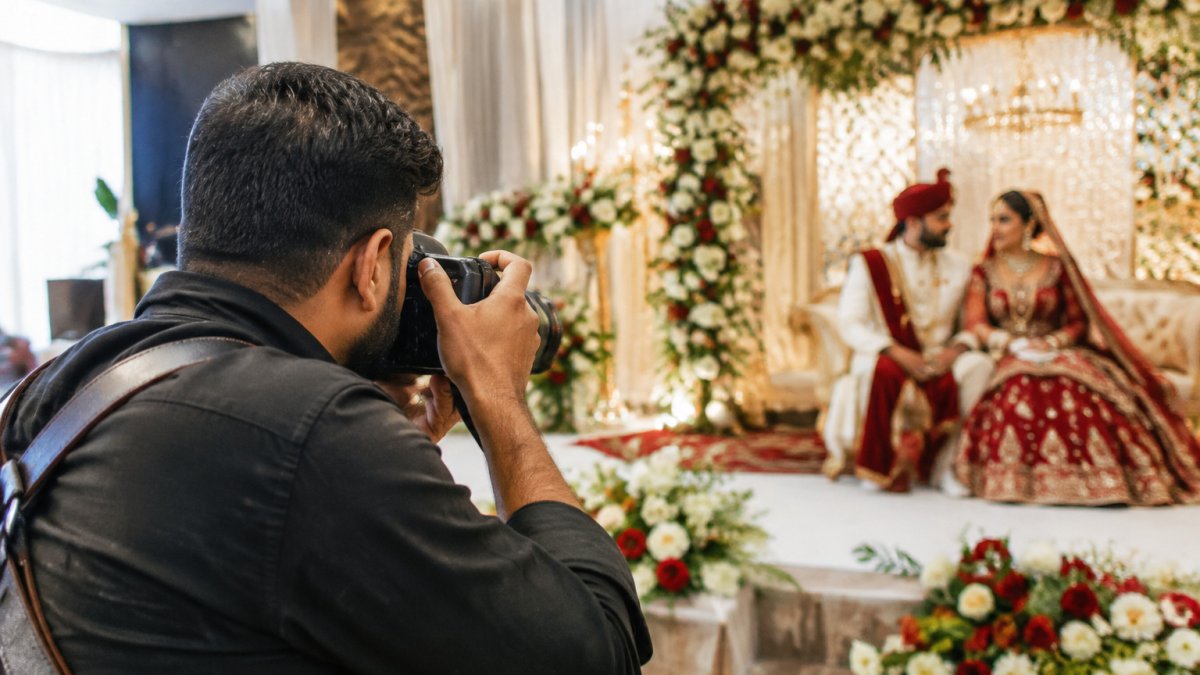
Muslim wedding photographers are hired for two jobs at once: making beautiful images and protecting the meaning of the day. The second job is invisible in a portfolio.
A common mistake is booking on style alone. Style can be learned in an afternoon; cultural fluency cannot. When you shortlist, weigh these three things above the images:
- Ceremony literacy: can they name the key parts of a Nikah without prompting?
- Conduct: how do they behave around elders and during private moments?
- Process: what happens before, during and after the day?
Watch out: a photographer who has never covered a Muslim wedding may still produce lovely portraits and miss the exact moment the dua is made.
If you want to see how a specialist studio actually works a Muslim wedding, explore our Muslim wedding photography and videography before you read further.
Experience With Nikah, Mehndi, Baraat and Walima
Multi-day weddings break inexperienced photographers. Four events across several venues, different light in each, and family who expect you to know the rhythm without being told.
Ask what they have actually covered, not what they have seen. A photographer who has shot a Mehndi knows the henna needs to be captured early, before the evening crowd arrives.
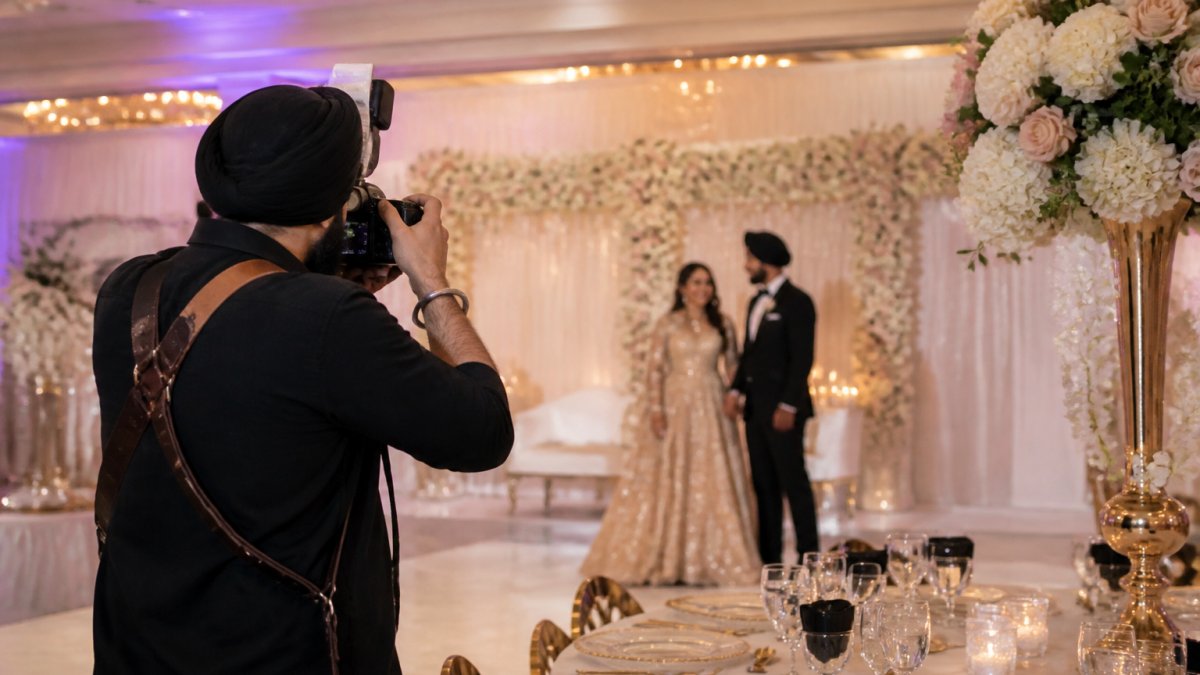
The same applies to the Walima, where the reception lighting is often the hardest of the week. Read how we document each event from Mehndi to Walima to see the difference between a photographer who turns up and one who plans.
Nikkah Photography: Capturing the Ceremony Itself
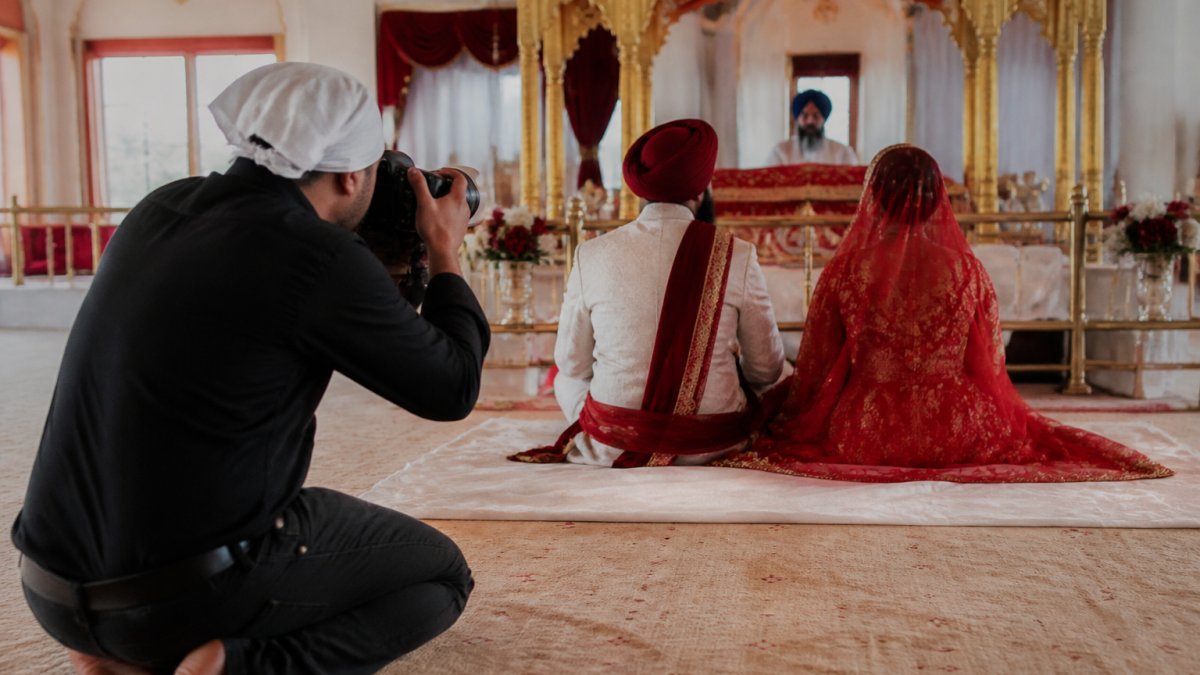
Nikkah photography is the documentation of the marriage contract and the moments around it: the signing, the witnesses, the exchange of consent, the dua, and the first look between bride and groom.
The ceremony rewards anticipation over speed. The signing is brief. The dua is brief.
Modest, tradition-respecting framing matters here too. If you want pose and shot-list ideas you can hand to your photographer, browse Muslim wedding photography ideas that keep the ceremony dignified.
Respect, Modesty and Gender-Separated Coverage
Respect is not a mood, it is a set of agreements made before the day.
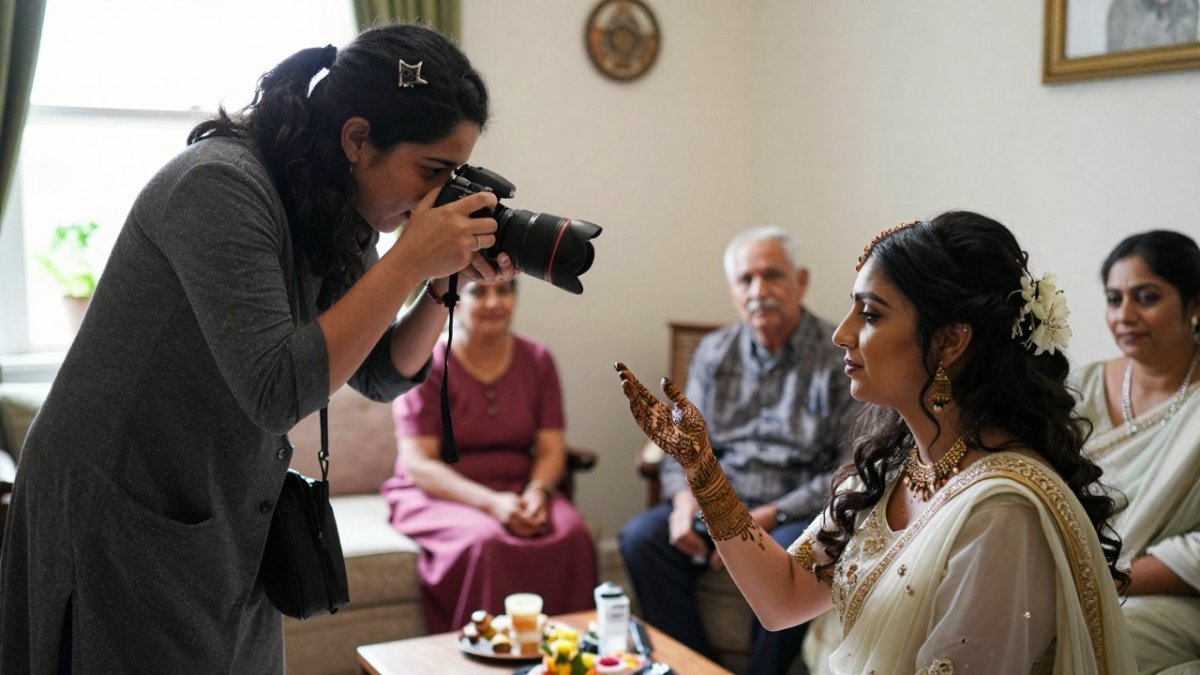
What most guides miss is that the photographer is not the only risk. A well-briefed photographer can still be undermined by a guest with a phone.
For the practical side of consent, guest briefing and what stays private, learn how to protect privacy during a Nikah. It is worth reading before you brief anyone.
When a Female Muslim Wedding Photographer Matters
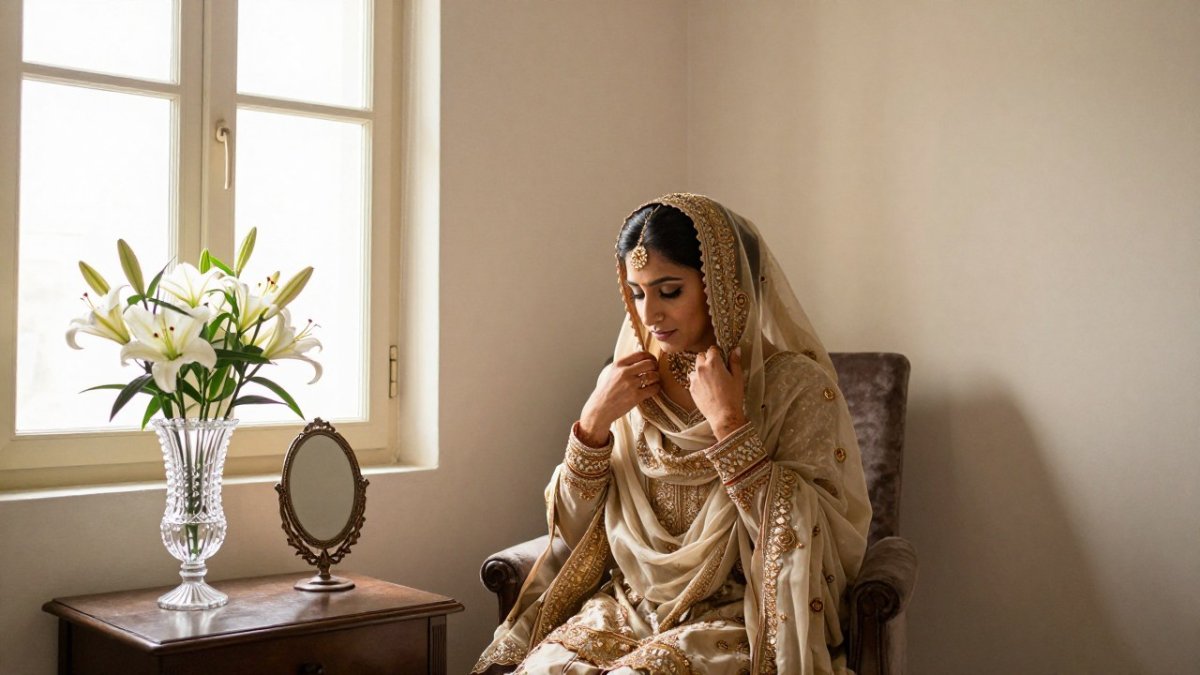
A female Muslim wedding photographer is not a box-ticking preference. For many families she is the only person who can be in the room during the bride's preparations, henna and private moments.
Ask directly: who will be in the women's spaces, and is that fixed in the contract?
If a female lead is essential for your family, say so in your first message. It is a reasonable request.
Questions to Ask a Wedding Photographer Before You Book
The right questions to ask a wedding photographer are the ones that reveal process, not personality. Anyone can be charming on a call. Fewer can explain what happens if a key moment is missed, a second shooter falls ill, or a family asks for images to stay private. The checklist below is built to surface those answers, and each question is paired with what a strong response sounds like so you can judge it in the moment.
Ceremony and cultural experience
- Which parts of a Nikah do you photograph, and where do you stand? A strong answer names the signing, the witnesses, the exchange of consent, the dua and the first look, and explains where they position themselves for each. A weak answer describes the ceremony only in general terms.
- How many Muslim weddings have you covered in the last two years, and at which venues? Ask for a number and a venue list, not a claim of cultural awareness.
- How do you handle a Mehndi, a Baraat and a Walima differently? Listen for specifics: henna captured early before the crowd arrives, a Baraat shot from the side rather than the middle of the procession, and Walima reception lighting planned in advance.
- What is your approach to modest framing and gender-separated spaces? A good answer describes sightlines, lens choices and where the photographer stands, not just a promise to be respectful.
Staffing, consent and privacy
- Who exactly will attend on the day, and are they named in the contract? Insist on names and roles. A studio that cannot say who will be in the women's spaces until the morning is a risk.
- Can you cover gender-separated events, and how do the teams coordinate? Ask how the two teams communicate during simultaneous events and who owns the shot list for each side.
- How do we specify which images stay private? A strong answer describes a written image-sharing agreement covering social media, portfolio use and guest photography, and explains how restrictions are passed to the whole team.
- How will you brief guests about phone photography? The photographer is not the only risk to privacy. Ask whether they will help you put rules in writing and whether they will ask the venue to support them.
Contracts, deliverables and contingency
- What is your backup plan for equipment failure or illness? Look for named backup bodies and lenses, a second shooter who can step in, and a written contingency clause.
- When do we receive the final gallery, and in what format? Get a date, not a range. Ask how many edited images are included, whether raw files are available, and how long the gallery stays online.
- What are your cancellation and postponement terms? Multi-day weddings are expensive to reschedule; check deposits, refunds and whether dates can be moved.
- Have you worked at our venues before, and what are the access restrictions? Venue knowledge affects lighting, movement and where a photographer can stand during the ceremony.
Watch out: a photographer who answers "we'll figure it out on the day" to the privacy or contingency question is telling you something. Believe them, and ask for the answer in writing before you pay a deposit.
What Muslim Wedding Photography Packages Should Cover
Muslim wedding photography packages should state coverage hours, the number of events, the team attending, deliverable formats and privacy terms in writing. Anything left vague becomes a conversation after the wedding, when you have the least leverage. The framework below lets you compare quotes line by line rather than on the headline price, which is usually the least useful number on the page.
Compare quotes on these lines
| What to compare | Why it matters | What to ask for |
|---|---|---|
| Coverage hours per event | Multi-day weddings rarely fit a single-day package | Hours for each of the Nikah, Mehndi, Baraat and Walima, plus overtime rates |
| Number of events included | A four-event week is not a one-day booking | A written event list with dates and venues |
| Team size and roles | Gender-separated events need separate coverage | Names, roles and which side each person covers |
| Second shooters | Simultaneous events cannot be covered by one person | Whether a second shooter is included or an add-on, and the cost |
| Travel and accommodation | Venue changes across a week add up | Whether travel is included, capped or billed at cost |
| Editing and image count | Headline price often hides a low edited count | Number of edited images, editing style, and whether raw files are available |
| Albums and prints | Often quoted separately | Whether an album is included, its size, and the cost of extras |
| Delivery timeline | A long wait is a hidden cost | A date for the final gallery, not a range |
| Privacy and consent terms | Protects the family, not just the couple | A written image-sharing agreement |
| Contingency clauses | Covers illness, equipment and venue issues | Backup equipment, backup photographer and cancellation terms |
Build a like-for-like comparison
Ask every shortlisted photographer for a written quote using the same event list and the same questions. Then compare the totals on three lines: coverage (hours, events, team), deliverables (edited images, album, timeline) and risk (privacy terms, contingency, cancellation).
Pricing depends on the number of events, dates, team size and delivery, so ask for a written quote rather than a figure over the phone.
Watch out: a package that quotes a single photographer for a gender-separated wedding is either misunderstanding your event or planning to miss one side. To see how coverage hours and privacy terms stack up, compare private Nikah photography packages side by side.
Enquire About Your Date and Build a Shortlist
The shortlist you build in one evening decides the images you keep for a lifetime. Start with three photographers who can prove ceremony experience, then test them on conduct and process, not portfolio alone.
At Khush Studio we have photographed Asian weddings since 2002, with more than 20 years of experience across Indian, Sikh and Muslim ceremonies.
A good shortlist starts with the right questions and ends with a team you trust in the room.
Frequently Asked Questions
What should I look for in a Muslim wedding photographer?
Start with proof of experience across the events you are actually holding: nikah, mehndi, baraat and walima. Ask to see two or three full galleries rather than a highlights reel, so you can judge how they handle low light, crowds and quiet moments. Confirm their approach to modesty, whether they can provide a female photographer, and how they plan gender-separated spaces. Finally, check the contract covers dates, delivery times and contingency plans in writing.
What questions should I ask a wedding photographer before booking?
Ask how many Muslim weddings they have covered in the past two years, how they handle separate male and female gatherings, and whether a female photographer is available for getting-ready coverage. Ask who will actually shoot on the day, what happens if they fall ill, how long editing takes, and how images are shared with family. Request a full gallery, not a portfolio edit, and ask how they coordinate a shot list with your family elders.
Can I request a female photographer for a Muslim wedding?
Yes, and many couples do. If getting-ready coverage or the women's gathering is private, a female Muslim wedding photographer can work in those spaces without anyone needing to adjust their dress or hijab. Ask whether she is part of the studio's own team or a trusted associate, confirm she will attend the whole event rather than part of it, and check that her editing style matches the rest of your gallery.
How do photographers handle gender-separated celebrations?
Good photographers plan it before the day. That means a site visit or floor plan, agreeing which rooms are mixed and which are women-only, and splitting the team so one photographer covers each space at the same time. Ask how they will capture both sides of the family without anyone feeling watched, and how they will brief any second shooter so your family's preferences are respected without repeated explanations.
What should a Muslim wedding photography package include?
Look for the number of events covered, hours on each day, number of photographers, edited image counts, delivery timelines and whether videography is included. Confirm album options, printing rights and how images are stored afterwards. Pricing depends on event count, dates and delivery, so ask for a written quote rather than comparing headline figures, and check what counts as extra time or an additional event.
Should I ask to see a full Muslim wedding gallery before booking?
Always. A curated portfolio shows the best 40 images from years of work; a full gallery shows how they cope with a dimly lit reception, a crowded baraat and the quiet dua after the nikah. Ask for a complete wedding with a similar schedule to yours. Check consistency across the day, how they handle mixed lighting, and whether family portraits look relaxed rather than rushed.