 Ultimate guide
What to Expect From Your Anand Karaj Photographer
Last Updated: October 30, 2026
Quick Summary
An Anand Karaj photographer arrives early, works quietly from the edges of the hall during the Laavan, and captures the ceremony, family portraits and reception without disrupting worship. They remove shoes, cover their heads and follow the Gurdwara's rules on flash, movement and restricted areas. You receive an edited gallery and film, with pricing shaped by events, days, travel and deliverables.
- Confirm the Gurdwara's photography policy in writing before you book, including flash and restricted areas.
- During the Laavan, photographers work from the edges of the hall with no flash.
- Crew must remove shoes, cover their heads and dress modestly inside the Gurdwara.
- Share family group names, ceremony timings and sensitive moments with your photographer beforehand.
- Compare quotes on deliverables and coverage hours, not headline price.
Table of Contents
- What an Anand Karaj Photographer Actually Does on the Day
- Anand Karaj Wedding Photography Timeline From Start to Finish
- Gurdwara Photography Rules and Your Anand Karaj Photography Checklist
- Respectful Coverage: Shoes, Head Coverings and Sensitive Moments
- Documentary, Candid and Portrait Coverage Across the Whole Celebration
- Questions to Ask a Sikh Wedding Photographer Before You Book
- What Shapes Your Tailored Quote and What You Receive
- Enquiring About Your Anand Karaj Coverage
- Frequently Asked Questions
What an Anand Karaj Photographer Actually Does on the Day
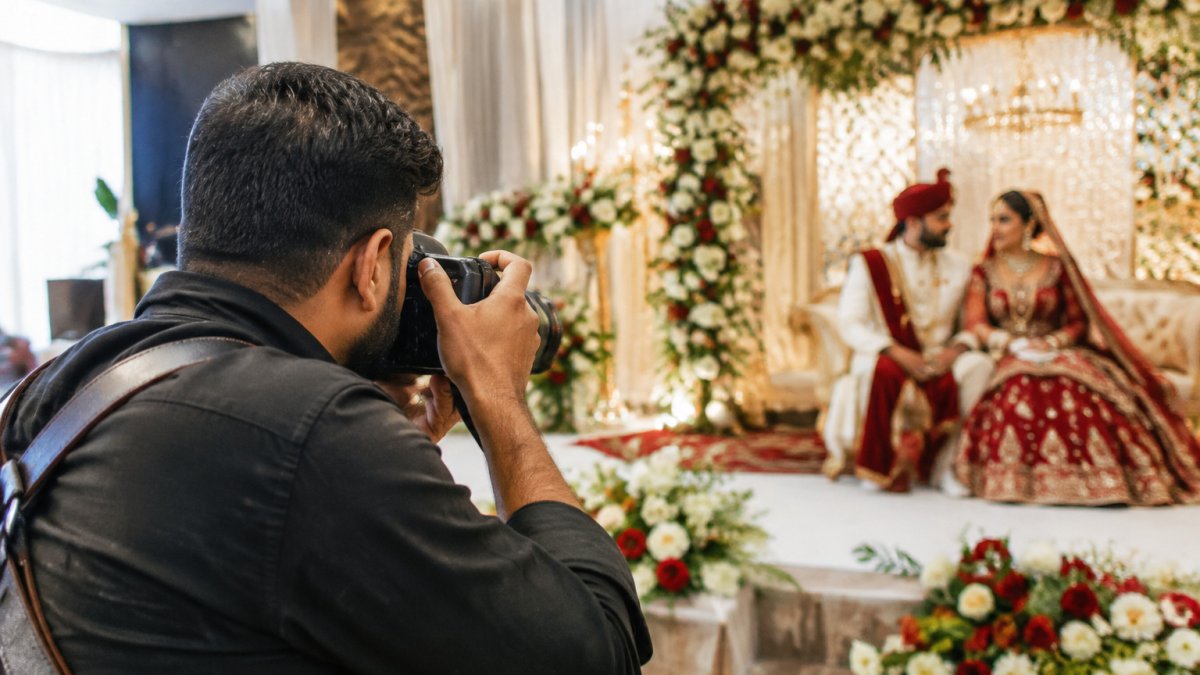
An Anand Karaj photographer is a wedding photographer trained to document the Sikh marriage ceremony inside the Gurdwara with cultural knowledge, discretion and respect, capturing the Laavan, the couple's vows and the family emotion without disrupting worship.
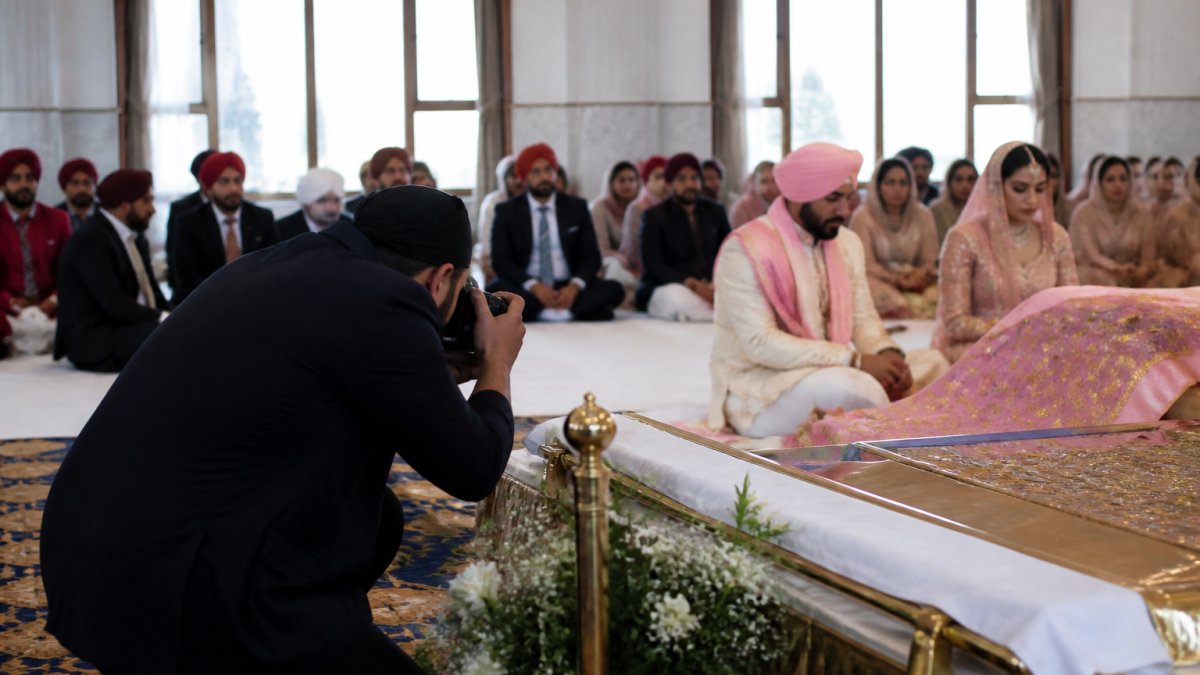
Here is the short answer: your photographer arrives early, works quietly around the ceremony, and leaves you with a complete record of a sacred day. The long answer is what this guide covers.
Before the Ceremony: Arrival, Details and Quiet Preparation
Arrival is usually earlier than couples expect, and agreeing with the Gurdwara team where a camera may and may not go matters more than any shot list.
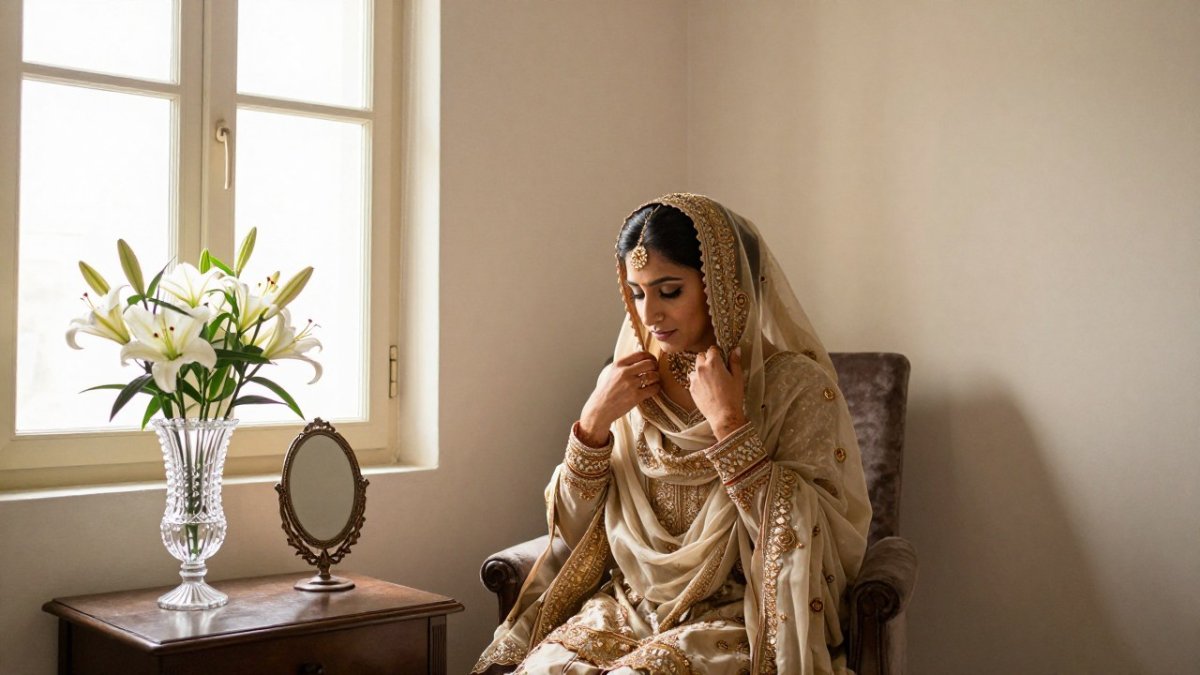
The quiet work happens here: the bride's details, the tying of the turban, the family gathering in the langar hall, and the last few minutes before the couple enters.
A common mistake is booking a photographer who treats this hour as admin. It is the opposite. It is where the day's emotional tone gets set.
During the Laavan: Where the Photographer Stands and What They Capture
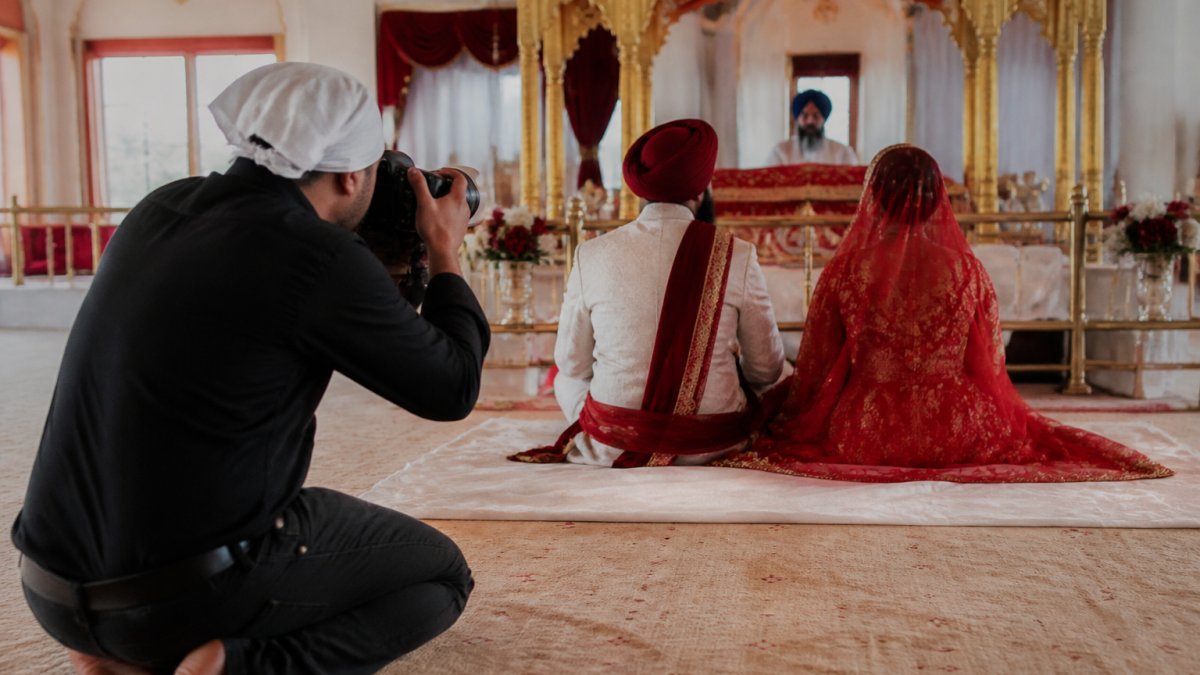
The four Laavan, the hymns that form the marriage vows, are the heart of the ceremony. The couple circles the Guru Granth Sahib together, and the photographer's job is to anticipate each round without ever entering the couple's path or the congregation's sightline.
During the Laavan, photographers typically work from the edges of the hall. Movement is slow and deliberate, with no flash and no stepping between the couple and the Guru Granth Sahib.
For a fuller breakdown of the ceremony order and the etiquette around the Laavan, see our guide to capturing Anand Karaj ceremony traditions.
Anand Karaj Wedding Photography Timeline From Start to Finish
An Anand Karaj wedding day typically runs from early morning detail shots through the ceremony, family portraits, and the evening reception, with the Laavan at the centre of the day. Below is a general shape for the timeline.
If you want a fuller walkthrough of what actually happens inside the ceremony, read what you can expect at a Sikh wedding ceremony.
Gurdwara Photography Rules and Your Anand Karaj Photography Checklist
An Anand Karaj photography checklist should cover three things: what the Gurdwara permits, what your family wants captured, and what your photographer needs from you before the day. Get those three aligned and the ceremony runs smoothly. This is the practical gap most guides leave open, here is the detail you actually need.
Gurdwara Photography Rules: What to Confirm in Advance
Rules vary by Gurdwara committee, so confirm them directly and in writing. In practice, expect these common restrictions:
- Flash: Often prohibited inside the main hall, so ask the Gurdwara what it allows.
- Movement: Limited near the Guru Granth Sahib and during prayer. Photographers typically work from the edges of the hall and avoid crossing the congregation's sightline.
- Footwear: Shoes must be removed before entering the hall, as for all attendees. Your crew should plan for this.
- Head coverings: Photographers and crew should cover their heads (usually with a rumal or scarf) and dress modestly.
- Restricted areas: Some Gurdwaras restrict access to certain areas. Confirm where cameras may and may not go.
- Permission: Some committees require prior approval for professional photography. Ask whether a letter or form is needed.
Your Pre-Wedding Photography Checklist
A practical checklist for the weeks before the ceremony:
- Confirm the Gurdwara's photography policy in writing, including flash, movement, and restricted areas
- Share the ceremony order and timings with your photographer
- Provide a list of family groups you want photographed, with full names and relationships
- Flag any sensitive moments or relatives who prefer not to be photographed
- Agree arrival time and a contact on the day (someone who will be present throughout)
- Confirm head covering and dress expectations for the crew
- Ask whether the Gurdwara requires a formal permission letter and, if so, obtain it
- Check parking and access for equipment, especially if the Gurdwara has limited space
What Your Photographer Needs From You
Beyond the checklist, your photographer needs a clear brief: the order of events, the names of key family members, and any cultural nuances they should respect. If you have a family member who is particularly knowledgeable about the ceremony, put them in touch with your photographer beforehand. A five-minute conversation can prevent a missed moment.
For a practical shot list and family photo list, use our Indian wedding photography checklist.
Here are the Gurdwara photography rules the article says to confirm in advance.
| Item | What to expect | Note |
|---|---|---|
| Flash | Often prohibited inside the main hall | Ask the Gurdwara what it allows |
| Movement | Limited near the Guru Granth Sahib and during prayer | Work from the edges of the hall |
| Footwear | Shoes must be removed before entering the hall | Applies to all attendees, crew included |
| Head coverings | Crew should cover their heads | Usually with a rumal or scarf; dress modestly |
| Restricted areas | Some Gurdwaras restrict access to certain areas | Confirm where cameras may and may not go |
| Permission | Some committees require prior approval | Ask whether a letter or form is needed |
Respectful Coverage: Shoes, Head Coverings and Sensitive Moments
Respect comes before the photograph. Every time. A photographer who understands the Gurdwara will remove their shoes, cover their head, dress modestly, and keep a low profile during prayer. That is not a restriction on the work; it is the condition that makes the work possible.
Sensitive moments need the same care. When the women of the family are getting ready, or during a quiet moment of prayer, your photographer should read the room and step back.
Watch out: a crew that treats the Gurdwara like a studio will get asked to stop, and you will lose coverage of the parts that matter most. Ask about this before you book, not on the morning.
Documentary, Candid and Portrait Coverage Across the Whole Celebration
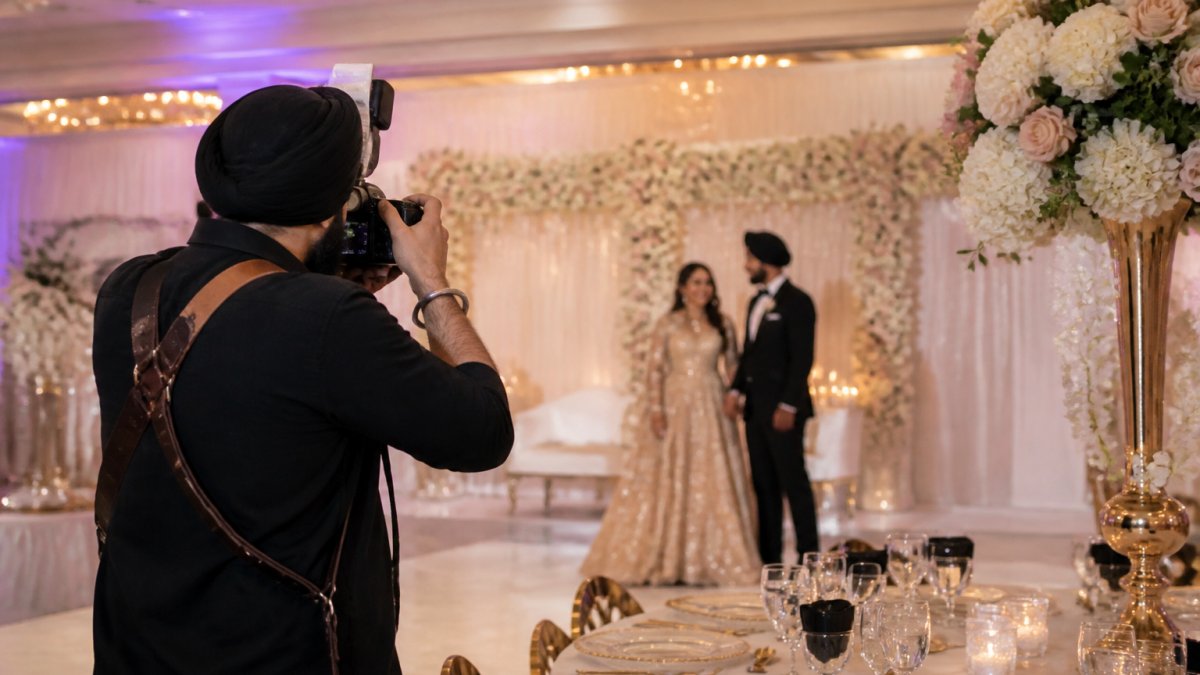
Documentary and candid photography is a common approach to Anand Karaj coverage, focused on the emotional moments families often treasure. The laughter in the langar hall, the grandmother adjusting a dupatta, the candid embrace after the final blessing.
Questions to Ask a Sikh Wedding Photographer Before You Book
Ask any Sikh wedding photographer these questions before you sign: how many Anand Karaj ceremonies have you covered, what are the Gurdwara rules you work to, and can I see a full gallery rather than a highlight reel? The answers tell you more than any portfolio page.
Other questions worth asking:
- How do you handle a multi-day schedule across different venues?
- Who will actually be shooting on the day, and will I meet them?
- How do you approach sensitive moments during getting-ready coverage?
- What is your backup plan if equipment fails or a moment is missed?
- How long until we receive the final gallery and film?
If you want a structured way to compare providers, our guide to what to look for in an Indian wedding photographer sets out the checks and the questions to ask before booking.
What Shapes Your Tailored Quote and What You Receive
Pricing for Anand Karaj photography depends on several factors, and understanding them helps you compare quotes fairly. Pricing depends on quantity, dates, and delivery, so for current prices or a quote, please check our website.
Factors That Shape Your Quote
-
Number of events: A single Anand Karaj ceremony is different from a full schedule including mehndi, sangeet, and reception. Each event adds coverage hours and editing time.
-
Days covered: Multi-day celebrations require additional crew days and travel.
-
Travel: Distance to the Gurdwara and any additional venues, including overnight stays if needed.
-
Deliverables: An edited gallery, a wedding film, highlights edit, albums, and prints all affect the final price.
-
Coverage hours: A half-day versus full-day versus multi-day coverage.
-
Season and demand: Peak wedding season dates may carry a premium.
What You Receive
A typical Anand Karaj photography package includes:
Ask us to confirm exactly which deliverables are included in your package before the day, and request a sample gallery so you know what the finished product looks like.
How to Compare Quotes
When comparing providers, ask for a written breakdown of coverage hours, team size, deliverables, and editing turnaround.
For a structured way to compare providers, see our guide to what to look for in an Indian wedding photographer.
Enquiring About Your Anand Karaj Coverage
The best time to enquire is as soon as your date and venue are confirmed, particularly for peak wedding season. Early enquiries give us time to discuss the ceremony order, visit the Gurdwara if needed, and build a schedule that fits your family.
At Khush Studio, we bring over 20 years of experience covering Sikh, Indian and Muslim weddings, with tailored packages built around your specific events. We have international experience covering weddings globally.
Enquire to talk through your Anand Karaj coverage with our team, and check our website for current prices or a quote.
Frequently Asked Questions
Can photographers take pictures during the Sikh wedding ceremony?
Yes, but with care. Most Gurdwara committees allow photography in the prayer hall provided the photographer covers their head, removes their shoes and works without flash or moving between the congregation and the Guru Granth Sahib. Some committees ask that no one stands in front of the Laavan. Ask your Gurdwara what it permits before the day, and confirm your Anand Karaj photographer has worked under those rules before.
How long does Anand Karaj photography coverage usually take?
Coverage timing varies, so agree the arrival time and hours with your photographer when you book. Build in 20 to 30 minutes of buffer for late arrivals, because the ceremony start often shifts.
What should we tell our photographer before an Anand Karaj?
Walk them through the order of events, who the key family members are, and which moments matter most to you. Flag anything sensitive, such as a relative who should not be photographed or a family disagreement. Share your Anand Karaj photography checklist in advance and name one person who will point out relatives on the day. A short call a week before the ceremony prevents most missed shots.
Should we choose a photographer experienced in Sikh weddings?
It helps considerably. A photographer who knows the Anand Karaj anticipates the four Laavan, the Palla ceremony and the Karah Parshad rather than reacting late. They also know the seating layout and where they can stand without blocking anyone's view. When you ask questions to ask a Sikh wedding photographer, ask how many Anand Karaj ceremonies they have covered and request a full gallery, not just highlights.
What moments should an Anand Karaj photographer capture?
The essentials include the bride's arrival and Milni, the Palla ceremony, all four Laavan with the couple's circumambulation, the Anand Sahib readings and Karah Parshad, plus the Ardas and family greetings afterwards. Add the quieter frames: hands on the Palla, parents' faces during the Laavan, and a candid embrace once the ceremony ends. A written shot list agreed in advance keeps these from being left to chance.
Your ceremony deserves a photographer who knows when to move and when to stay still. Khush Studio offers over two decades of Asian wedding experience, a discreet documentary approach, and tailored photography and videography packages for multi-day celebrations. Get started with Khush Studio and secure coverage that honours every part of your Anand Karaj.