 How-to
7 Same-Day Edit Steps for Indian Weddings
Last Updated: October 31, 2026
Quick Summary
A same-day edit is a short highlight film of the wedding day, created and screened within hours of the event, usually at the reception while guests are still in the room. At Indian weddings it can gather the baraat, ceremony, sangeet or mehndi and reception into one piece. Plan the timeline and screening slot with your videographer in advance.
- Agree the screening slot with the venue and couple in writing before the wedding.
- Copy footage to two separate drives before any card is reformatted.
- Expect the rough cut to take roughly 60 to 90 minutes after handoff.
- Limit the couple's review to one pass to avoid missed screenings.
- Confirm filming permissions at each venue well before the day.
Table of Contents
- What a Same-Day Edit Is at an Indian Wedding
- How the Same-Day Edit Wedding Timeline Works on the Day
- Covering Multi-Day Events and Multiple Venues
- Which Moments to Include in an Indian Wedding Highlight Film
- How Long a Same-Day Edit Video Should Be
- Choosing Music for an Indian Wedding Video
- Booking Your Same-Day Edit with Khush Studio
- Frequently Asked Questions
Khush Studio has spent over 20 years documenting Indian, Sikh and Muslim weddings, and more couples now ask about a same-day edit. A same-day edit is a short film, usually shown at the reception, that gathers the day's highlights while guests are still in the room. This guide walks through the practical steps so you know what to expect and what to ask your videographer.
What a Same-Day Edit Is at an Indian Wedding
A same-day edit is a condensed highlight film created and screened within hours of the event. Unlike a traditional wedding film delivered weeks later, the footage is reviewed, cut and shared while the celebration is still going on.
The appeal is immediacy. Family members who arrived from abroad can watch the ceremony they missed, and older relatives can see the procession again while the day is still fresh. Many couples choose it for the playback moment alone. This emotional resonance is further amplified when you choose wedding ceremony music that perfectly underscores the visual narrative of these fleeting, captured moments.
Expect a same-day edit to be a highlight, not a full record. The editor selects the strongest moments, such as the groom's arrival, the couple's first look, family interactions and guest reactions, and cuts them to a runtime that suits a screen in the room. The full edit and complete coverage follow later.
How the Same-Day Edit Wedding Timeline Works on the Day
A same-day edit only works if the timeline is planned in advance and written down. Without a clear schedule, the editor spends the evening searching for footage instead of cutting it. The most useful thing you can ask your videographer for is a timed workflow showing when footage leaves the camera, when the first cut is reviewed, and when the film must be ready to screen.
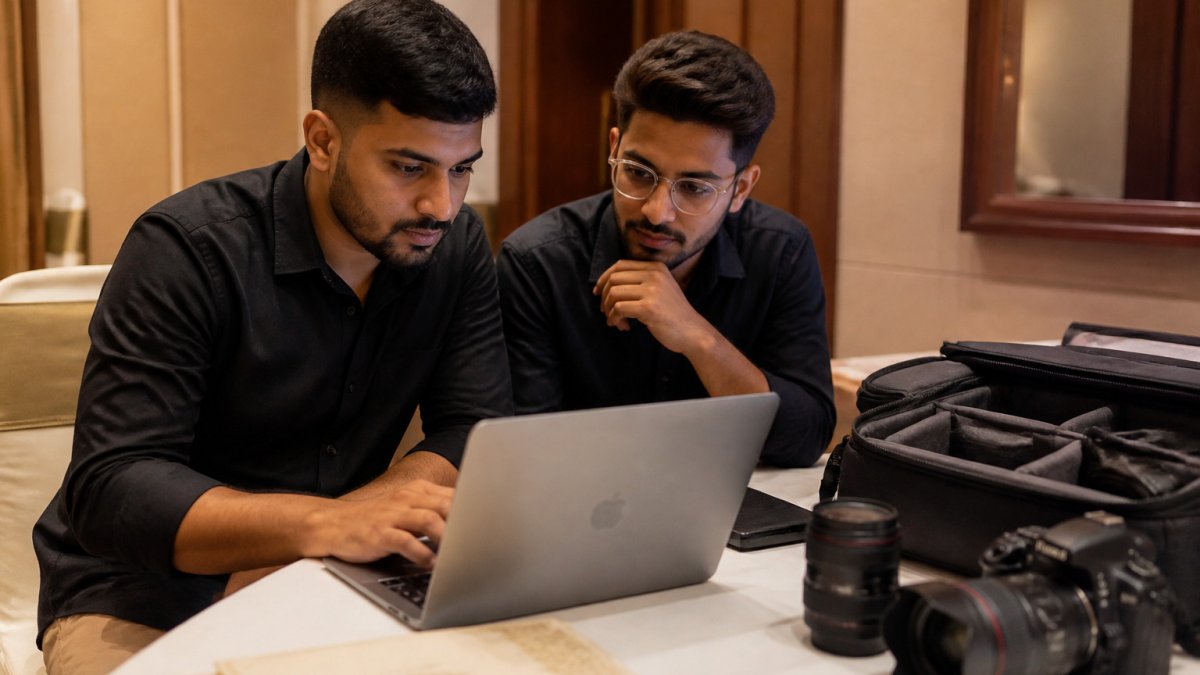
A realistic pattern for a single ceremony-plus-reception day looks like this. Treat the times as a template to adapt, not a guarantee:
- Two to three weeks before: agree the events to capture, the screening slot with the venue, the runtime, the music shortlist and any family requests (for example, a particular relative to feature, or a ritual to avoid on camera). Confirm who from the couple's side will approve the final cut on the night.
- Morning / pre-ceremony (roughly 2-3 hours before): the team arrives for coverage of preparations, the baraat assembly and detail shots. The editor, if attending, checks power, cards and backup drives and confirms the screening screen and audio with the venue.
- During the ceremony: primary and second camera record key rituals and family reactions. Cards are swapped rather than wiped, so nothing is lost if a file corrupts.
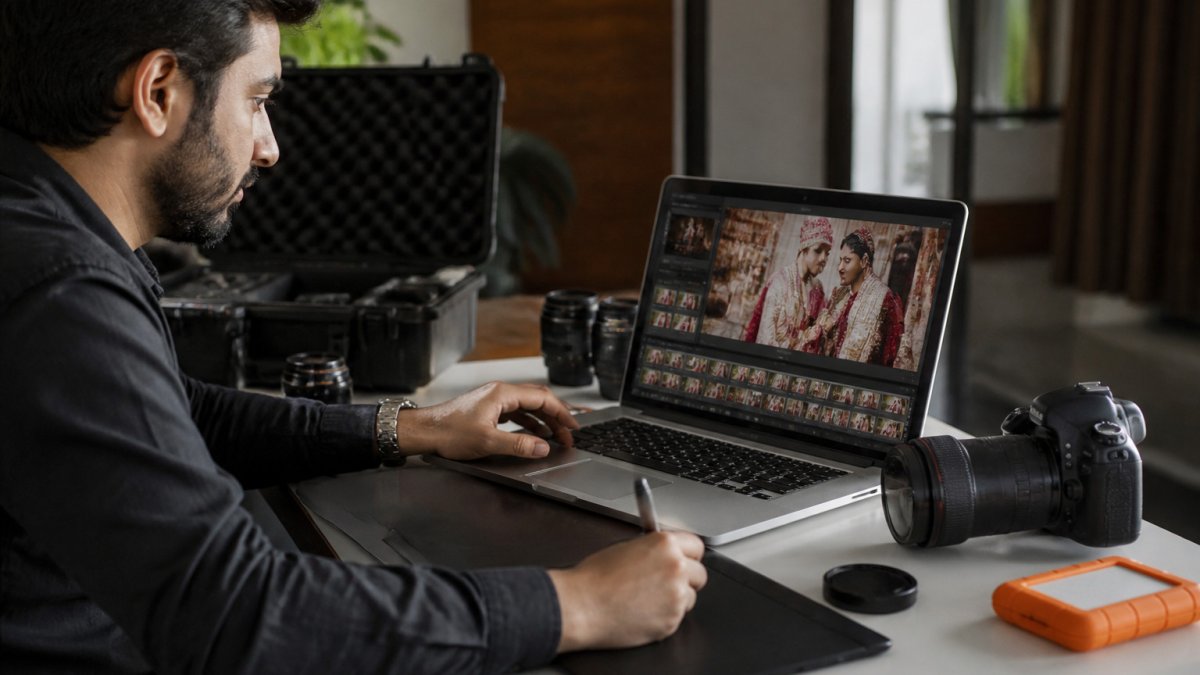
- First handoff (immediately after the ceremony): a runner or the second shooter transfers cards to the editor's workstation. Footage is copied to two separate drives before any card is reformatted, a common pattern is one working drive and one backup kept off the editing machine.
- Rough cut (typically 60-90 minutes after handoff): the editor assembles the strongest 8-12 moments into a story spine, then trims to the agreed runtime. This is the stage most likely to overrun, so build slack here.
- Review (15-20 minutes): the couple, or a nominated family member, watches once for factual errors, wrong name spelling on a title card, a ritual out of order, a guest who asked not to appear. Keep this to one pass; multiple review rounds are what cause missed screenings.
- Final export and check (20-30 minutes): export to the venue's screen format, test audio through the venue's sound system, and keep a second copy on a separate device.
- Screening: play at the agreed slot. Have the film ready at least 30 minutes before the announced time so a late-running reception does not force a rushed export.
Build the schedule around the venue, not the other way round. Ask the hall how much time they allow between the last ceremony moment and the reception opening, whether they can provide a screen and PA, and what file format and aspect ratio their system accepts.
Agree a fixed screening slot in writing with the venue and the couple. If the reception is running late, decide in advance whether the film plays at the scheduled time, between courses, or after the first dance, and tell the editor which. Changing the slot on the night is the single most common reason a same-day edit is rushed or missed.
Turnaround time varies with runtime and complexity. Confirm the realistic turnaround with your videographer before the wedding, not on the night, and ask what happens if the edit is not ready.
The article lays out the timeline stages for a single ceremony-plus-reception day, with approximate timings for each.
| Stage | When | What happens |
|---|---|---|
| Planning | Two to three weeks before | Agree events, screening slot, runtime and music |
| Pre-ceremony | Roughly 2-3 hours before | Team arrives and checks power, cards and screen |
| Handoff | Immediately after the ceremony | Cards copied to two separate drives |
| Rough cut | Typically 60-90 minutes after handoff | Strongest 8-12 moments assembled and trimmed |
| Review | 15-20 minutes | Couple checks once for factual errors |
| Final export | 20-30 minutes | Export to venue format and test audio |
| Screening | Agreed slot | Film plays; ready at least 30 minutes before |
Covering Multi-Day Events and Multiple Venues
Indian weddings often run across several days and locations, from a mehndi at home to a sangeet hall and a separate reception venue.
A useful way to decide is to plan by event and tradition, with the family's priorities written down:
- Mehndi: often at home or a community hall, with mixed daylight and tungsten lighting. Good for intimate detail and family interaction; rarely the best candidate for a same-day screening because the main ceremony has not yet happened.
- Sangeet: performances, speeches and dancing. Strong same-day material if the reception is the next evening, because the energy carries the room.
- Baraat: the groom's procession, dhol and arrival. Almost always worth including in a same-day edit, it is visually strong and emotionally recognisable to guests.
- Ceremony (for example Anand Karaj, Nikah or a Hindu vivah): the rituals themselves. Confirm with the family which moments are essential (varmala, saath phere, kanyadaan, the Nikah contract) and which should be filmed discreetly or not at all.
- Reception: speeches, first dance and guest reactions. This is usually where the same-day edit is screened, so the edit must be finished before the reception programme begins.
Ask the couple to nominate one family member who can answer questions on the day, about a relative's name, a ritual's order, or a guest who does not wish to be filmed.
Team size and roles matter more across multiple venues than on a single day. If the editor stays at a base location, agree how footage reaches them: a runner, a second shooter driving back, or a courier.
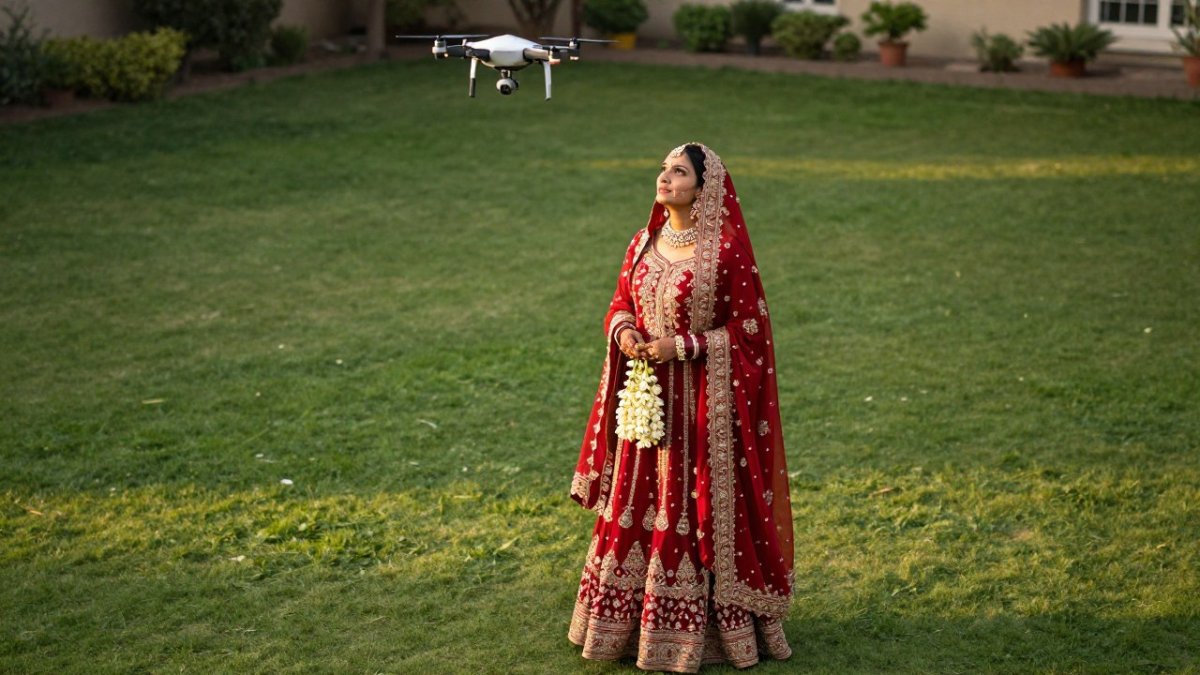
Confirm filming permissions at each venue in advance. For a fuller breakdown of hours, packages and costs across several days of celebrations, see our three day Asian wedding videography guide. Some venues restrict tripods, drone use or filming during certain parts of a religious ceremony, and some homes have space or power limits. A short call with each venue before the wedding avoids a setup being refused on the day.
Coordinate with the photographer and planner rather than working around them. Agree who stands where during key rituals, who controls the family group shots, and when the videographer needs a clear line of sight.
Which Moments to Include in an Indian Wedding Highlight Film
A strong highlight film balances ceremony, emotion and celebration. Choose moments that tell the story of the day rather than trying to show everything.
Common choices include:
- The baraat arrival and dhol
- Key rituals such as the varmala or saath phere, filmed respectfully
- Family embraces, tears and laughter
- The couple's first look or first dance
- Guest reactions during speeches and performances
Ask your videographer how they handle sensitive moments, such as bridal preparations or the Nikah. Discreet filming matters most during religious moments.
How Long a Same-Day Edit Video Should Be
Same-day edits vary in length, and the right runtime depends on the events covered and the room where the film is shown.
Set the length according to the room. Your videographer can suggest a runtime based on the number of events and the amount of footage they expect to capture.
Choosing Music for an Indian Wedding Video
Music sets the emotional tone of a highlight film. Many couples pick a mix of traditional Punjabi, Bollywood and modern tracks, matched to the mood of each moment. A joyful dhol section might suit the baraat, while a slower song can frame the vows.
Check licensing before the day. Commercial tracks used in a film shared publicly may require permission, and some platforms restrict streaming (Changes to Section 72: Public showing or playing of broadcasts). Ask your videographer which music they can use legally and whether they have a licensed library. Choosing tracks in advance also gives the editor time to cut to the beat rather than rushing at the last minute.
Booking Your Same-Day Edit with Khush Studio
Same-day edits need careful planning, from the timeline and the number of operators to the screening slot and the music. Pricing depends on the number of events, the team size, the length of the edit and the delivery schedule, so the best starting point is a conversation with Khush Studio. Visit the Khush Studio website for current prices or to request a quote.
If you are planning a multi-day wedding or a same-day edit for your ceremony, enquire with Khush Studio to discuss your event. You can also read our multi-day wedding photography tips to see how timelines and lighting are planned across each celebration, or compare Asian wedding venues across the UK when you are choosing where each event will take place.
Frequently Asked Questions
What is a same-day edit at an Indian wedding?
A same-day edit is a short film cut from the day's footage and shown to guests during the reception or shared with the couple the same evening. At Indian weddings it typically covers the baraat, the ceremony, the rituals and family moments, with the edit timed around the event schedule. Pricing depends on the package, the number of events and the delivery format. Visit the Khush Studio website for current prices or to request a quote.
How long does it take to create a wedding same-day edit?
The working window depends on how much footage is shot and how much time the editor has before the screening. Multi-day weddings take longer because footage from each event must be logged and sequenced. Confirm the turnaround in your contract before the wedding, especially if a screening is planned for a specific time.
How long should an Indian wedding same-day edit be?
Shorter edits hold attention during a busy reception, while longer ones suit families who want more of the rituals and guest reactions. Agree on the target length with your videographer early so the editor can plan the cut around the key moments.
What should couples ask a videographer before booking a same-day edit?
Ask how many people will be on the team, who will shoot and who will edit, and how they plan to cover multiple venues if your events are spread out. Ask about the editing timeline, the screening arrangements, and how they handle sensitive moments such as getting-ready rooms and the Nikah. Request examples of finished same-day edits from Indian weddings, not just cinematic highlight reels. Confirm backup equipment, what happens if footage is incomplete, and what the final delivery format will be.
Khush Studio has spent two decades documenting these celebrations, and a same-day edit is one of the most rewarding things we deliver. Start the conversation early, agree the timeline and the screening slot, and let the team handle the cut while you enjoy the day. Get in touch today for a free consultation and to claim your place in the planning.