 How-to
How to Choose an Asian Wedding Videographer
Last Updated: October 28, 2026
Quick Summary
Choosing an Asian wedding videographer starts with cultural fluency: confirm the team knows your ceremonies, their order and which moments are private before you watch a showreel. Ask for a written ceremony timeline, full-length ceremony edits with clear audio, and a contract naming coverage, delivery dates and footage rights.
- Khush Studio has over 20 years of experience with Indian, Sikh and Muslim weddings.
- Ask to see a full-length ceremony edit and a full speeches set, not just the highlight film.
- Send every shortlisted videographer the same written questions and compare replies side by side.
- Compare quotes like-for-like on hours, days, crew, audio, travel and delivery dates, not headline prices.
- Put private moments, venue camera rules and footage storage in the contract before the day.
Table of Contents
- Start With Cultural Fluency, Not Just a Showreel
- Reviewing Portfolios and Previous Wedding Films
- Filming and Editing Styles: Finding Your Visual Language
- Wedding Videographer Questions to Ask Before You Book
- What Asian Wedding Videography Packages Should Include
- Contracts, Consent and Religious Venue Rules
- Wedding Film Delivery Time and What to Expect After the Day
- Enquire About Your Wedding Film With Khush Studio
- Frequently Asked Questions
Start With Cultural Fluency, Not Just a Showreel
Choosing an Asian wedding videographer starts with one question: does this Asian wedding videographer understand what they are filming? A beautiful showreel proves technical skill.
Here is what most guides get wrong. They treat an Asian wedding film as a longer version of a Western one. It is not. A multi-day wedding has its own rhythm, its own key moments and its own rules about what stays private.
Cultural fluency is a videographer's working knowledge of your ceremonies, their order and their meaning, so the camera is in the right place before anything happens.
So before you watch a single highlight film, ask how the team prepares. Do they request a ceremony timeline in advance? Do they ask which rituals are private?
For a closer look at how respect and timing work in practice, read our guide to capturing Anand Karaj ceremony traditions.
Reviewing Portfolios and Previous Wedding Films
A portfolio is only useful if you watch it the right way. Most couples watch the highlight film and stop there. That is the trailer, not the film. Ask to see a full-length ceremony edit and a full speeches set instead.

Then watch with a checklist in hand:
- Does the film include the ceremony itself, not just the dancing?
- Can you hear the vows, the hymns and the family speeches clearly?
- Are the pre-wedding events covered, or only the main day?
- Does the colour and sound stay consistent across the whole film?
Ask how many full weddings they have delivered this year.
Filming and Editing Styles: Finding Your Visual Language
Filming style is how a videographer captures the day. Editing style is how the footage is shaped afterwards. You need to like both before you book. A cinematic, documentary-led approach suits couples who want the day to feel real. A more directed style suits couples who want a polished, film-like result.
Ask each team three things:
- Can we see an unedited clip alongside the final film?
- How much direction will you give us on the day?
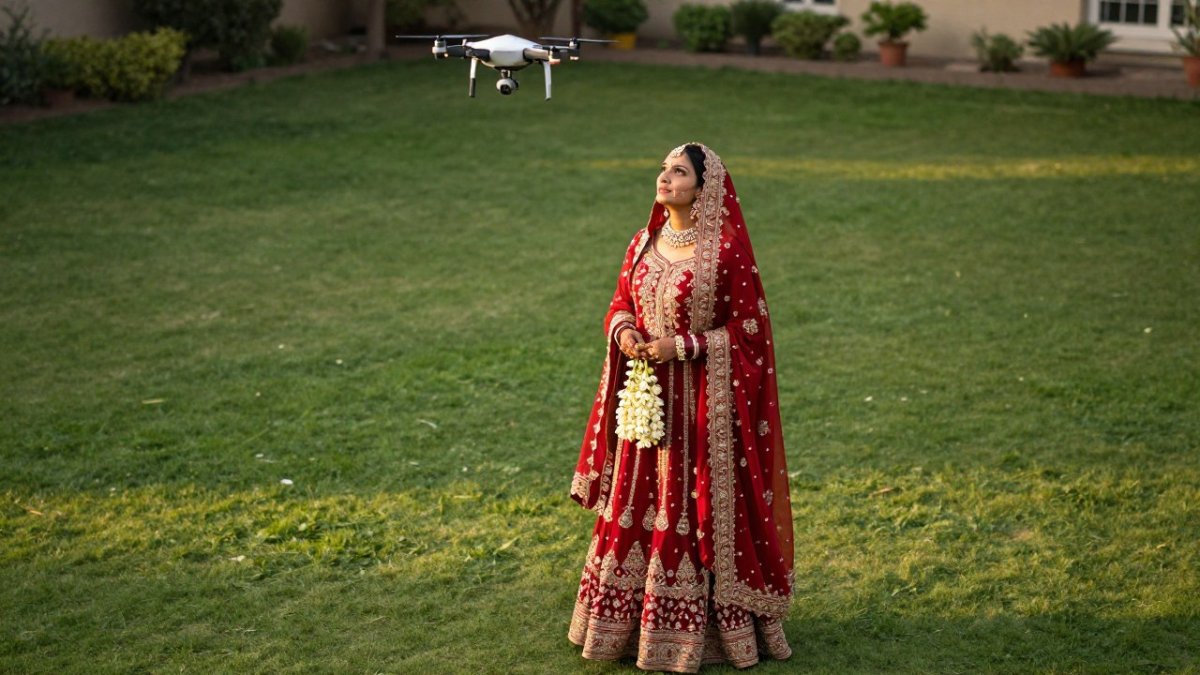
- Do you use 4K cameras and cinematic drones, and where are drones allowed?
Watch how the team handles dimly lit venues, such as a gurdwara or a marquee in the evening. Low light separates strong videographers from weak ones. If you want to see what professional Asian wedding cinematography looks like in motion, browse our cinematography work before you shortlist anyone.
Wedding Videographer Questions to Ask Before You Book
The right questions save you from surprises later. These are the wedding videographer questions to ask in your first call, and the answers should be specific, not vague. Most guides stop at "how many weddings have you filmed?", useful, but not enough for a multi-day Asian wedding. The questions below are grouped so you can work through them in order and compare answers like-for-like. Securing a cohesive visual narrative requires similar diligence when finding wedding photography to ensure your still images and motion footage share a consistent aesthetic.
Cultural fluency and ceremony knowledge
- Which of our ceremonies have you filmed before, Anand Karaj, Nikah, Hindu Vivah, Bengali Gaye Holud, Pakistani Mehndi, and can you describe the order of the key rituals without prompting?
- Will you request a written ceremony timeline and a family contact for each event before the day?
- Which moments in our ceremonies are private or restricted, and how will you confirm that with our families in advance?
Ask them to walk you through one ceremony they filmed last year, start to finish, and listen for specifics rather than adjectives.
Audio capture and backup plans
Ceremony sound is the hardest thing to get right and the easiest to ruin. Ask about audio first, and do not accept "we use good microphones" as an answer.
- How many microphones will you place, and where, on the couple, on the officiant, on the musicians, or on a lectern?
- Do you run a separate backup recorder, and what happens if the primary audio fails mid-ceremony?
- How do you capture live music, hymns and family speeches in a room with poor acoustics or a marquee with wind noise?
- Can you show us a full ceremony edit where the vows and hymns are clearly audible, not just a highlight reel with a music track over the top?
Ask for an unedited clip with the raw sound so you can judge for yourself.
Consent, privacy and venue rules
- Which moments are private and will not be filmed, and how will you brief your crew and our guests?
- Where may cameras and drones stand at each venue, and have you filmed at our venues before?
- How will you handle a guest who does not want to be filmed?
Some ceremonies, such as the Nikah, have private moments. Some venues restrict where cameras can stand or ban drones outright. Put the rules in writing before the day. For guidance on setting privacy rules around a religious ceremony, read how to respect privacy during a Nikah ceremony.
Coverage, crew and schedule
- Who will actually film on the day, and will we meet them before the wedding?
- How many crew members will attend each event, and will the same team cover every day?
- Can you cover multiple venues across several days, including travel between events and late finishes?
- What is your contingency plan if a ceremony runs late or two events overlap?
Contract, delivery and ownership
- Can we see a full contract before we pay a deposit, including cancellation, overtime and revision limits?
- What is your delivery timeline, in writing, for the teaser, highlight film and full-length film?
- Who owns the footage, how may you use it, and how long will you store it?
A discreet team will welcome these questions. A team that dodges them is telling you something.
What Asian Wedding Videography Packages Should Include
Compare quotes carefully, because headline prices may not describe the same thing.
What a complete package should state
| Package Element | What to Check | Why It Matters |
|---|---|---|
| Coverage hours | Full-day vs part-day, with start and finish times | Prevents gaps on the day |
| Filming days | One, two or three, named per event | Multi-day weddings need multi-day cover |
| Crew size | One videographer or a crew, per event | Affects coverage at each venue |
| Deliverables | Teaser, highlight film, full-length film, speeches set | Sets your expectations clearly |
| Audio | Microphones, backup recorder, live music capture | Protects the ceremony sound |
| Travel | Venue-to-venue travel and overnight stays | Avoids surprise add-ons |
| Delivery time | Written date for each deliverable | Avoids months of waiting |
| Rights | Ownership, usage and storage period | Protects your footage |
A fair way to compare quotes
Do not compare headline prices. Compare like-for-like. Build a simple grid with one column per videographer and one row per item below, then fill it in from their written quotes. Where a quote is silent, mark it as "not stated" rather than assuming it is included.
- Total hours and days: how many hours on each event, and how many events in total?
- Crew size per event: one camera or two, and is a second shooter extra?
- Events covered: mehndi, haldi, gaye holud, nikah, Anand Karaj, reception, which are in and which are add-ons?
- Edit length: how many minutes is the highlight film, and is the full-length film the whole ceremony or a cut version?
- Audio setup: how many microphones, and is a backup recorder included or an extra?
- Travel and accommodation: are these included for out-of-area venues, and at what rate?
- Overtime: what is the hourly rate if a ceremony runs late?
- Delivery dates: a written date for each deliverable, not "6-8 weeks" in conversation.
- Rights and storage: who owns the footage, how may it be used, and how long is it stored?
Pricing considerations
Pricing depends on the number of days, hours, crew and deliverables, so ask for a written quote rather than a headline figure. Ask each team to price the same scope so you can see the real difference. For a detailed breakdown of multi-day coverage, hours and costs, see our three-day Asian wedding videography guide.
Questions to ask about any package
- Is the deposit refundable, and what are the cancellation terms?
- Are revision rounds included, and how many?
- Is raw footage available, and at what cost?
- What happens if a camera or microphone fails on the day?
Contracts, Consent and Religious Venue Rules
Consent and venue rules belong in the contract, not in a conversation on the morning of the wedding. Some ceremonies, such as the Nikah, have private moments. Some venues restrict where cameras can stand. Put the rules in writing before the day.
Watch out: a contract that does not name who owns the footage, how it can be used and how long it is stored leaves you exposed. Ask for these points in writing:
- Which moments are private and will not be filmed
- Where cameras may and may not go at each venue
- How the team will brief guests about filming
- How your footage is stored and for how long
For guidance on setting privacy rules around a religious ceremony, read how to respect privacy during a Nikah ceremony. A discreet team will welcome these questions. A team that dodges them is telling you something.
Wedding Film Delivery Time and What to Expect After the Day
Ask for the wedding film delivery time in writing before you book.
Ask how the team reviews the final edit before sending it, and what happens if something is missing.
Enquire About Your Wedding Film With Khush Studio
The hardest part of choosing a videographer is trusting that the team will understand your day. That trust is built on cultural knowledge, clear contracts and honest delivery dates. Khush Studio has over 20 years of experience and offers tailored packages.
If you are ready to talk through your ceremonies, venues and dates, get in touch with our team.
Frequently Asked Questions
What should I look for in an Asian wedding videographer?
Look for proven experience with the specific ceremonies you are planning, whether that is an Anand Karaj, a Nikah or a Tamil Hindu wedding. Ask to see full-length films, not only highlight reels, so you can judge how they handle audio, lighting and key ritual moments. Check that they understand multi-day schedules and can coordinate with your photographer. Reviews and recommendations from couples with similar traditions are a strong signal of reliability.
How much does an Asian wedding videographer cost?
Request a tailored quote directly for accurate current pricing.
How long does it take to receive a wedding film?
Delivery timelines vary by studio and package. A short highlight film often arrives within a few weeks, while a full-length feature with multi-day coverage can take several months because of the editing involved. Ask for the delivery window in writing before you book, and check whether a teaser or trailer is included earlier. Confirm what happens if you request changes after the first cut.
Should I choose a videographer who also offers photography?
A studio offering both can be an advantage for multi-day Asian weddings. One team coordinates timings, shares an understanding of the rituals and avoids two suppliers competing for the same angles during key moments. It also simplifies your planning and often reduces cost compared with booking separately. Ask how the photo and video teams work together on the day and who leads coordination.
Your wedding deserves a film that respects every ritual and every quiet moment. Get started with Khush Studio and secure a team that knows your traditions before the first camera is switched on.