 How-to
How to Choose a Cinematic Indian Wedding Film
Last Updated: November 4, 2026
Quick Summary
To choose a cinematic Indian wedding film, pick a videographer who knows your rituals, judge their portfolio by watching two complete films rather than a showreel, and get a written package covering hours, cameras and delivery. A cinematic Indian wedding film is narrative-driven, using feature film style, dramatic lighting and colour grading to tell your rituals as a story.
- Ask how many weddings of your specific tradition the videographer has filmed.
- Request one summer and one winter wedding film to test lighting conditions.
- Confirm camera count per event, not per booking, for multi-day weddings.
- Get separate written delivery dates for the teaser, highlight film and feature film.
- Check music licensing early, since commercial tracks need a licence for online sharing.
Table of Contents
- What Makes a Wedding Film Cinematic
- Indian Wedding Film Styles You Will See in Portfolios
- Questions to Ask a Wedding Videographer Before You Book
- How to Judge a Videographer Portfolio and Creative Direction
- Indian Wedding Highlight Film Length and Delivery Timelines
- What Indian Wedding Videography Packages Should Include
- Music Licensing, Multi-Camera Coverage and Multi-Day Logistics
- Enquire About a Cinematic Indian Wedding Film
- Frequently Asked Questions
What Makes a Wedding Film Cinematic
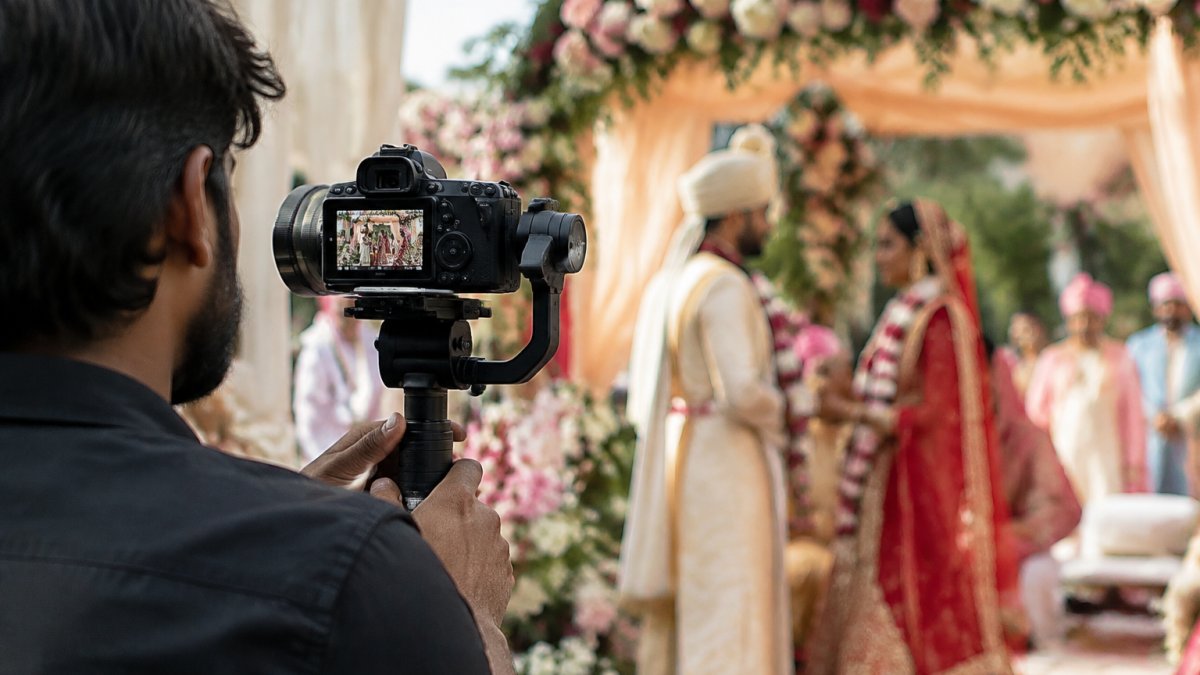
A cinematic Indian wedding film is a narrative-driven piece of wedding cinematography that uses feature film style, dramatic lighting, artistic composition and careful post-production to tell the story of your wedding rituals as a cohesive story rather than a chronological record. It prioritises emotional storytelling over documentation alone.
The difference between a video and a film comes down to creative direction. A video records events. A film interprets them, choosing which candid moments carry the emotional weight and how the editing pacing builds towards them.
At Khush Studio, we have spent over two decades filming Indian, Sikh and Muslim weddings.
Documentary Storytelling Versus a Feature Film Style
Documentary storytelling follows events as they unfold, with minimal intervention and long takes. It suits families who want the full ceremony preserved, including the parts that feel slow in real time.
Feature film style is more selective. It uses a shot list, creative direction and post-production colour grading to produce a wedding trailer or highlight reel with the pace of a short film. Most couples want a blend: the rituals captured in full, then shaped into something cinematic.
Neither approach is better. The right choice depends on whether you value completeness or emotional impact more.
Indian Wedding Film Styles You Will See in Portfolios
Before you compare videographers, learn the styles you will encounter. Most portfolios mix several, so ask which style dominates your chosen package.
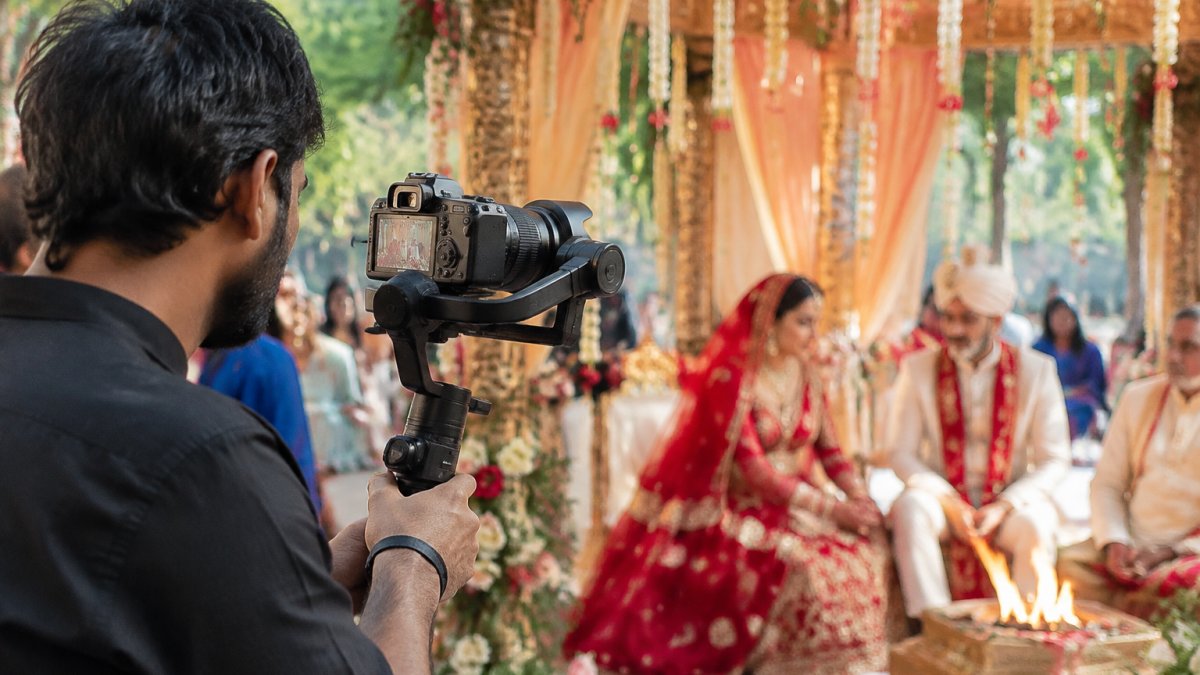
- Cinematic highlight film: narrative-driven, 4K resolution, colour graded, built around emotional beats
- Documentary edit: full-day coverage with minimal cuts, ideal for multi-day cultural traditions
- Same-day edit: a short film edited on site and screened at the reception
- Trailer: 60 to 90 seconds for social sharing
- Teaser plus feature: a short trailer alongside a longer main film
Watch for variety in visual aesthetics across a portfolio. A studio that shoots every wedding identically is showing you a template, not creative direction.
Here are the film styles you will encounter in portfolios, so you know what to ask about.
| Style | What it is | Key detail |
|---|---|---|
| Cinematic highlight film | Narrative-driven, colour graded, built around emotional beats | 4K resolution |
| Documentary edit | Full-day coverage with minimal cuts | Ideal for multi-day cultural traditions |
| Same-day edit | Short film edited on site | Screened at the reception |
| Trailer | Short film for social sharing | 60 to 90 seconds |
| Teaser plus feature | Short trailer alongside a longer main film | Two deliverables |
Questions to Ask a Wedding Videographer Before You Book
The right questions reveal whether a videographer understands your cultural traditions and can handle your schedule. Start with these:
- How many weddings of our specific tradition have you filmed?
- Which moments in the Anand Karaj or Nikah do you treat as unmissable?
- How do you work around sensitive moments, such as getting-ready coverage?
- What is your multi-camera setup for the ceremony and reception?
- How do you handle audio capture for vows and prayers?
- What happens if equipment fails or a key moment is missed?
- How many hours of full-day coverage are included, and what is the overtime rate?
- Can we see a complete film, not just a highlight reel?
- Who owns the raw footage, and how is it delivered?
- What is the delivery timeline in writing?
For a deeper walkthrough of interviewing and choosing an Asian wedding videographer, our guide on how to choose an Asian wedding videographer sets out the questions in full.
A common mistake is asking only about price. The answer to question two tells you more about your final film than any quote will.
How to Judge a Videographer Portfolio and Creative Direction
Judge a portfolio by watching two complete films, not a showreel. Showreels collect the best ten seconds of twenty weddings; a full film shows you what an ordinary delivery looks like, including the parts the studio cannot cherry-pick.
Request one summer wedding and one winter wedding. Summer brings harsh overhead light and crowded marquees; winter brings early dusk and dimly lit reception halls. A studio that only shows golden-hour couple shots has not shown you how it handles the conditions your wedding will actually present.
Look for consistency across those two films. Strong cinematography holds up in poor light, in crowded rooms and during quiet moments. Watch specifically for these markers:
- Exposure in dim venues: Can you see faces during the sangeet or reception without the image turning orange or noisy?
- Skin tones across lighting setups: Do family members look natural under mixed tungsten, LED and daylight, or does everyone turn the same shade of amber?
- Audio clarity on vows and prayers: Can you hear the couple over guests and background music, or is the dialogue buried?
- Cutting rhythm: Does the edit breathe during emotional moments, or does it cut every two seconds to hide weak coverage?
- Continuity across cameras: When the film cuts between angles, do the colours and exposure match, or does the grade jump?
Lighting, Composition and Audio Capture
Dramatic lighting and artistic composition separate a cinematic wedding film from event coverage. Ask how the team lights a dim venue without disrupting the ceremony, and whether they bring their own lighting kit.
Audio matters just as much. Vows, prayers and speeches recorded badly cannot be fixed in post-production. Ask the videographer how they capture audio for the couple, the officiant and the room, and how they handle a venue that forbids visible microphones during religious rituals.
Colour grading shapes a film's final look, so ask how the grade is applied and whether you can see examples from the same wedding.
Indian Wedding Highlight Film Length and Delivery Timelines
Highlight films, trailers and feature films vary in length, so confirm the running times for each product when you request a quote. Length should follow the story, not a fixed template.
Delivery timelines vary by studio and season. Ask for the promised date in writing, and confirm what happens if it slips.
Our breakdown of same-day edit steps for Indian weddings explains timing, film length and music choices if a same-day screening is on your list.
What Indian Wedding Videography Packages Should Include
Indian wedding videography packages should state hours of coverage, number of videographers, number of cameras, delivery formats, film lengths and the revision process. Anything left vague becomes a dispute later. The checklist below is the minimum; the explanations after it are where most couples get caught.
- Hours of full-day coverage per event, confirmed in writing
- Number of videographers and cameras per event
- Trailer, highlight film and feature film lengths
- 4K resolution and delivery format
- Audio capture equipment and backup
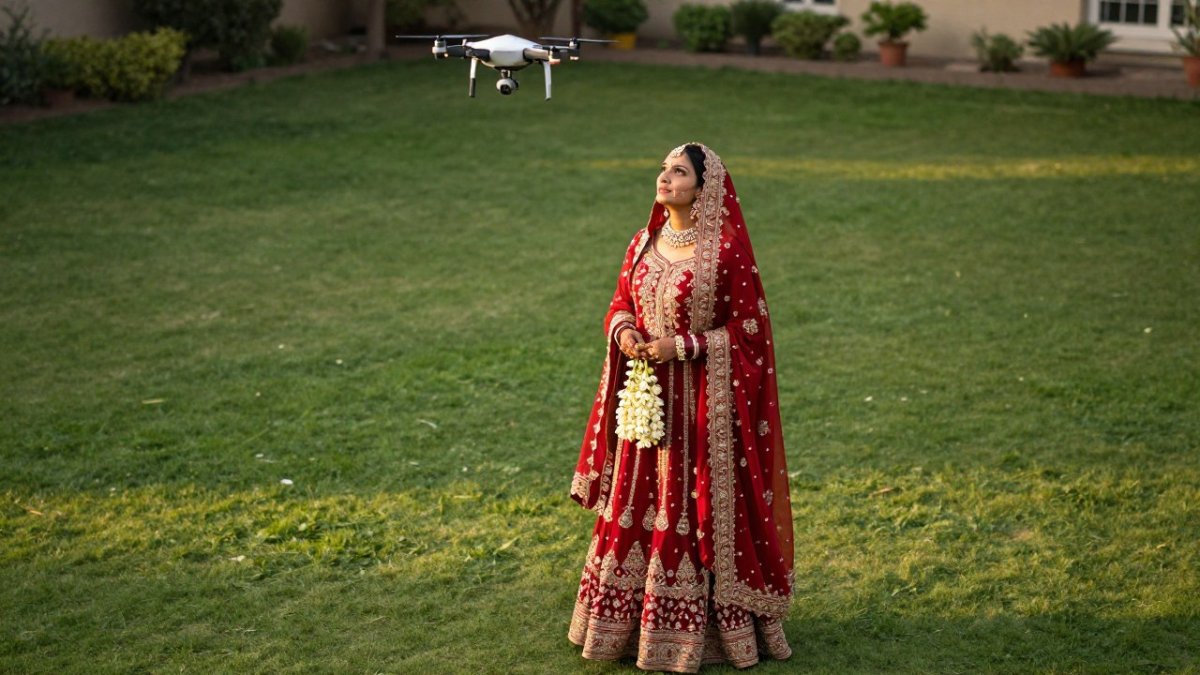
- Drone coverage, if permitted at the venue
- Same-day edit, if wanted
- Number of revision rounds included
- Raw footage policy and delivery method
- Travel costs for venues outside your city
- Music licensing and where the film can be shared
- Turnaround dates for teaser, highlight film and feature film
Pricing depends on the number of events, dates, hours and delivery requirements, so ask for a written quote. For current prices, visit the Khush Studio website or request a quote.
Music Licensing and Copyright
Music licensing is the gap most couples discover too late. Commercial tracks, including most Bollywood and Punjabi chart songs, need a licence for online sharing, and many videographers use licensed libraries for exactly this reason. Ask early which music your film can legally use, and where it can be posted. The Intellectual Property Office guidance on copyright explains what a licence covers. A studio that promises your favourite film track without mentioning licensing is either planning to use it unlawfully or will swap it at delivery.
Turnaround and Delivery Expectations
Ask for separate dates for the teaser, the highlight film and the feature film, not one vague delivery window. Get the promised dates in writing and confirm what happens if they slip.
Multi-Camera and Multi-Day Logistics
Multi-camera setups matter for Indian weddings because rituals happen in several places at once. Confirm the camera count per event, not per booking. Three-day celebrations need timeline management as much as equipment: ask how the team splits across venues, who leads each day and how they travel between them. Our guide to three day Asian wedding videography coverage covers packages, hours and logistics for multi-day events in detail.
Watch out: a quote that lists one videographer for a three-day wedding with two simultaneous events is a warning sign, not a bargain.
Music Licensing, Multi-Camera Coverage and Multi-Day Logistics
Music licensing is the gap most couples discover too late. The Intellectual Property Office guidance on copyright explains what a licence covers.
Multi-camera setups matter for Indian weddings because rituals happen in several places at once.
Three-day celebrations need timeline management as much as equipment. Ask how the team splits across venues, who leads each day and how they travel between them.
Watch out: a quote that lists one videographer for a three-day wedding with two simultaneous events is a warning sign, not a bargain.
Enquire About a Cinematic Indian Wedding Film
Choosing a cinematic Indian wedding film comes down to three checks: a videographer who knows your rituals, a portfolio that holds up in full, and a written package that covers hours, cameras and delivery.
Khush Studio has filmed Asian weddings since 2002, offering tailored packages and an artistic approach to preserving cultural traditions. Read more on why professional Asian wedding cinematography matters.
If you want a film that honours every ritual, get in touch to claim your free consultation and talk through your dates.
Frequently Asked Questions
What makes an Indian wedding film cinematic?
A cinematic Indian wedding film is built in post-production as much as on the day. It uses deliberate lighting, artistic composition, a multi-camera setup and colour grading to give the footage a feature film style, then shapes it with narrative-driven editing pacing rather than a straight chronological record. The result is a highlight reel with emotional storytelling at its centre, where candid moments and cultural traditions sit alongside the key rituals. Ask to see a full film, not just a trailer, so you can judge how the pacing holds up across twenty minutes.
How long should an Indian wedding highlight film be?
Most couples choose a highlight film of around five to fifteen minutes, with a longer feature cut of thirty to sixty minutes covering the full day. A three-day wedding with a Mehndi, Sangeet and Anand Karaj or Nikah usually needs a longer edit or separate films per event. Ask how the length is decided and whether you can request a shorter social media cut alongside the main film. Delivery timelines matter too, so confirm in writing when the raw footage and the edited film will arrive.
Should I choose a cinematic or documentary-style wedding film?
Documentary storytelling keeps an unobtrusive presence and records events as they happen, which suits families who want the rituals captured exactly as they unfolded. A cinematic approach adds creative direction, dramatic lighting and colour grading for a more polished, emotional film. Many videographers blend the two, filming candid moments naturally and then editing them into a narrative-driven story. Watch samples of both styles and decide which one you would actually rewatch with your family in ten years.
What should an Indian wedding videography package include?
Check for full-day coverage across every event, the number of videographers and whether a multi-camera setup is standard, audio capture for vows and speeches, drone footage if your venue allows it, and a clear post-production schedule. Ask who owns the raw footage, how music licensing is handled, and what backup plan exists if equipment fails. Pricing depends on the number of events, dates and delivery, so request a written quote rather than comparing headline figures alone.