 How-to
7 Ways to Include Grandparents in Asian Wedding Portraits
Last Updated: November 6, 2026
Quick Summary
Include grandparents in Asian wedding portraits by writing a named family photo list before the day, then photographing them first in a 15 to 20 minute session near their seats. Seat the eldest in the centre front, keep the front row seated throughout, and appoint one coordinator per side to gather elders.
- Write full names, relationships, mobility notes and language preferences for every grandparent on both sides.
- Run the formal grandparent session in 15 to 20 minutes, 30 to 45 minutes after the ceremony winds down.
- Use chairs with backs and arms, and keep the front row seated for the whole set.
- Keep each large group under about 25 people and allow five extra minutes per large group.
- Ask each family to rank their top five group shots, then merge the lists and cut duplicates.
Table of Contents
- Start With a Written Asian Wedding Family Photo List
- Map Out Wedding Family Photo Combinations Before the Day
- Build an Asian Wedding Photography Timeline Around Elder Comfort
- Elderly Guests Wedding Photography Tips for Large Family Groups
- Coordinate Portrait Priorities With Both Families
- Balance Formal Portraits With Candid Moments With Grandparents
- Plan Grandparent Portraits Around Multi-Day Ceremonies and Customs
- Brief Khush Studio on Your Grandparent Portrait Priorities
- Frequently Asked Questions
Start With a Written Asian Wedding Family Photo List
Grandparents are often the most photographed people at a wedding and the least photographed well. They get swept into a quick group shot, then spend the rest of the day watching from a chair.
Below, we'll show you exactly how to build that list, plus six more ways to make sure your grandparents appear in your Asian wedding portraits as themselves, not as an afterthought.
What Every Grandparent Portrait List Should Include
A good list covers more than group shots. Include:
- Full names and relationships for every grandparent, on both sides
- Mobility and health notes (who needs a chair, who tires quickly)
- Language preferences so the photographer can direct them kindly
Adapt the List to Your Family's Structure, Not a Generic Template
A generic family-session template assumes two parents, four grandparents and a tidy set of cousins. Asian weddings rarely run that neatly, and forcing the template produces lists that miss the people who matter most.
A few patterns we see repeatedly, and how to write them down:
- Three- and four-generation households. Where a grandparent lives with the couple, or helped raise them, put that grandparent near the top of the priority order and give them a dedicated portrait, not just a place in the group.
- Maternal and paternal sides treated separately. Many families want each side photographed as its own complete group before any combined shot. List each side as a separate line item so neither is squeezed into the other's time.
- Naming conventions. Elders are often addressed by relationship terms rather than first names, Nani, Nana, Dadi, Dada, Ajji, Ajja, Thatha, Patti, Ammachi and similar. Write both the formal name and the term the family uses, so the photographer can call someone over without causing offence or confusion.
A Ready-to-Use Grandparent Shot List
Copy this into a document, delete what doesn't apply, and add names. It is deliberately short enough to run in 15 to 20 minutes.
Priority one, dedicated portraits (do these first):
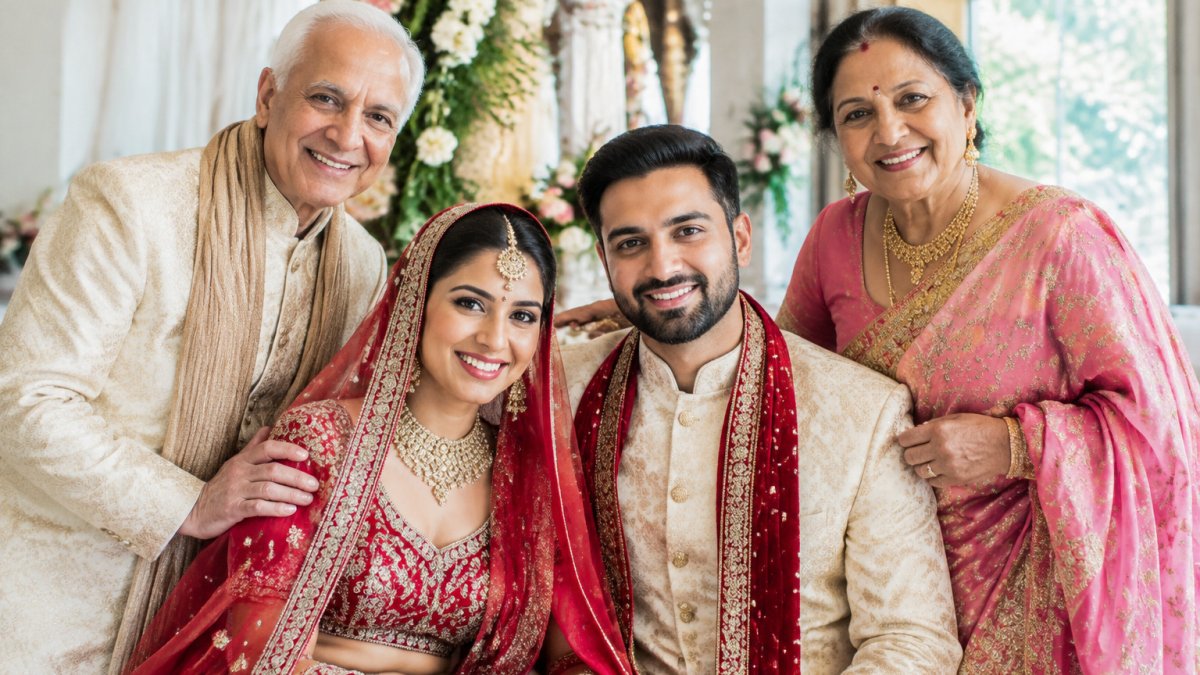
- Each grandparent alone with the bride and groom
- Both grandparents from one side with the bride and groom
- All four grandparents with the bride and groom
Priority two, generational combinations:
- Grandparents with all their grandchildren
- Grandparents with their own children and grandchildren together
- Great-grandparents with the newest generation
- Siblings and cousins with the eldest relatives
Priority three, full family groups:
- Each side of the family as a complete group
- Both families combined, if numbers allow
Optional, if time and energy permit:
- Grandparents with the couple's siblings individually
- Grandparents in a relaxed seated portrait, no posing
Keep the whole list to a single page. A list the coordinator cannot hold in one hand will not be used on the day.
Appoint a Coordinator Who Can Actually Gather the Elders
The best list fails without one person per side whose only job is to find people. Choose someone who knows every elder by sight, speaks their first language, and is comfortable being gently firm.
Brief that person on three things: the order of shots, where the grandparents will be seated, and who is responsible for mobility aids or a walking stick. Give them the list a week ahead, not on the morning.
Map Out Wedding Family Photo Combinations Before the Day
Most wedding stress around photos comes from maths. Two families, several generations, and dozens of possible groupings add up fast. Work out your wedding family photo combinations in advance and the session shrinks to minutes. With the combinations settled ahead of time, families can focus on the people in each frame and keep the pace of stress-free photo sessions.
Combinations That Matter Most to Grandparents
Start with the groups your grandparents will treasure most:
- Each grandparent with the bride and groom alone
- Grandparents with all their grandchildren
- Each side of the family as a full group
A common mistake is leaving these to the end of the session. Put them first, while everyone is fresh and seated.
Build an Asian Wedding Photography Timeline Around Elder Comfort
An Asian wedding photography timeline should place grandparent portraits early in each event, near seating, and with a firm time limit.
Here's how we'd structure it:
- Choose a slot 30 to 45 minutes after the ceremony starts winding down, before lunch or dinner service.
- Cap the formal session at 15 to 20 minutes. Beyond that, older guests fade.
- Seat them before the couple arrives. No standing and waiting.
- Photograph them first, then release them. They can relax while the rest continues.
- Repeat the pattern at each event. Multi-day weddings mean multiple short sessions, not one long one.
For more on planning coverage across several events, our guide to multi day wedding photography walks through hours, lighting and shot lists for each function.
Here is how we structure the day around grandparents' energy rather than the other way round.
| Step | What to do | Timing |
|---|---|---|
| Choose the slot | 30 to 45 minutes after the ceremony winds down | Before lunch or dinner service |
| Cap the formal session | Keep it short so older guests do not fade | 15 to 20 minutes |
| Seat them first | No standing and waiting for the couple | Before the couple arrives |
| Photograph then release | They relax while the rest continues | Right after their shots |
| Repeat at each event | Multiple short sessions, not one long one | Every event of the wedding |
Elderly Guests Wedding Photography Tips for Large Family Groups
Large family groups are where elderly guests wedding photography tips matter most. The bigger the group, the longer the setup, and the harder it is on anyone who can't stand for long.
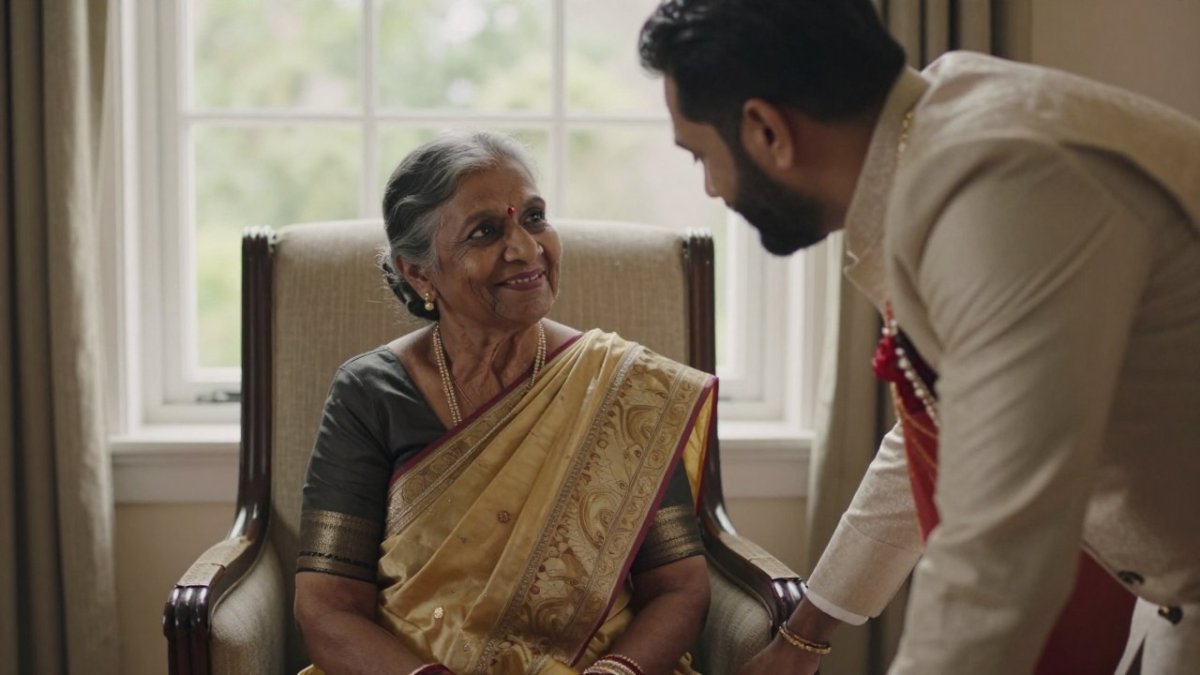
- Watch the cold, too. Long ceremonies in unheated venues leave older guests stiff. Have a wrap or shawl nearby and keep the portrait session short.
Rest Breaks and Time Limits
- Cap the formal session at 15 to 20 minutes. Beyond that, older guests fade, and the last photographs show it.
- Build in a seated rest before and after. Give them ten minutes with a drink before the session starts, and release them straight afterwards rather than holding them for "just one more".
- Split very large groups. Keep each group under about 25 people and photograph the family in two or three sets rather than one 40-person crush.
Practical Fixes That Work
- Build the group outward from the seated elders, adding rows behind
- Nominate one family coordinator per side to gather people
- Brief the photographer on who cannot stand, kneel or turn easily
Watch out: don't schedule a 40-person group shot at the end of a long ceremony. People drift, grandparents tire, and the shot you most wanted never happens.
Coordinate Portrait Priorities With Both Families
Both families usually want the same limited photo time, and nobody wants to say so. Settle photo priorities before the wedding, in writing, with one coordinator named per side.
A simple approach:
- Ask each family to rank their top five group shots
- Merge the lists and cut anything duplicated
- Share the final list with both coordinators a week ahead
This is also where multilingual communication helps. If grandparents speak a different first language, brief the coordinator so instructions reach them clearly and gently.
Balance Formal Portraits With Candid Moments With Grandparents
Formal portraits give you the framed photographs for the mantelpiece. Candid moments give you the ones that make people cry. You need both.
The best grandparent images often happen off-list: a grandmother adjusting the bride's dupatta, a grandfather wiping a tear during the Anand Karaj, two elders laughing over old stories at the mehndi. Our guide to planning candid photos at a mehndi party shows how to leave room for these without losing the formal shots.
Tell your photographer which moments matter. They'll watch for them.
Plan Grandparent Portraits Around Multi-Day Ceremonies and Customs
Each ceremony has its own rhythm, and grandparent portraits should follow it. A mehndi is relaxed and social; a Nikah is quiet and brief; a Jago is loud and lively, with music and dancing.
Plan portraits around the customs, not against them:
- Mehndi: casual portraits during the quieter early hours
- Jago: capture grandparents watching or joining the celebration
- Nikah: quiet, respectful portraits immediately after
If your family includes a Jago ceremony, read up on its flow so you can slot grandparent photos into the calm moments.
Brief Khush Studio on Your Grandparent Portrait Priorities
The final step is the briefing. Tell your photographer exactly which grandparents matter, what they can and can't do, and which images you'd regret missing.
At Khush Studio, we've covered Indian, Sikh and Muslim weddings for over 20 years, including multi-day celebrations across different venues. Our Indian wedding photography checklist gives you a ready-made shot list and family photo list to start from.
Skip if: you're planning a single-hour civil ceremony with no family groupings.
Ready to plan? Get in touch to enquire about your grandparent portraits.
Frequently Asked Questions
How do you organise family portraits at an Asian wedding?
Start with a written Asian wedding family photo list agreed by both families, then order the shots from largest group to smallest so grandparents are seated once and released early. Give a family coordinator a printed copy to gather relatives by name and side. Build the portrait block into the Asian wedding photography timeline with buffer time, and keep elderly guests near seating and shade.
How can you make wedding portraits comfortable for elderly grandparents?
Seat grandparents for every group shot rather than standing them in a line, choose a spot with shade or indoor natural light, and keep water nearby. Schedule their portraits early in the block, before the full family combinations, and allow short breaks. Ask about mobility aids, hearing aids and medication timing beforehand. Elderly guests wedding photography tips that matter most are simple: fewer steps, less standing, and a clear signal for when they are needed and when they can rest.
When is the best time to take family portraits at an Asian wedding?
Most couples get the best results straight after the ceremony, while everyone is together and grandparents are still fresh, or during a quieter window before the reception. Avoid the hottest part of the day and any point when older relatives are travelling between venues. On multi-day celebrations, place grandparent portraits on the day with the lightest schedule. Build the slot into your Asian wedding photography timeline and allow extra minutes for large family groups to assemble.
How can you include grandparents who cannot attend the wedding?
If a grandparent cannot travel, arrange a short video call during the portrait session so they can be part of a group photo on a screen, or plan a separate visit with the photographer before or after the wedding.
Your grandparents won't be at every wedding you attend, and this is the one where they matter most. Start the list this week, share it with both families, and brief your photographer early. Khush Studio brings over 20 years of Asian wedding experience, tailored photography and videography packages, and a discreet, personalised approach that puts older relatives at ease. Get started with Khush Studio and capture the portraits your family will treasure for generations.