 How-to
How Do You Build a Wedding Photo Schedule That Works?
Last Updated: November 14, 2026
Quick Summary
Build your wedding photo schedule backwards from the fixed events: the ceremony start time, religious rites and the meal. Lock those anchors first, then work outwards to travel, portraits and buffer, planning realistic time blocks and slack between each one.
- Plan 60 to 90 minutes of getting-ready coverage for details, jewellery and final touches.
- Give the first look 15 to 20 minutes and couple portraits 30 to 45 minutes.
- Build 15-20 minutes of buffer between blocks to absorb delays.
- List each family photo group with names, in priority order, at 3-5 minutes per group.
- Check the sunset time for your date and venue, then work backwards.
Table of Contents
- Start With the Fixed Events, Then Build the Wedding Photo Schedule Around Them
- How Long Do Wedding Photos Take? Realistic Time Estimates by Block
- Use a Wedding Photo Timeline Template You Can Adapt
- Build Your Wedding Family Photo List Before the Day
- The Indian Wedding Photography Timeline: Multi-Day and Multi-Venue Logistics
- Contingency Planning: Delays, Weather and Accessibility Needs
- Enquire About a Photo Schedule Built for Your Ceremony
- Frequently Asked Questions
Start With the Fixed Events, Then Build the Wedding Photo Schedule Around Them
A wedding photo schedule is a minute-by-minute plan that tells your photographer where to be, what to shoot and when.
Your ceremony time is not a slot in the day, it is the spine of the day. A Sikh Anand Karaj, a Nikah or a Hindu Vivaha each carry their own rhythm and must-capture moments.
Then work outwards:
- Fixed events: ceremony, religious rites, speeches, first meal
- Travel and venue changes: buffer time between locations
- Portraits: couple, wedding party, family groups
Below, we show you exactly how to turn those anchors into a working schedule that survives real-world delays.
How Long Do Wedding Photos Take? Realistic Time Estimates by Block
Most portrait blocks run longer than couples expect. Plan in minutes per group and add buffer, never the other way around.
Here is how we break down the key blocks:
| Block | Realistic Time | Notes |
|---|---|---|
| Getting ready | 60-90 mins | Covers details, jewellery, final touches |
| First look | 15-20 mins | Private, unhurried moment |
| Couple portraits | 30-45 mins | Longer at golden hour |
| Wedding party photos | 20-30 mins | Grows with group size |
| Family groups | 3-5 mins per group | Depends on your family photo list |
| Cocktail hour | 45-60 mins | Guest candids, venue shots |
| Reception coverage | 2-4 hours | Speeches, dancing, key moments |
Getting-Ready Coverage and Photographer Arrival
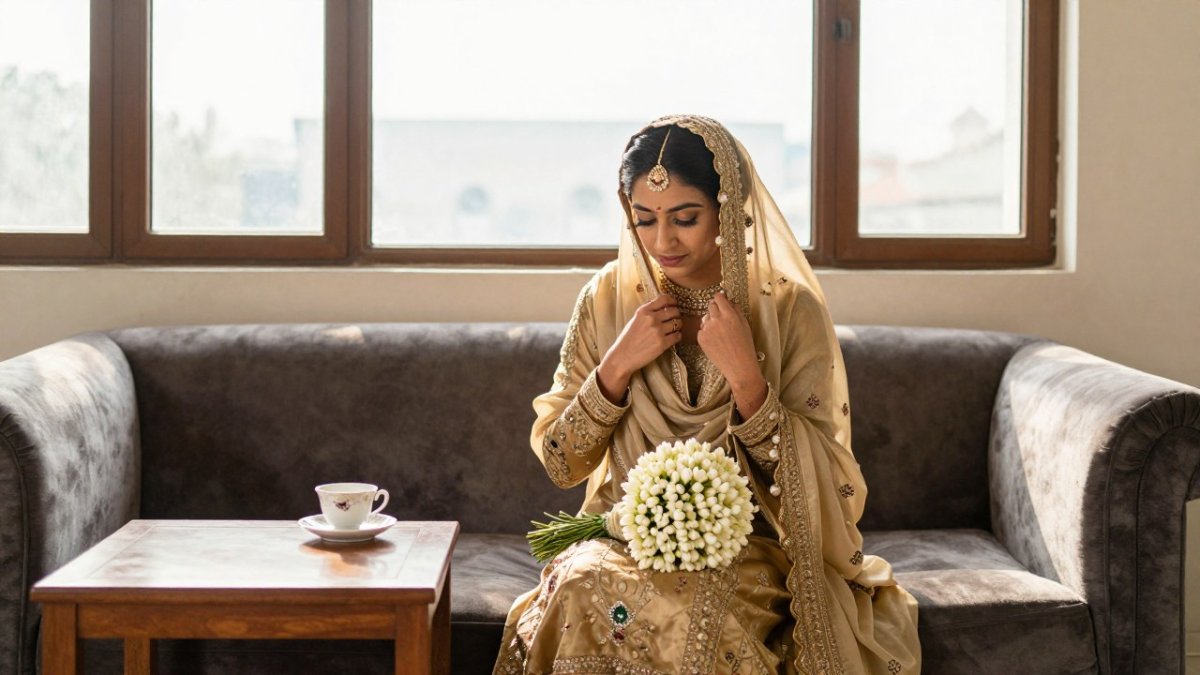
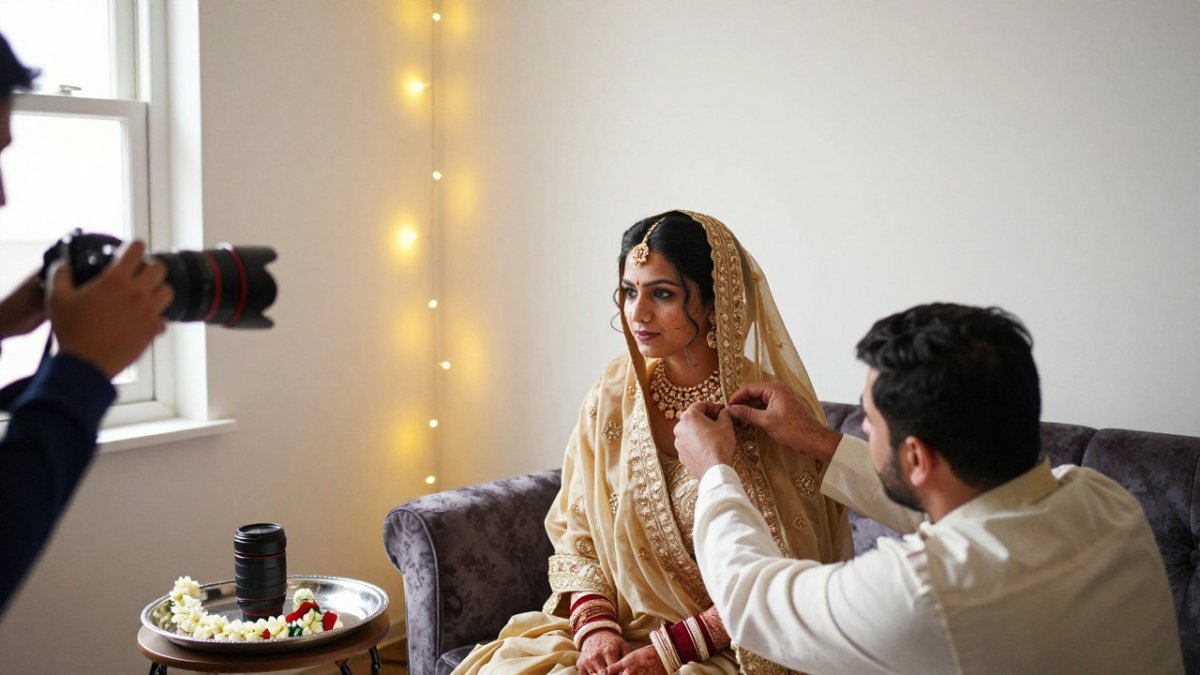
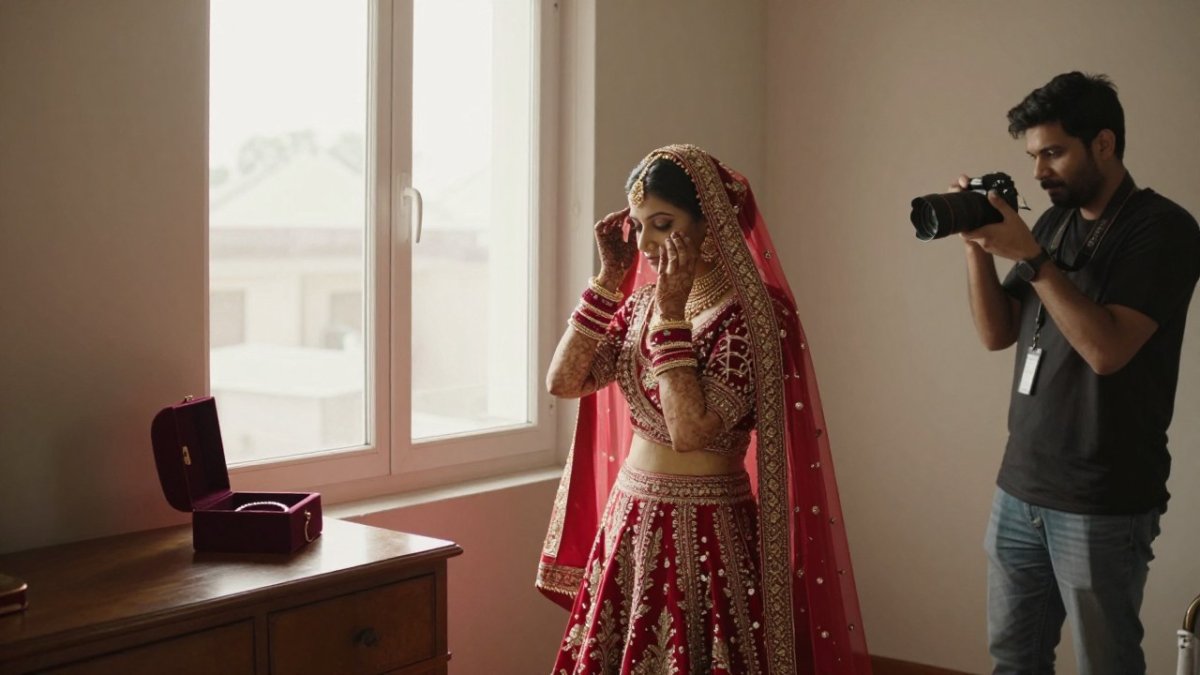
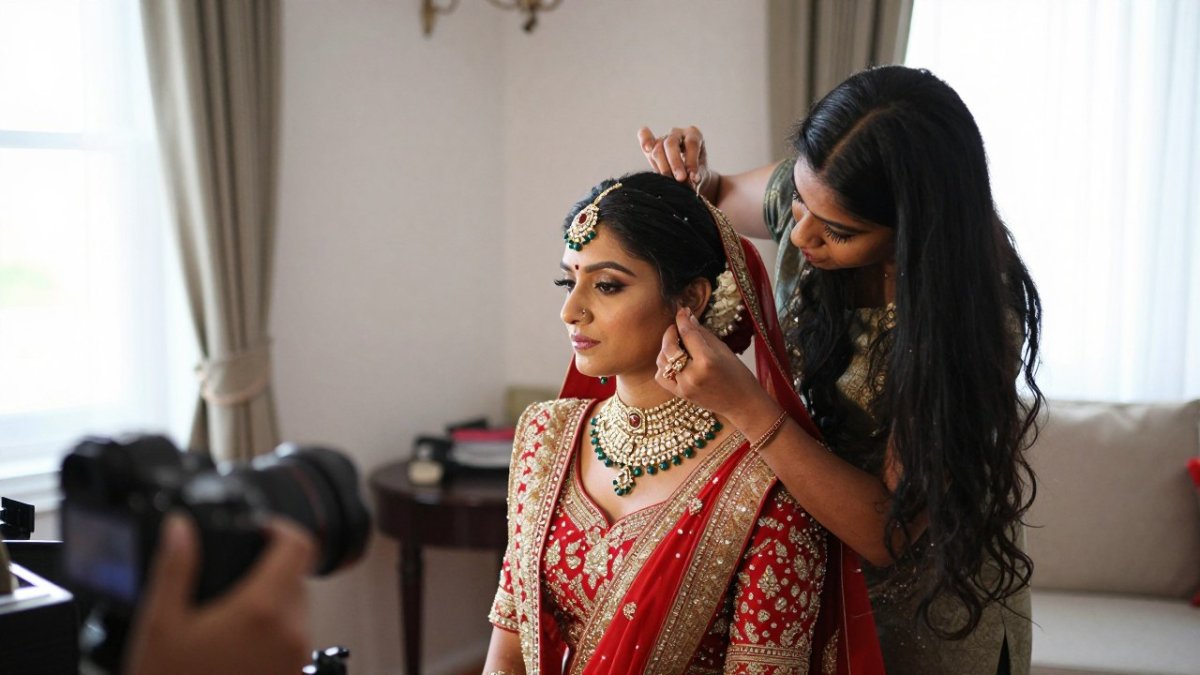
Plan for 60 to 90 minutes of getting-ready time. That window typically holds the jewellery, the dupatta setting and the quiet moments with family.
Couple Portraits, First Look and Golden Hour
The first look is a private moment, so protect it. Give it 15 to 20 minutes with no crowd and no rush.
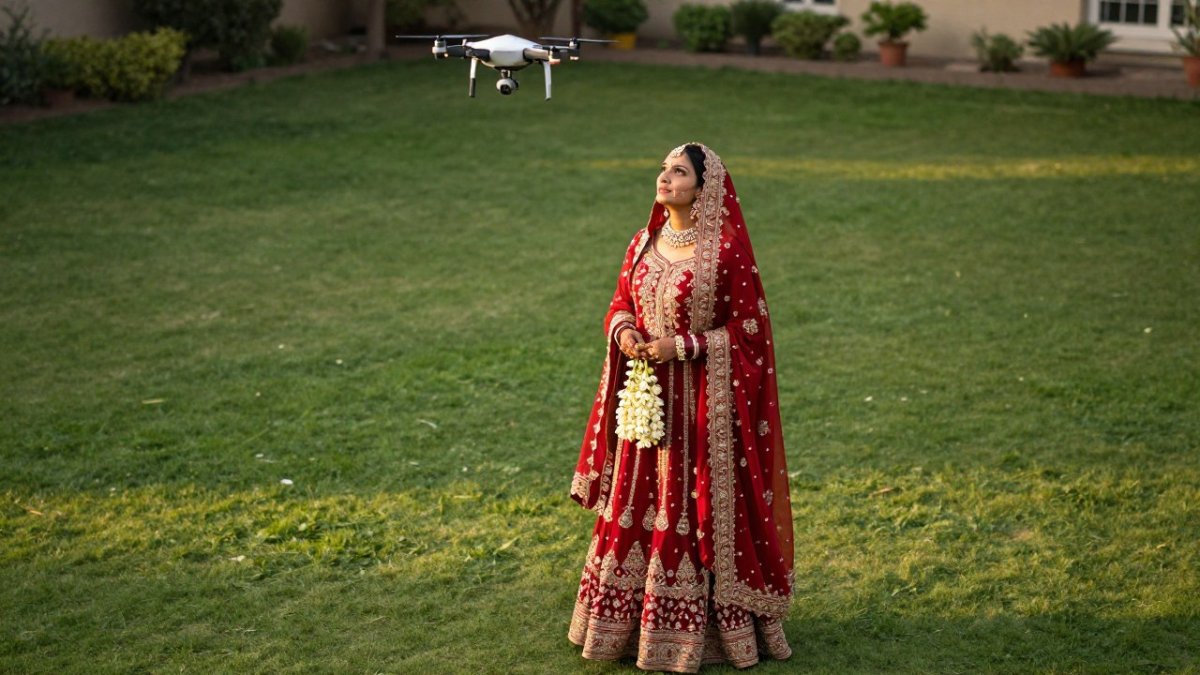
Couple portraits need 30 to 45 minutes. If you can, time one session for golden hour. Sunset portraits in soft natural light are the frames couples treasure most.
Use a Wedding Photo Timeline Template You Can Adapt
A wedding photo timeline template is a starting structure you adjust to your ceremony time, season and venue.
Here is a flexible sample you can adapt:
- Photographer arrival: 2.5 hours before ceremony
- Getting ready: 60-90 minutes
- Pre-ceremony formals: 20 minutes
- Ceremony: fixed start, full coverage
- Post-ceremony family groups: 30 minutes
- Couple portraits: 30-45 minutes
- Cocktail hour: guest candids
- Reception: speeches through dancing
Plan every ritual with our Indian wedding photography checklist. It gives you shot lists, family photo lists and multi-day timelines you can adapt to your own day.
The template is a map, not a cage. Adjust blocks to fit your venue logistics and travel time.
Adapt the Template to Your Ceremony Time
Ceremony time is the single biggest variable. The earlier the ceremony, the more portrait time you have after it; the later the ceremony, the more you need to front-load couple portraits or accept that golden hour falls during the reception. Because an early ceremony shifts portraits into the afternoon while a later one can push them into golden hour, coordinating vendor timing with Rakis Productions helps keep each part of the day aligned.
- Morning ceremony (before 12:00): Plan getting-ready coverage from first light, ceremony mid-morning, family groups immediately after, and couple portraits in the early afternoon. You will usually have enough daylight for a second, shorter portrait session before the evening reception.
- Early afternoon ceremony (12:00-15:00): This is the most common slot and the tightest. Family groups and couple portraits compete with the cocktail hour. Decide in advance whether you will join cocktail hour late or leave portraits until golden hour.
- Late afternoon or evening ceremony (after 16:00): In winter, daylight may be gone by the time the ceremony ends. Book a first look or pre-ceremony portrait session, and plan for flash or continuous lighting at the reception. In summer, you gain a long golden hour after the ceremony and can schedule portraits then.
Adapt the Template to the Season and Daylight
Daylight hours change dramatically across the year, and a template that works in July will fail in December. Check the sunset time for your date and venue, then work backwards.
- Winter (November to February): Sunset can fall before 16:00. Front-load couple portraits and family groups before the ceremony where possible, and agree an indoor portrait location with good window light or a lighting plan.
- Spring and autumn (March to May, September to October): Daylight is workable but changeable. Build in a weather contingency and keep portrait blocks flexible enough to move earlier if the forecast turns.
- Summer (June to August): Sunset is late, often after 21:00, which gives you a generous golden-hour window. The risk shifts to heat and long days: build rest breaks into the schedule so the couple and wedding party are not exhausted by the reception.
Adapt the Template to Your First-Look Choice
- With a first look: You can complete couple portraits and wedding-party photos before the ceremony, freeing the post-ceremony window for family groups and guest mingling. This suits late ceremonies and winter dates where daylight is scarce.
- Without a first look: Couple portraits must happen after the ceremony, which compresses the gap between ceremony and reception. Protect 30-45 minutes for portraits and keep family groups tight, or plan a golden-hour session during the reception.
Adapt the Template to Your Wedding Format
The standard template assumes a ceremony followed by a seated reception. Nontraditional formats need different blocks:
- Brunch or daytime weddings: Light is strongest early, so schedule portraits before or immediately after the ceremony and keep the reception short and candid-led.
- Multi-day celebrations: Treat each event as its own mini-timeline with its own arrival, coverage and buffer, rather than stretching one template across three days.
- Outdoor or marquee weddings: Travel between ceremony, portrait location and reception can be longer than expected. Walk the route in advance and add 10-15 minutes per move.
Watch out: the most common template failure is copying a summer schedule into a winter wedding. If you do not adjust for sunset, your couple portraits will be shot in the dark or dropped altogether.
Build Your Wedding Family Photo List Before the Day
A wedding family photo list is a written record of every group you want photographed, in priority order. Build it weeks before the wedding, not on the morning.
- List each group with names, not just "family"
- Order groups by priority, most important first
- Assign one family member to gather each group
Plan Asian wedding portraits that honour grandparents and keep elderly relatives comfortable. Consider photographing the oldest relatives first, while they still have energy.
The Indian Wedding Photography Timeline: Multi-Day and Multi-Venue Logistics
An Indian wedding photography timeline spans multiple days and often multiple venues. The schedule has to account for travel, outfit changes and rest between events.
Contingency Planning: Delays, Weather and Accessibility Needs
Every schedule needs a backup plan. Ceremonies run late, weather turns and family needs shift. The difference between a plan that survives and one that collapses is deciding in advance what you will protect, shorten and drop.
A contingency checklist:
- Delays: build 15-20 minutes of buffer between blocks
- Weather: agree an indoor portrait backup in advance
- Accessibility: note mobility needs and plan routes that work
Plan for the Delays That Actually Happen
Most delays come from a small number of predictable sources. Name them in advance and assign a response.
- Hair and makeup running late: This is the most common delay. Build 20-30 minutes of slack into the getting-ready block and agree with your photographer which detail shots can be captured later if the schedule slips.
- Ceremony starting late: Guests arrive late, officiants run over and processions take longer than rehearsed.
- Transportation delays: Traffic, parking and guest shuttles can add 15-30 minutes between venues. Map the route in advance, add buffer per move and keep the photographer's kit with them rather than in a separate vehicle.
A practical approach is to agree a priority list before the day: must-have photo moments, nice-to-have moments and everything else. When time runs short, the photographer can work down the list.
Plan for Weather
- Agree a trigger point: Decide in advance the conditions under which you move portraits indoors, such as steady rain or wind above a workable level, and who makes the call.
- Scout an indoor alternative: Identify a room or covered area with good window light or space for lighting, and check access times with the venue.
- Keep the outdoor option open: A short break in the rain is often enough for 10-15 minutes of portraits. Build flexibility so you can take advantage of a gap rather than abandoning outdoor shots entirely.
Plan for Accessibility and Family-Specific Needs
Schedules should account for mobility limitations, young children, elderly relatives and sensory needs. These are not edge cases; most weddings have at least one.
- Mobility: If a grandparent uses a wheelchair or has limited stamina, choose portrait locations with level access and short walks, and photograph the oldest relatives first while they still have energy.
- Young children: Build in short, flexible windows for children in the wedding party, and accept that some shots may need to happen earlier or be abandoned.
- Sensory needs: Some guests and family members find flash, crowds or long formal sessions difficult. Agree quieter portrait spots and keep group sessions short.
Decide Your Coverage Trade-Offs in Advance
- Shorten: Group photos can be combined, and table shots can be reduced to a few key tables.
- Move: Couple portraits can shift to golden hour or to a pre-ceremony first look.
- Omit: Detail shots, extended dancing coverage or second-location portraits can be dropped if the day runs late.
The goal is not a rigid plan but a shared understanding of what matters most. A schedule with named priorities, buffer between blocks and a pre-agreed weather trigger will hold together far better than a perfect timeline with no slack.
For practical tips on handling shifting plans, read tips for multi-day wedding photography. It covers coverage hours, timelines and lighting across every event.
Enquire About a Photo Schedule Built for Your Ceremony
The best schedule is built around your specific ceremony, venues and family. A generic template gets you started, but a tailored plan gets you the album you actually want.
At Khush Studio, we have spent over 20 years photographing Indian, Sikh and Muslim weddings.
To discuss your wedding, enquire with Khush Studio.
Your ceremony has fixed events that cannot move. Everything else can be planned around them, with buffer, backup plans and a family photo list ready to go.
Frequently Asked Questions
How do you create a wedding photography timeline?
Work backwards from the ceremony start time, which is the one thing you cannot move. Block out the ceremony and any religious rituals at their real duration, then add travel time between venues and a 15-minute buffer before each fixed event. Fit getting-ready coverage, couple portraits and family groups into the gaps that remain. Share the finished schedule with your photographer, venue coordinator and key family members so everyone works from the same document.
How much time should you allow for wedding photos?
As a working guide, allow 45 to 60 minutes for couple portraits, 20 to 30 minutes for wedding-party photos and 2 to 3 minutes per family group on your wedding family photo list. Getting-ready coverage usually needs 60 to 90 minutes to capture the details, the outfit and the quiet moments. Build in a buffer of at least 15 minutes around each block, because ceremonies and family arrivals rarely run exactly to plan.
Should you plan a separate photography timeline for multiple ceremonies?
Yes. A multi-day Indian, Sikh or Muslim wedding needs its own schedule for each event, because a mehndi, an Anand Karaj and a walima have different rituals, venues and light conditions. Give each day its own shot list and its own buffer time, and confirm travel and setup windows between venues. A photographer experienced with Asian weddings will already know which moments in each ceremony cannot be missed.
How can you keep a wedding photo schedule on track?
Name one person, often a sibling or a close friend, as the day's point of contact for the photographer so you are not fielding questions during the ceremony. Print the schedule and share a digital copy with the venue and any other suppliers. Ask your photographer to flag slippage early rather than at the end of the day, and agree in advance which photo blocks you would shorten if time runs short.