 How-to
How to Hire a Wedding Video Editor for Your Celebration
Last Updated: November 7, 2026
Quick Summary
A wedding video editor takes raw footage from one or more cameras and shapes it into a finished film, handling audio sync, moment selection, colour grading, pacing and music. Pricing depends on footage volume, number of finished films, turnaround speed and revisions, so ask for a written quote listing each deliverable.
- Judge a portfolio by watching complete films, not just the highlight reel.
- Ask every editor for a written quote listing each deliverable and assumed footage volume.
- Compare quotes line by line, since a much lower price often excludes logging or audio repair.
- Send a short, specific editing brief with reference films before the edit starts.
- Read the contract for who owns the finished film and how long raw footage is kept.
Table of Contents
- What a Wedding Video Editor Actually Does
- Wedding Video Editor Cost: What Shapes the Price
- Judging a Wedding Video Editor Portfolio
- Editor Evaluation Checklist: Questions to Ask Before You Book
- Writing a Wedding Video Editing Brief Template
- Wedding Video Editing Turnaround Time and Delivery
- Contracts, Footage Security and Your Next Step
- Frequently Asked Questions
Hiring a wedding video editor is one of the decisions couples often leave until the footage is already in hand, and that is usually when it goes wrong. The edit matters a great deal in how a wedding film turns out. The right editor turns hours of raw footage into a film that holds the ceremony, the music and the family's faces. This guide explains what an editor actually does, what shapes the cost, and how to judge a portfolio before you commit.
What a Wedding Video Editor Actually Does
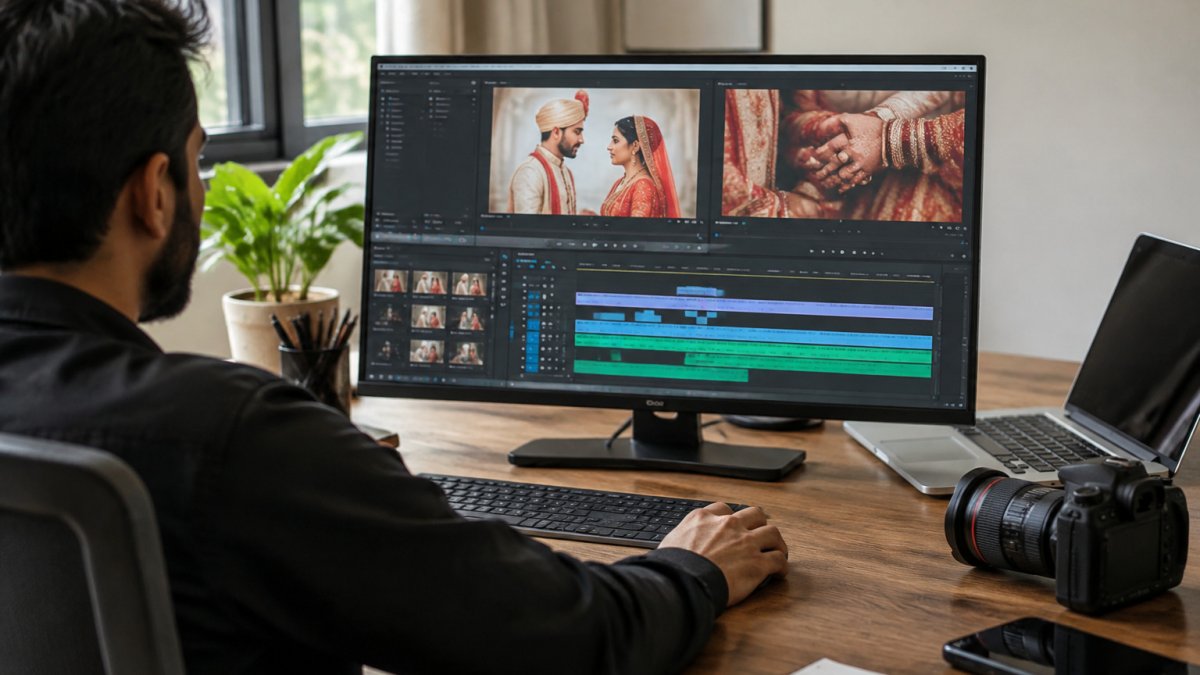
A wedding video editor takes raw footage from one or more cameras and shapes it into a finished film. The job covers far more than cutting clips together. The editor syncs audio, selects the moments that matter, grades colour, sets the pacing and adds music that suits each part of the day.
For an Asian wedding, the editor also needs to understand the order of events. A good editor knows when a ritual is building towards its emotional peak, so the cut lands on the right beat. Without that knowledge, a film can look polished and still miss what the family cares about most.
A common mistake is treating editing as a finishing step. In practice, the editor's choices decide what the film says about the day.
Wedding Video Editor Cost: What Shapes the Price
Pricing depends on quantity, dates and delivery, so we do not quote fixed figures here. For concrete Asian wedding photography prices to compare against editor quotes, see that guide. Instead, these are the factors that usually move a quote up or down, and how they tend to interact:
- Hours of raw footage: A full three-day celebration produces far more material than a single-evening event. Most editors price on footage volume because logging and syncing multi-camera rushes is the slowest part of the job. Ask whether the quote assumes a set number of hours and what happens if the actual footage exceeds it.
- Number of finished films: A highlight film, a full ceremony edit and a short social cut each take separate work. A highlight film and a full ceremony edit share the same rushes but not the same timeline, so bundling them rarely halves the cost. A social cut is usually the cheapest add-on because it is short and drawn from the same selects.
- Turnaround speed: Rush delivery usually costs more because it moves other work aside. Ask what the standard turnaround is before you treat a faster date as an upgrade, and confirm whether a rush fee applies to the whole project or only the first deliverable.
- Revisions: Clear feedback at the start keeps revision rounds to a minimum. Most editors include a set number of rounds, then charge per additional round. The cost of a revision is not the editing time alone but the re-export and re-delivery that follows.
- Complexity of the cut: Multi-camera sync, heavy colour grading, licensed music and subtitles all add time. A ceremony filmed on three cameras with clean audio is quicker to cut than one filmed on one camera with patchy sound that needs repair.
Ask every editor for a written quote that lists each deliverable, the assumed footage volume, the number of revision rounds and the delivery date. Quotes that bundle everything into one vague figure make it hard to compare options. For a closer look at judging an Indian wedding photographer's cultural knowledge and portfolio, see Indian wedding photographer checklist. A useful habit is to ask two editors to quote against the same brief so the difference in price reflects scope rather than guesswork.
Watch out: a quote that is far below the others often excludes logging, audio repair or a second deliverable, so compare line by line rather than on the headline figure. For current prices, contact Khush Studio directly for a quote matched to your event.
Judging a Wedding Video Editor Portfolio
A portfolio shows what an editor can do, but only if you look at it the right way. Watch complete films where possible, not just the highlight reel. For guidance on comparing wedding videographer work and interview questions, see choosing an Asian wedding videographer. Short showreels often hide weak pacing and clumsy audio. The method below turns a portfolio viewing into an assessment you can compare across editors.
Pacing. Watch the first two minutes without skipping. A strong editor establishes the setting, introduces the people and reaches the ceremony without rushing. Look for cuts that land on a beat, whether that is a ritual moment, a speech line or a piece of music. If the film feels like a sequence of disconnected clips, the editor is cutting to length rather than to story.
Audio. Listen on headphones. Speech should stay clear through the vows and speeches, with music sitting underneath rather than over the top. Check whether background noise is controlled and whether the transition between live sound and music is smooth. Audio problems are the most common weakness in otherwise polished films.
Colour. Look for consistency across the whole film, not just the opening. Skin tones should stay natural from daylight to evening, and the grade should suit the setting rather than fight it. A film that shifts colour dramatically between scenes usually signals an editor who grades clip by clip rather than across the timeline.
Storytelling. Ask yourself what the film says about the day. A good editor chooses a point of view, whether that is the couple's nerves before the ceremony or the family's reaction during it, and returns to it. A film that simply lists events in order is coverage, not storytelling.
Consistency. Watch two films from the same editor. If the quality drops sharply between them, the stronger one may have been a showcase piece. Consistency across several weddings is a better signal than one standout film.
Handling your footage. Ask the editor to walk you through a film made from footage similar to yours, such as a multi-day event with several venues. Work from a tradition you know well will usually show a stronger sense of timing, so check whether they have handled a ceremony like yours and how they treated the key rituals.
Watch out: a portfolio of beautiful films from a different style of wedding does not prove the editor can handle your ceremony, so ask for a sample that matches your event type before you shortlist.
Editor Evaluation Checklist: Questions to Ask Before You Book
Use these questions to compare editors on the same footing:
- Can you show a complete wedding film from start to finish, not just a showreel?
- Have you edited ceremonies from my tradition before?
- How do you handle a multi-day wedding with events in different venues?
- What is your typical turnaround, and what happens if the schedule slips?
- How many revision rounds are included?
- Who owns the finished files, and how long are the raw files kept?
- How is our footage stored and protected while you work on it?
An editor who answers these clearly and in writing is usually easier to work with later.
Writing a Wedding Video Editing Brief Template
A short, specific brief saves time and reduces revisions. Send it before the edit starts. Here is a template you can adapt:

Couple names: [Names] Event dates and venues: [Dates, venue for each event] Key rituals to feature: [e.g. Milni, Anand Karaj, Nikah, Vidaai] Must-include people: [Family members, speeches] Music preferences: [Styles, songs to avoid, any sensitive music] Pacing: [Emotional and slower, or lively and upbeat] Length of final film: [Target minutes] Deliverables: [Full edit, highlight film, social cut] Deadline: [Date]
Attach a few reference films you like, and note what you like about each one. Specific notes such as "slow cut on the vows" help an editor far more than general adjectives.
Wedding Video Editing Turnaround Time and Delivery
Turnaround time depends on how much footage there is, how many deliverables you ordered and how many revisions you request. Ask for the estimated delivery date in writing when you book, and confirm the revision schedule.
For multi-day events, plan for the editor to receive and organise footage in stages. Our guide to three day Asian wedding videography coverage explains how coverage hours and costs shape delivery scope and timing. A same-day edit is a different job, with tighter timing and a shorter film, so ask specifically whether that is what you want. Learn how a same-day edit works at an Indian wedding, including timing, video length and what to ask before booking.
Keep your own copies of all raw footage until the final delivery is in your hands.
Contracts, Footage Security and Your Next Step
Before you sign, read the contract carefully. It should state who owns the finished film and the raw files, how long the editor keeps your footage, and what happens if either side cannot meet a deadline. Look for clear data-handling terms, particularly if the editor works remotely or passes files to a subcontractor.
Ask how your footage is stored and protected at every stage, and what the policy is for deleting files once the agreed period ends.
Choosing the right editor is the step that decides how your wedding film feels for decades. If you want an edit shaped by experience with Indian, Sikh and Muslim ceremonies, get in touch with Khush Studio to discuss your celebration and request a quote.
Frequently Asked Questions
How do I hire a wedding video editor?
Start by shortlisting editors whose portfolios match the style and cultural content of your ceremonies. Ask each for a sample of a full wedding film, not only highlight reels, and check that they have worked with multi-day events. Send the same brief to each shortlisted editor so you can compare quotes, turnaround times and communication. Confirm the agreed deliverables, rights to footage and revision rounds in writing before you pay a deposit.
What should I look for in a wedding video editor's portfolio?
Look for complete wedding films rather than only short clips, since these show pacing, music choice and how ceremonies are edited together. Check whether the editor handles key rituals, such as an Anand Karaj or a Nikah, with care and clear storytelling. Consistency across several weddings matters more than one standout film. Ask which parts of the work the editor did themselves if the portfolio includes team projects.
How much does it cost to hire a wedding video editor?
Pricing depends on the length of the footage, the number of events covered, the final film length and how many revision rounds are included. Editors may also charge extra for colour grading, multiple cuts or rush delivery. Request itemised quotes so you can compare what each includes. For current prices, contact Khush Studio directly for a quote tailored to your schedule and venues.
How long does wedding video editing take?
Turnaround depends on how much footage you have, how many events are filmed and the editor's current workload. Multi-day celebrations usually take longer than a single ceremony. Ask for a realistic delivery date in writing and check how many revision rounds are included before the final version. Planning ahead with a clear schedule avoids rushed edits closer to your event.